
Last updated September 22, 2026
Free on-site gate assessment - hinges, posts, and your LiftMaster or Nice gate operator checked before anything is quoted
The assessment is free and the quote is the invoice.
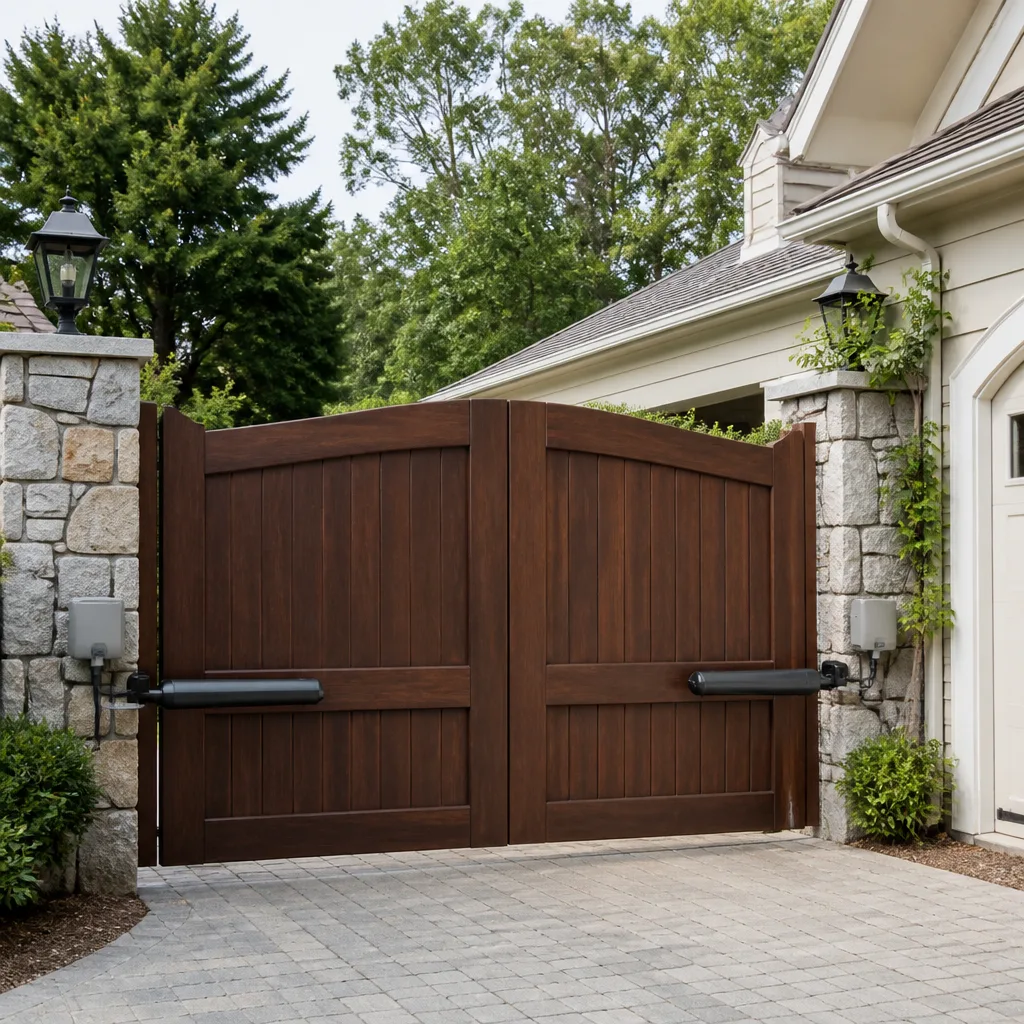
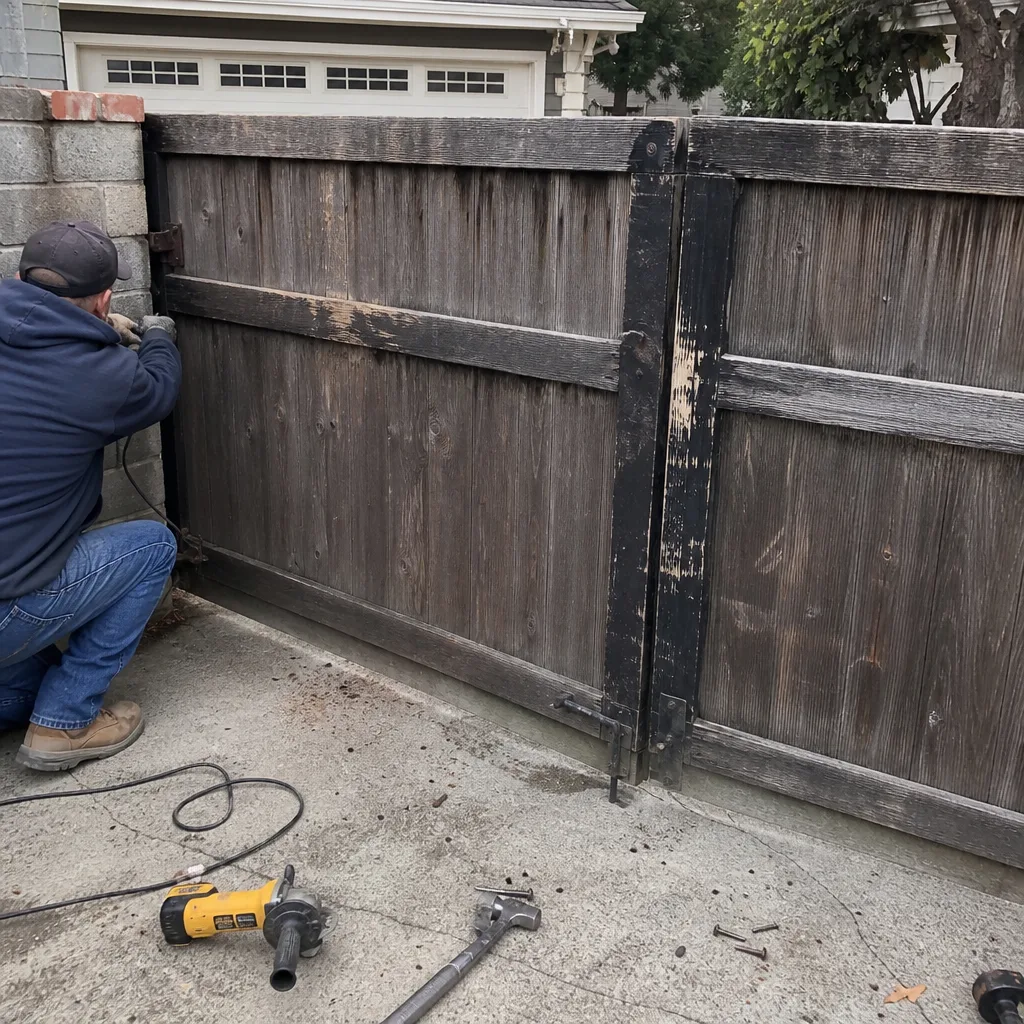 Before
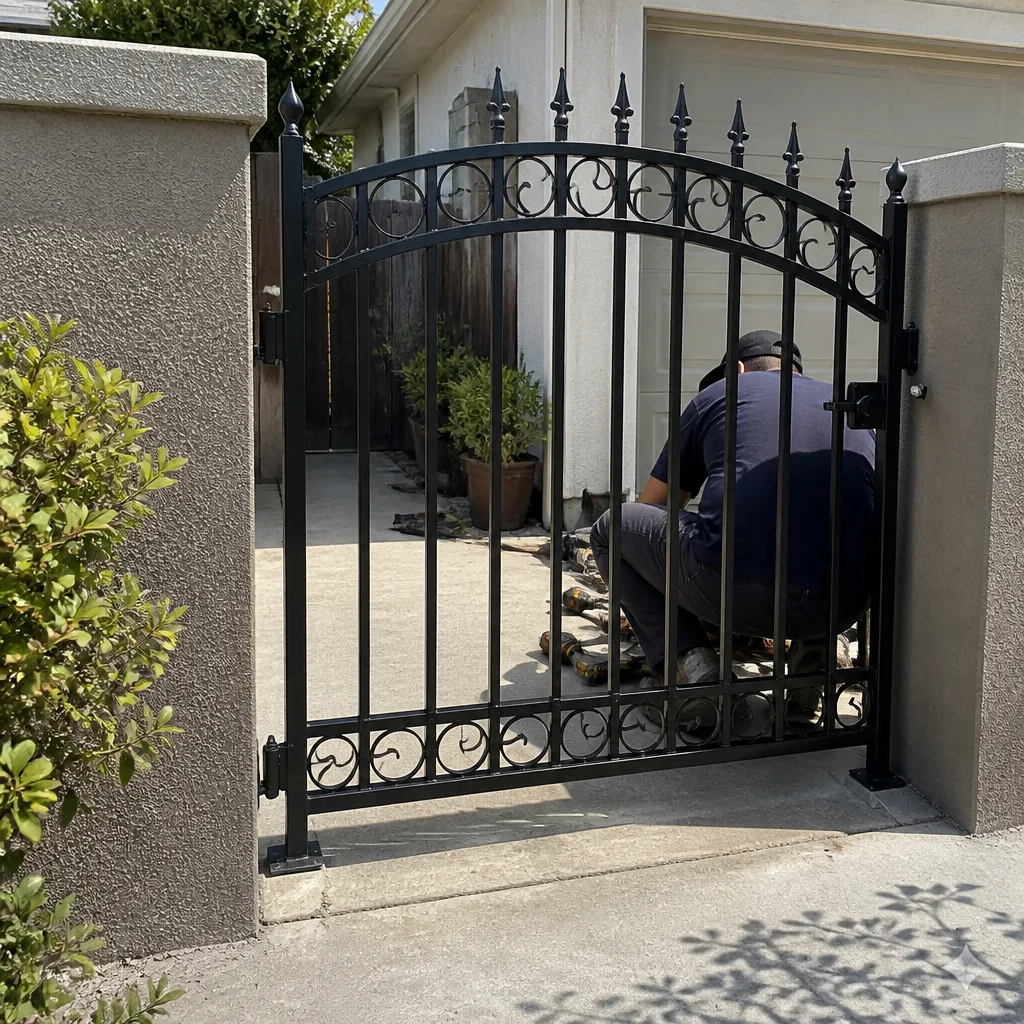 After
After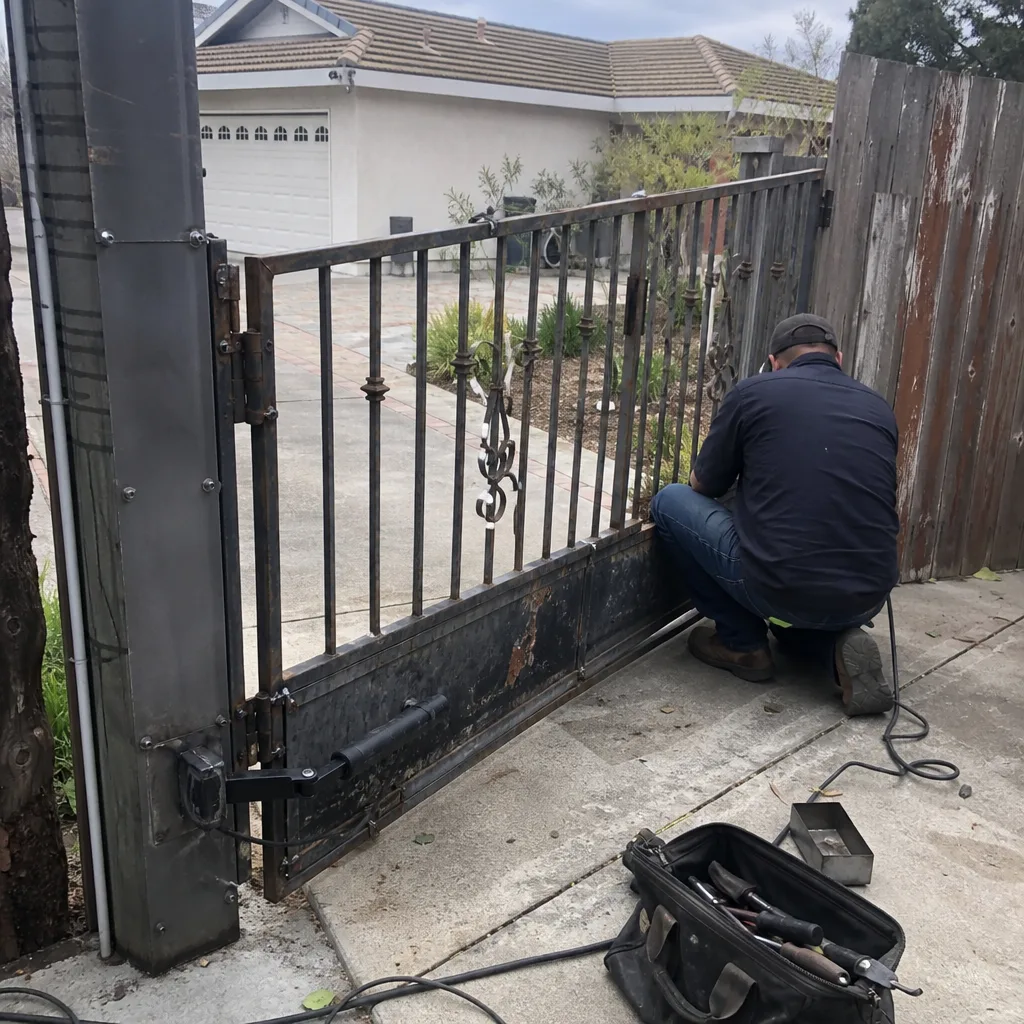 Before
 After
After Before
 After
AfterHow to Hire a Gate Repair Contractor in Fremont: A Step-by-Step Guide
Yelp reviews tell you whether a contractor was friendly and arrived on time. They cannot tell you whether that contractor left your gate in a state the next technician can understand. In Fremont, where a single Hillsdale Estates HOA gate failure can strand twenty residents and a Warm Springs driveway gate stuck open turns a garage into a showroom for thieves, the hiring decision that costs homeowners the most money is not choosing the wrong price. It’s accepting a verbal scope. A verbal scope cannot be compared, verified, or held to after the technician leaves. This guide - alongside our Complete Guide to Gate Repair in Fremont - will teach you to make written documentation your hiring filter, not reviews or years in business.
Quick Answer
To hire a gate repair contractor in Fremont, request three documents before approving any work: a written scope of repair, an itemized written estimate, and a list of post-repair deliverables. Compare contractors on whether they diagnose the root cause before quoting and whether they document what they found, adjusted, and installed. Avoid any contractor who cannot explain what caused the failure or who offers only verbal estimates with vague line items like “labor and parts.”
Table of Contents
- Why Verbal Scopes Cost Fremont Homeowners More Than Bad Prices
- The Three Documents to Request Before Any Work Starts
- Red Flags in Verbal Estimates and Vague Promises
- How to Compare Two Written Estimates Side by Side
- Questions That Reveal Whether a Technician Diagnoses or Replaces-and-Hopes
- Special Considerations for Fremont HOA and Multi-Entry Gate Systems
- Fremont Climate, Codes, and Neighborhood Realities
- Common Mistakes to Avoid
- When to Call a Professional
- Frequently Asked Questions
- The Bottom Line
 Before
 After
AfterWhy Verbal Scopes Cost Fremont Homeowners More Than Bad Prices
The average homeowner in Fremont assumes the biggest risk in hiring a gate contractor is overpaying. We’ve found the opposite. Since 2014, we’ve been called to re-repair gates in the Ardenwood, Mission San Jose, and Centerville areas where the original technician charged a reasonable rate, performed work that seemed correct, and left nothing behind but a handshake. Six months later, the same symptom returns. The new technician opens the control box and finds a mess: wires spliced without labels, limit switches reset without recorded positions, a replacement motor installed with no documentation of the brand or model.
The homeowner pays twice. Not because the first contractor was dishonest, but because the first contractor worked without a written scope and left no evidence of what was done.
This is especially costly in Fremont’s older neighborhoods, where gates installed during the 1980s and 1990s building booms now share property lines with new construction. A gate in the Glenmoor area might have a LiftMaster operator from 2008, a custom welded arm fabricated by a previous owner, and a photo-eye retrofit that doesn’t match the original wiring diagram. Without documentation, every subsequent technician starts from zero. The homeowner funds the rediscovery of the same information.
Written scopes prevent this. They force the contractor to name the problem before naming the price. They create a record that outlasts the technician’s memory. And they give the homeowner a tool to hold the work accountable, whether that means a warranty claim, a second opinion, or simply understanding what was done to their property.
We’ve repaired and installed over 22,000 gates since 2014. Every one started with a written price before any work began and ended with a documented photo record. The cost of documentation is negligible. The cost of its absence is often the entire job, repeated.
The Three Documents to Request Before Any Work Starts
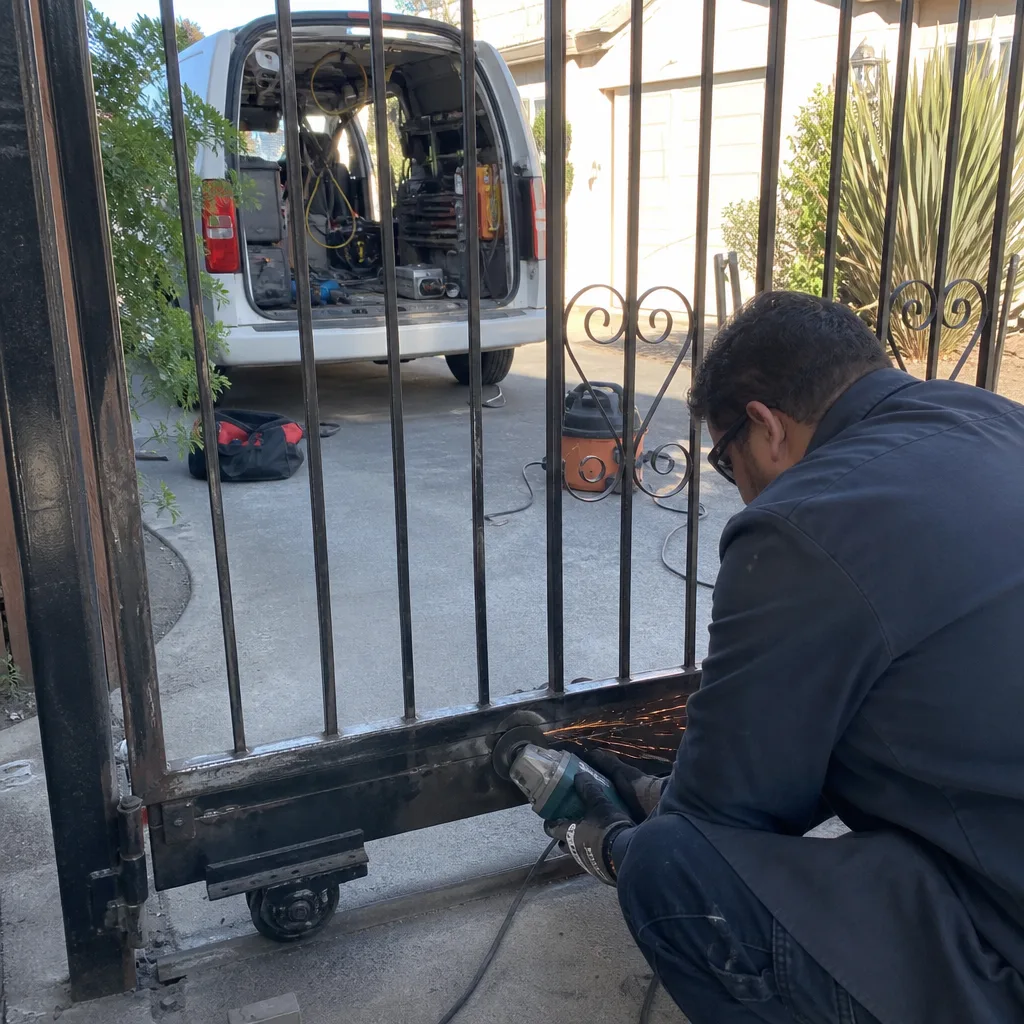
Before any technician touches your gate in Fremont, you should have three documents in hand or in email. These are not preferences. They are the minimum standard for a transaction where you cannot see the work product before you pay.
Document 1: Written Scope of Repair
This document states, in plain language, what the technician believes is wrong and what they intend to do about it. It is not an invoice. It is a diagnosis and treatment plan.
A proper scope of repair for a gate in Fremont’s Niles district might read:
- “Swing gate drifts open 4-6 inches after closing. Suspected cause: worn clutch in FAAC 415 operator, compounded by gate leaf sag of approximately 3/8 inch due to hinge pin wear. Scope: replace clutch assembly, adjust clutch torque to 280 Nm per manufacturer spec, measure and document gate leaf position before and after. If hinge pin wear exceeds 1/4 inch play, recommend hinge replacement as separate scope.”
Notice what this scope contains: the symptom, the suspected root cause, the specific part and setting, the measurement threshold that triggers additional work, and the boundary between included work and additional scope. A verbal estimate or a text message saying “fix drift, $450” contains none of this. You cannot verify whether the clutch was actually replaced. You cannot know whether the gate leaf was measured. You cannot hold anyone accountable when the drift returns.
Under Vance Gate Repair Fremont‘s Haven Standard, Clause 1 requires this scope in writing before any tool is picked up. Clause 4 requires photographic evidence of what was found and what was done. The scope and the evidence together create a complete record.
Document 2: Itemized Written Estimate
The estimate breaks the scope into line items with prices. It answers the question: what am I paying for, specifically?
Reject estimates with single lines like “labor and parts: $650.” Demand separation:
| Line Item | Description | Price Range (Fremont Market) |
|---|---|---|
| Diagnostic labor | Root-cause identification, control box inspection, safety system test | $95-$150 |
| Repair labor | Clutch replacement, torque setting, limit switch reset | $180-$280 |
| Parts | FAAC clutch assembly, part number [specified] | $140-$220 |
| Documentation | Photo record, written settings log, wiring diagram update | $0 (included) |
The Fremont market for our Gate Repair services typically sees diagnostic fees between $95 and $150, with repair labor running $180-$280 for standard swing-gate operator work. Parts vary by brand: FAAC and BFT components often carry longer lead times from European suppliers, while LiftMaster and Linear parts are generally available same-day through regional distributors. The estimate should name the brand, the part number, and whether the part is in stock or ordered.
Most importantly, the estimate should state the total price that will be charged. Not a “range.” Not “plus materials.” The flat price, written, before work starts. This is Haven Standard Clause 1. Any contractor who cannot commit to a written price before starting either does not understand the job well enough to quote it, or does not intend to be held to the number.
Document 3: Post-Repair Deliverables List
This document states what you will receive when the job is complete. It transforms the repair from an event into a record.
Standard post-repair deliverables should include:
- Photographs of the control box interior, showing wire routing and connections
- Photographs of the operator nameplate, including model and serial numbers
- Recorded settings: limit switch positions, torque values, safety edge sensitivity readings
- Written list of parts installed, with manufacturer part numbers
- Updated or annotated wiring diagram, if any wiring was modified
- Copy of the original scope and estimate, marked complete
These deliverables are not bureaucratic extras. In Fremont’s Mission Valley neighborhood, we’ve serviced gates where the original installer left no record, and three subsequent technicians each rewired the safety edges differently. The homeowner paid for three correct-but-incompatible solutions before we arrived, documented the actual wiring, and left a diagram that has prevented two future misdiagnoses.
Ask for the deliverables list before approving work. A contractor who documents as standard practice will answer immediately. A contractor who does not document will hesitate, deflect, or promise to “email something later.” The latter is a signal to choose someone else.
Red Flags in Verbal Estimates and Vague Promises
Verbal estimates are not inherently dishonest. They are inherently unverifiable. In a market like Fremont, where gate contractors range from solo operators working out of pickup trucks to established companies with commercial access-control backgrounds, the difference between reliable and risky often appears in how pricing is discussed.
Watch for these specific patterns:
- “Labor and parts, probably around…” The word “probably” and the phrase “labor and parts” are both warnings. The first admits uncertainty the contractor is asking you to absorb. The second lumps together the two largest cost categories, preventing you from verifying whether parts were actually installed or whether labor time was reasonable.
- “I’ll know more once I get into it.” Some diagnostic uncertainty is normal. But a contractor who cannot identify the likely root cause after inspecting the gate, testing the operator, and checking safety systems is either inexperienced or planning to bill by time rather than outcome. In our experience, a trained technician can identify the probable cause of common failures - motor strain, limit switch drift, photo-eye misalignment, hinge wear - within fifteen minutes of arrival.
- “We don’t usually write that down.” This applies to scopes, estimates, or documentation of any kind. The contractor is telling you that their business practice does not include creating records. This benefits them exclusively. It removes your ability to compare quotes, verify work, or transfer information to future technicians.
- No mention of what caused the failure. A repair without a diagnosed cause is a replacement with hope. We’ve seen gates in the Brookvale area where the previous technician replaced three operators in four years without ever measuring the gate leaf weight or checking for hinge binding. The operators kept failing because the root cause was mechanical overload, not electrical defect. Each replacement was a $1,200-$1,800 charge that addressed a symptom.
- Inability to name the automation brand on your gate. Fremont properties run a mix of LiftMaster, FAAC, BFT, Linear, Viking, Ghost Controls, DoorKing, Elite, and Mighty Mule operators. A technician who cannot identify the brand from the control box or arm geometry has not looked carefully. A technician who identifies the brand but immediately recommends replacement “because parts are hard to get” may be steering toward their preferred product rather than repairing what exists. We service all nine brands specifically so we can repair what is installed rather than replace for convenience.
One additional red flag specific to the Fremont market: contractors who claim familiarity with “city permits” without specifying which permits, for which work, at what cost. Fremont does not require a permit for standard residential gate repair or operator replacement on an existing gate. New gate installation, structural modification, or electrical service upgrades may trigger permitting through the City’s Development Services Center. A contractor who vaguely references “handling the permits” for routine repair is either uninformed or padding the invoice.
How to Compare Two Written Estimates Side by Side
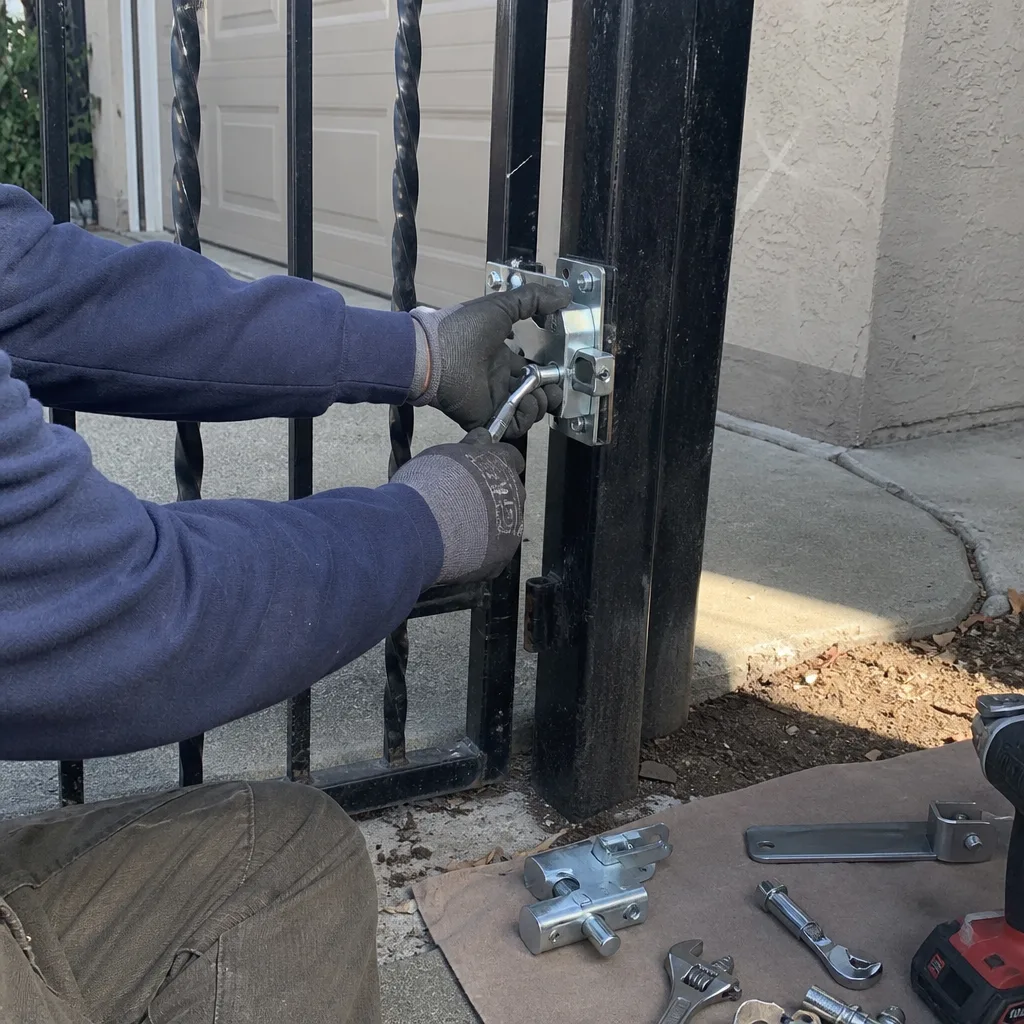
Once you have two written estimates for gate repair in Fremont, the comparison is not about finding the lower number. It is about finding aligned scope, specific parts, and documented commitments. Here’s how to evaluate them systematically.
Step 1: Align the Scopes
Lay both estimates side by side and check whether they address the same problem. One contractor may diagnose “operator motor failure” while another diagnoses “operator motor failure compounded by gate leaf overload due to hinge seizure.” The second scope is more complete. It identifies a contributing factor that, if unaddressed, will strain the new motor.
In Fremont’s older Centerville properties, we’ve frequently found - as detailed in our Seasonal Gate Repair Care for Fremont: Year-Round Homeowner’s Guide - that “operator failure” is actually operator overload caused by gates that have sagged on corroded hinges. Replacing the operator without freeing the hinges repeats the failure in eighteen to twenty-four months. The scope that names both problems is the more honest estimate, even if the total is higher.
Step 2: Check Parts Specificity
Compare the parts listed on each estimate. A specific estimate names the manufacturer and part number:
- “LiftMaster LA500DCUL swing gate operator, 24VDC, with MyQ connectivity”
A vague estimate says:
- “New gate motor, comparable to existing”
The specific estimate lets you verify the part exists, check the manufacturer’s warranty, and confirm the price against distributor listings. The vague estimate lets the contractor substitute whatever is in stock, potentially downgrading your system without disclosure.
Also check whether the estimate includes peripheral parts that the repair logically requires: mounting brackets, hardware kits, safety edge sensors, or photo-eyes. A low estimate that omits these may rise significantly during the job when the technician “discovers” they are needed.
Step 3: Compare What Each Contractor Commits to Leave Behind
This is where most estimate comparisons fail. Homeowners compare prices and scopes but ignore deliverables. Yet the deliverables determine whether you pay once or twice.
Ask these questions of each estimate:
- Will I receive photographs of the completed work?
- Will I receive recorded settings for limit switches, torque, and safety systems?
- Will I receive a wiring diagram, updated if wiring was changed?
- Will the technician’s name and license information be recorded on the documentation?
- What warranty or promise covers the work, and is it in writing?
The estimate with stronger deliverables is often the better value, even at higher initial cost. A gate repair in Fremont that includes full documentation creates an asset: a transferable record that increases property value, speeds future service, and prevents redundant charges.
Under our Haven Standard, every job includes these deliverables at no additional charge. The 365-Day Done Right Promise covers all completed work: if the repair is not right, we make it right with no argument, no fee, no expiration within that window. This promise is in writing on every invoice.
Questions That Reveal Whether a Technician Diagnoses or Replaces-and-Hopes
The most important skill a gate technician brings is not installation speed or tool inventory. It is diagnostic rigor: the ability to identify why something failed, not merely what failed. These questions reveal whether a contractor practices diagnosis or replacement.
“What caused this failure?”
A technician who replaces parts without identifying the cause is gambling with your money. The correct answer to this question names a mechanism:
- “The limit switch cam is worn at the detent, so the gate coasts past the closed position and the motor stalls against the mechanical stop.”
- “The photo-eye receiver is receiving intermittent signal because condensation has degraded the lens coating, which happens on north-facing gates in Fremont’s morning fog.”
- “The gate leaf has gained approximately forty pounds of water weight in the lower rail, exceeding the operator’s rated capacity.”
Wrong answers include: “It just wore out,” “These motors only last so long,” or “It’s old.” These are not diagnoses. They are excuses for replacement without investigation.
“What will you document when the job is done?”
This question - one of many covered across our more guides & resources - tests whether documentation is standard practice or an afterthought. A technician who documents as habit will answer immediately and specifically: “I’ll photograph the control box, record the limit switch positions, and note the part numbers installed.” A technician who does not document will pause, generalize, or offer to “take some pictures if you want.”
Documentation should not be optional. It is the only evidence that the work described was actually performed. In our practice, every technician carries a tablet to record photos, settings, and notes in the field. The homeowner receives a copy before we leave. The job record is filed with the original scope and estimate. This is Clause 4 of the Haven Standard, and it applies to every visit, including callbacks.
“If this symptom returns, what would you check first?”
This question reveals whether the technician has thought through the failure mode or is simply swapping the most likely part. A thoughtful answer traces the diagnostic logic: “I’d check whether the new limit switch held its setting, because if the gate leaf is still binding, the mechanical shock can knock the cam out of position.” A shallow answer repeats the original symptom: “Probably the motor again.”
“Can you work on this brand, or do you need to replace it?”
Fremont gates run the full range of automation brands. A technician who services only one or two brands, or who immediately recommends replacement of any brand they don’t stock, is limiting your options for cost-effective repair. We maintain training and parts access for all nine major brands specifically to avoid this steering behavior. The right answer is: “I can repair this. Let me identify the specific part and check availability.”
Special Considerations for Fremont HOA and Multi-Entry Gate Systems
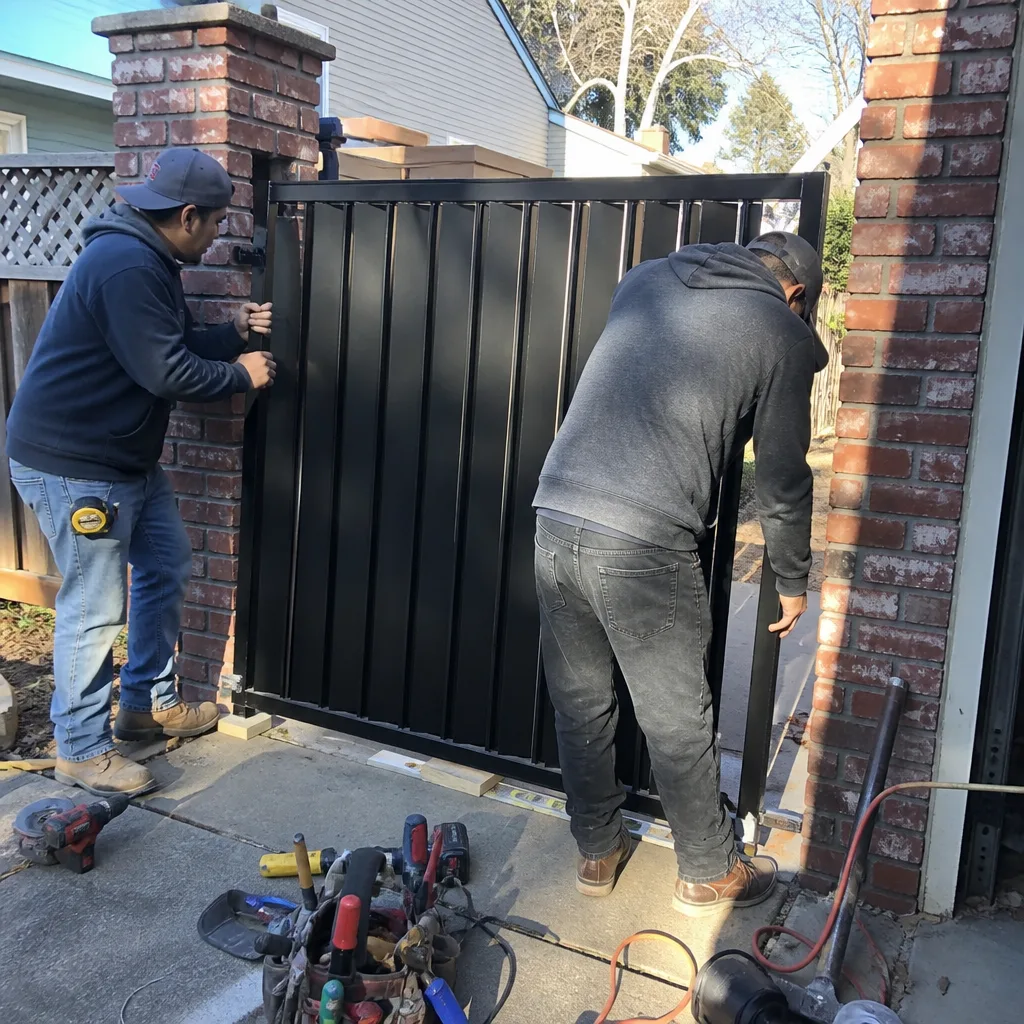
Homeowners associations in Fremont - particularly in planned communities like Hillsdale Estates, Parkmont, and parts of Warm Springs - operate gate systems that differ from single-family residential gates in three critical ways: shared cost responsibility, higher duty of documentation, and complex interdependence between entry points.
Shared Cost and Board Approval
HOA gate repairs typically require board approval, which means the estimate must be detailed enough for non-technical directors to evaluate. A verbal scope or single-line estimate will be rejected or tabled, delaying repair and extending security exposure. The written scope, itemized estimate, and deliverables list described earlier are not best practices for HOA work. They are minimum requirements for board action.
We have served Fremont HOAs where our documentation package - scope, estimate, and sample deliverables from previous work - was the deciding factor in board approval. The competing bid was lower but consisted of a single page with a total and a signature line. The board could not verify what was included. They chose the documented proposal.
The Wiring Diagram Requirement
Multi-entry gate systems in Fremont HOAs often include telephone entry systems, loop detectors, card readers, and multiple operators networked to a common control point. When these systems were installed, the original contractor may have provided an as-built drawing. More commonly, they did not, or the drawing was lost in board transitions.
When hiring a contractor for HOA gate repair, require that any wiring modification produce an updated wiring diagram as a deliverable. Not a photocopy of the manufacturer’s generic manual. An actual diagram showing:
- Which wires run from which device to which terminal
- Which loops control which entry direction
- Which relays interlock the pedestrian gate with the vehicle gate
- Which power supply serves which component
Verify that the diagram was created, not copied, by asking the technician to explain one specific routing choice: “Why does the south entry loop connect to terminal 3 rather than terminal 5?” A technician who created the diagram will know. A technician who copied a manual will not.
In our work with Fremont HOAs, we generate updated diagrams on a tablet in the field, save them to the job record, and leave laminated copies in the control box and with the property manager. This practice, developed from commercial access-control documentation standards, prevents the “mystery wiring” problem that plagues older multi-entry systems.
Interdependence and Downtime Planning
Repairing one gate in a two-gate HOA system can affect the other if they share power, communication lines, or control logic. The scope of repair should address this explicitly: “Work will be performed on the north entry gate. The south entry gate will remain operational. If shared power must be interrupted, work will be scheduled during [specific window] with advance notice to residents.”
A contractor who does not mention interdependence in the scope has not analyzed the system completely.
Fremont Climate, Codes, and Neighborhood Realities
Gate repair in Fremont is shaped by local conditions that a generic guide cannot address. These factors should inform your hiring decision and your evaluation of any contractor’s proposed scope.
Corrosion from Bay Moisture and Morning Fog
Fremont’s position at the eastern end of San Francisco Bay creates specific corrosion patterns. Gates in the Niles and Mission San Jose areas, particularly those with western or northern exposure, accumulate moisture from marine layer fog that burns off slowly on summer mornings. This moisture accelerates galvanic corrosion at aluminum-steel junctions, common in gate hinges and operator mounting brackets.
A technician working in Fremont should inspect for corrosion as standard practice, not only when it is visibly advanced. We regularly find hinge pins in the Glenmoor area with internal corrosion that is not visible until the pin is removed. A scope that does not mention corrosion inspection is incomplete for this climate.
Soil Movement and Gate Alignment
Parts of Fremont, including the Warm Springs and Irvington areas, sit on expansive clay soils that shift with seasonal moisture. This movement affects gate alignment, particularly on long swing gates where a quarter-inch of post tilt translates to several inches of leaf drift. A technician who adjusts an operator’s limit switches without checking post plumb is treating a symptom of soil movement as an electrical problem.
The correct scope includes post measurement and notes whether alignment is within operator tolerance. If posts have shifted, the scope should say so, and the estimate should separate gate structural work from operator work.
Wind Loading on Elevated Properties
Properties in the hills above Fremont, toward Mission Peak, experience wind loading that flatland contractors may underestimate. A gate operator specified for standard wind load will strain and fail prematurely in these conditions. The scope should note wind exposure and specify an operator with adequate duty cycle and torque margin, or recommend a wind lock or supplemental closer.
Electrical Code and Safety Requirements
Fremont follows the California Electrical Code, which requires that low-voltage gate control wiring be separated from line-voltage power in raceways or enclosures. We have found violations in older installations, particularly where homeowners or handymen added accessories like wireless receivers or keypad lighting without proper separation. A competent contractor identifies these violations during inspection and includes code-compliant correction in the scope if present.
Grounding is another frequent issue. Gate operators must be grounded to the gate structure and the electrical supply ground. In Fremont’s corrosive environment, ground connections degrade. The scope should include ground continuity verification.
Neighborhood-Specific Patterns
Our records from Fremont service calls show patterns that inform diagnosis:
- Ardenwood and Brookvale: Older LiftMaster operators (pre-2015) with mechanical limit switches, frequently needing cam replacement or conversion to electronic limits
- Hillsdale Estates and Parkmont: FAAC and BFT systems on HOA entries, often with intercom integration requiring specialized diagnostic equipment
- Warm Springs and Weibel: Newer installations with Linear and Ghost Controls operators, frequently needing smart-home integration troubleshooting
- Centerville and Niles: Custom fabricated gates with non-standard hinge geometry, requiring weld repair or custom bracket fabrication
A contractor who has worked extensively in Fremont will recognize these patterns and adjust diagnosis accordingly. A contractor new to the area may miss them.
Common Mistakes to Avoid
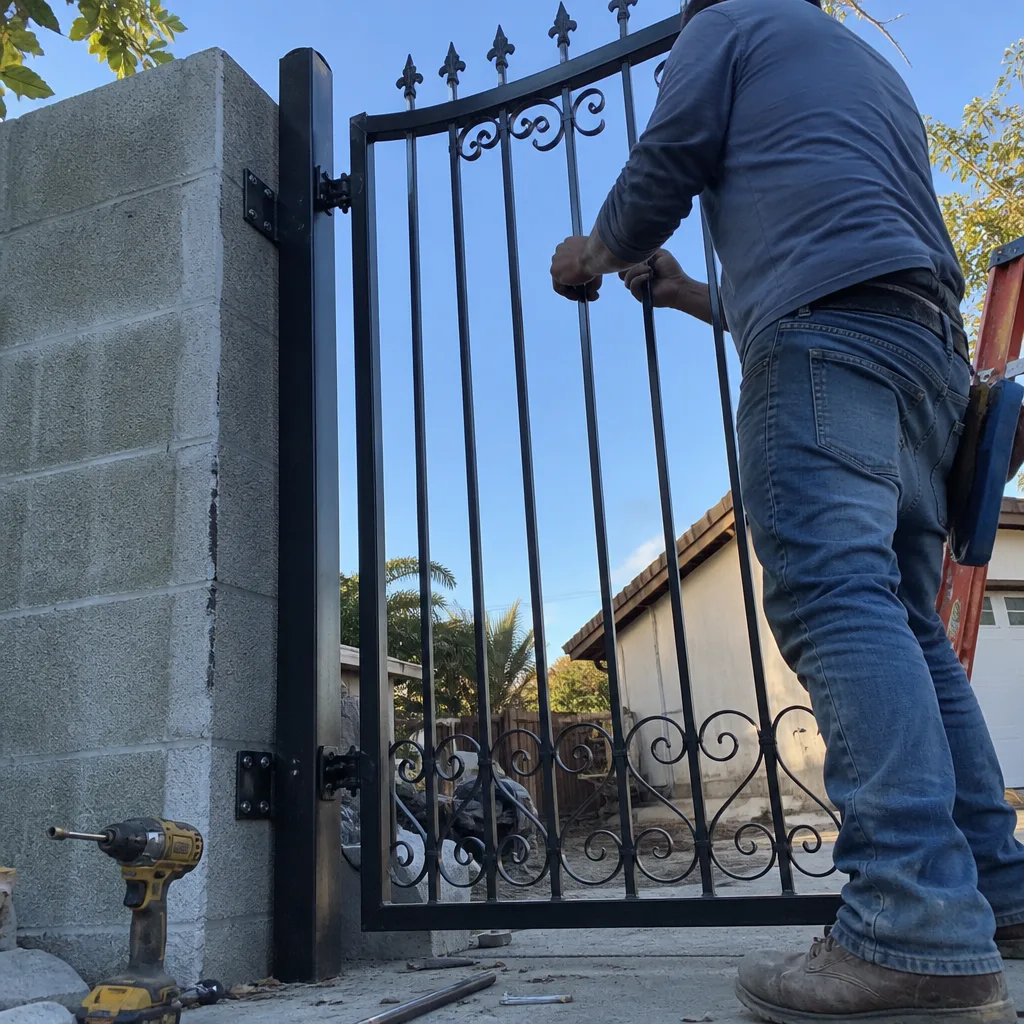
- Choosing by review count rather than documentation practice. A contractor with 200 five-star reviews who leaves no written record is a higher long-term cost than a contractor with 40 reviews who documents every job. Reviews measure satisfaction at the moment of service. Documentation protects you for years.
- Accepting “the price will be about…” as a binding estimate. In Fremont’s competitive market, some contractors use low verbal openings to secure the appointment, then present higher written prices after arrival. The only price that matters is the one written before work starts. Anything else is a conversation, not a commitment.
- Neglecting to ask about post-repair deliverables. Most homeowners remember to ask about warranty length. Few ask what they will hold in their hands when the technician leaves. The deliverables are the warranty’s evidentiary foundation. Without them, a warranty claim becomes your word against the contractor’s.
- Hiring based on speed promises for non-emergency work. “Same-day” or “we’ll be there in an hour” is appropriate for a gate stuck open with security exposure. It is not appropriate for a scheduled motor replacement or new gate installation in Fremont, which requires measurement, ordering, and scheduling. A contractor who promises instant dispatch for planned work may be underutilized for a reason.
- Failing to verify that the technician is background-checked and identified. You are granting access to your property and security system. The contractor should provide the technician’s name and photo before arrival, and the technician should arrive in uniform with visible identification. This is standard practice for reputable companies and should not require request.
- Ignoring the difference between repair and replacement specialists. Some contractors derive most revenue from new gate and operator sales. Their diagnostic bias tilts toward replacement. A contractor who also performs gate motor and opener service in Fremont on existing equipment has demonstrated commitment to repair as a business line.
- Not getting a second opinion on a large estimate. For estimates exceeding $1,500, a second opinion is prudent due diligence. We offer free second opinions on any written estimate from another company. Bring the paperwork and we will review the scope, the parts specified, and the pricing at no cost.
When to Call a Professional
Some gate symptoms require immediate professional attention due to safety risk or security exposure. Call a qualified contractor if:
- The gate is stuck open, leaving your property exposed
- The gate moves unpredictably or reverses without obstruction
- You hear grinding, binding, or motor straining that persists after clearing the track
- The safety edges or photo-eyes are damaged, non-functional, or bypassed
- The control box shows burn marks, melted components, or acrid odor
- The gate has struck a vehicle or person, even without visible damage
These conditions involve genuine hazards. High-tension gate springs, line-voltage electrical components, and the crushing force of a moving gate can cause serious injury. Do not attempt DIY repair on these systems. A trained professional has the equipment to test, isolate, and repair safely.
Vance Gate Repair Fremont offers free estimates in Fremont. A live person answers calls 24 hours a day, seven days a week. Call (510) 826-3980 to discuss your gate issue, request documentation of our standard deliverables, or schedule a diagnostic visit with a written scope and flat price before any work begins.
Frequently Asked Questions
Most residential gate repairs in Fremont range from $280 to $650, depending on the problem, the automation brand, and whether parts are in local stock. Diagnostic service typically runs $95-$150. Operator motor replacement generally costs $1,200-$1,800 including parts and labor. We provide a written, itemized estimate before any work starts, and the price we quote is the price you pay. Call (510) 826-3980 for an exact quote on your specific gate - estimates are free.
Same-day service is available for emergency situations where the gate is stuck open or poses a safety hazard. For non-emergency repairs, we schedule diagnostic visits within 24-48 hours. New gate installation and planned motor replacement require measurement and ordering, so we commit to a free measure and written price rather than same-day installation. Call (510) 826-3980 to discuss urgency and availability.
A proper estimate includes: a written scope naming the diagnosed problem and proposed repair, line-item pricing for labor and parts with specific part numbers, the total flat price before work starts, and a list of post-repair deliverables including photo documentation and recorded settings. If any of these elements is missing, request it or choose another contractor.
We service nine major automation brands: LiftMaster, FAAC, BFT, Linear, Viking, Ghost Controls, DoorKing, Elite, and Mighty Mule. We do not steer customers toward replacement when repair is viable. Our parts access and training cover all nine brands, so we can work on whatever motor is already on your property.
You should receive photographs of the control box and operator, recorded settings for limit switches and safety systems, a written list of installed parts with manufacturer part numbers, and an updated wiring diagram if any wiring was modified. Under our Haven Standard, Clause 4, every visit includes this documented photo record at no additional charge.
Ask the technician to explain one specific routing choice on the diagram: why a particular wire runs to a particular terminal. A created diagram reflects actual field conditions and the technician will know the reasoning. A copied manual shows generic ideal wiring and the technician will not be able to explain deviations. For HOA systems, we generate diagrams in the field on a tablet and leave laminated copies in the control box.
The Bottom Line
The gate repair contractor you hire in Fremont should be evaluated on what they leave behind, not what they promise upfront. Written scope, itemized estimate, and documented deliverables are the three filters that separate professionals from operators. Reviews measure a moment. Documentation protects an investment. In a climate where corrosion, soil movement, and marine moisture create specific failure modes, a contractor who names what they found, names what it costs, and names what they documented is the contractor who prevents you from paying twice for the same problem.
Since 2014, we’ve applied commercial documentation standards to every residential gate we touch in Fremont. The Haven Standard governs every job: written price before work starts, photographic evidence on every visit, and the 365-Day Done Right Promise. If you’re evaluating estimates or need a free second opinion on paperwork from another company, call (510) 826-3980. A live person answers at any hour.
Written by Adrian Vance, Owner at Vance Gate Repair Fremont, serving Fremont since 2014.