
Last updated September 22, 2026
Free on-site gate assessment - hinges, posts, and your LiftMaster or Nice gate operator checked before anything is quoted
The assessment is free and the quote is the invoice.

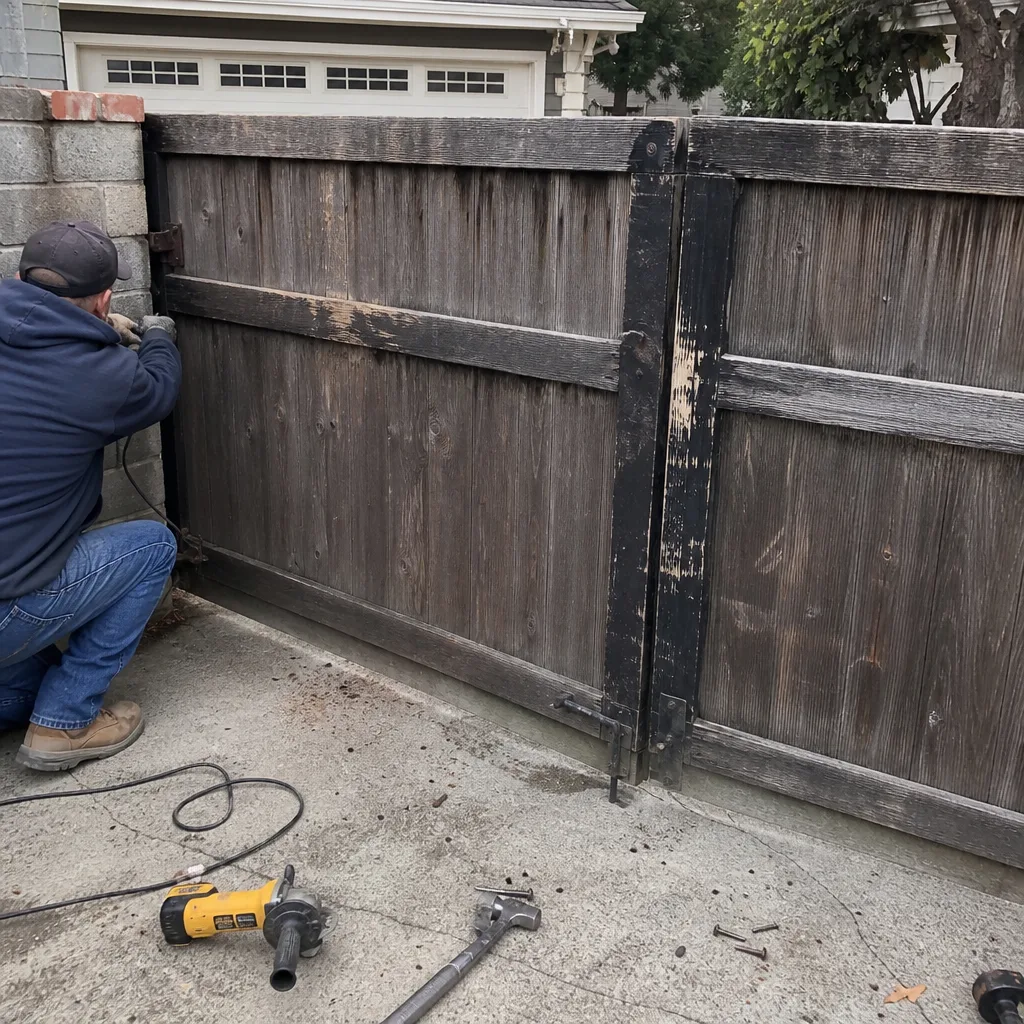 Before
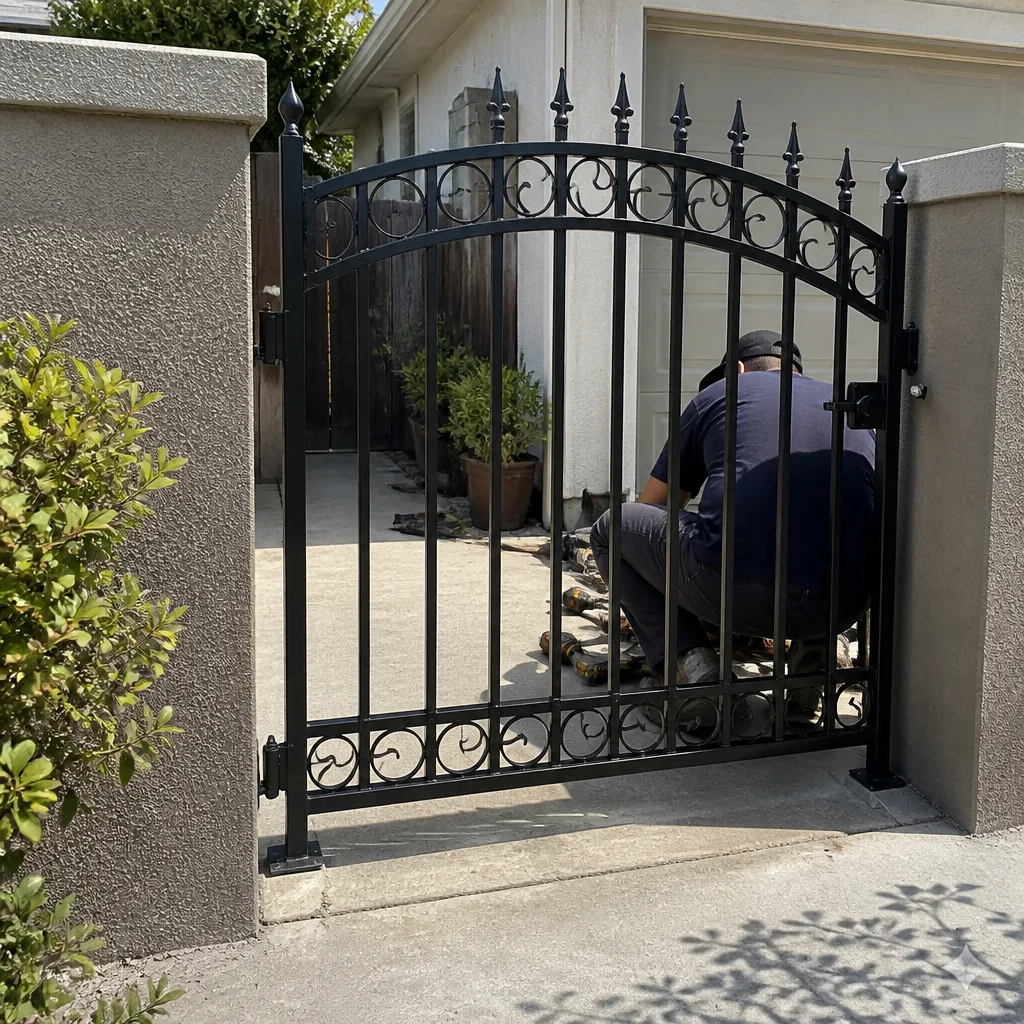 After
After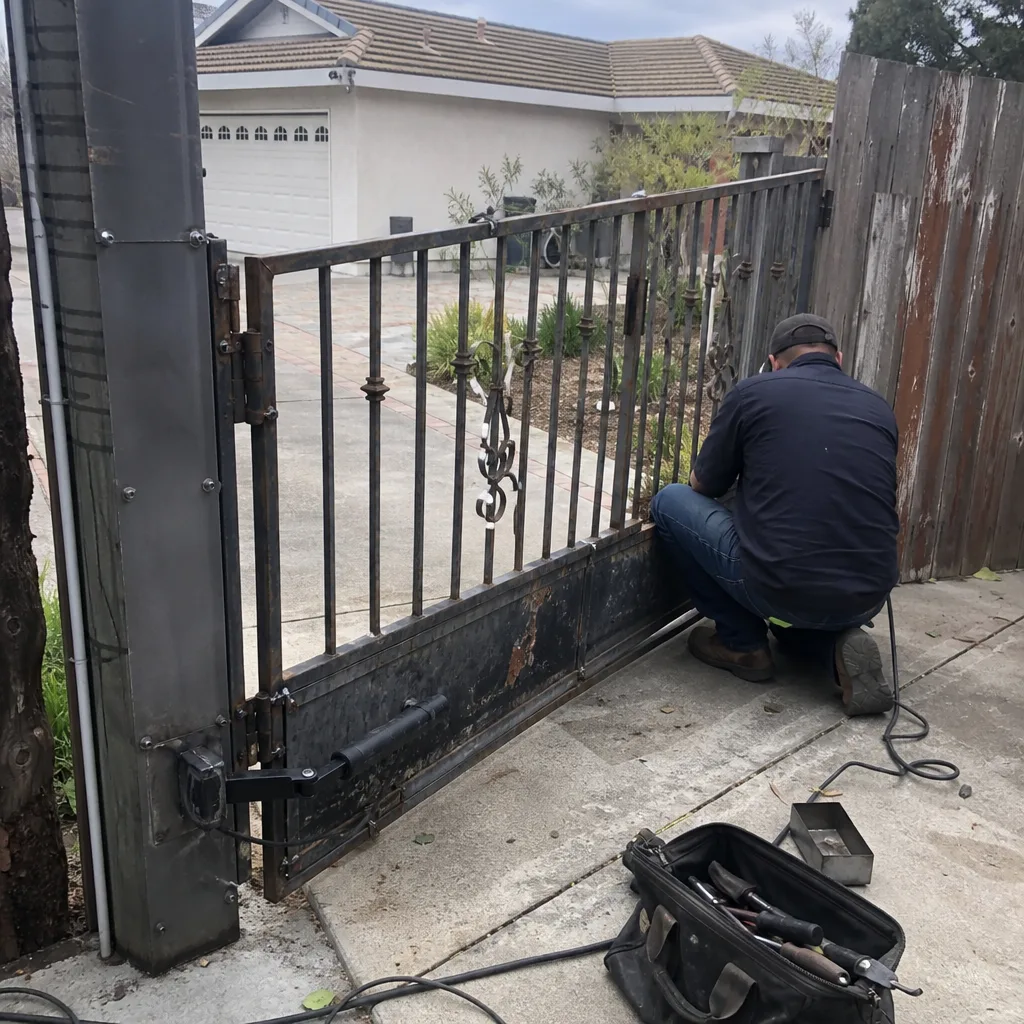 Before
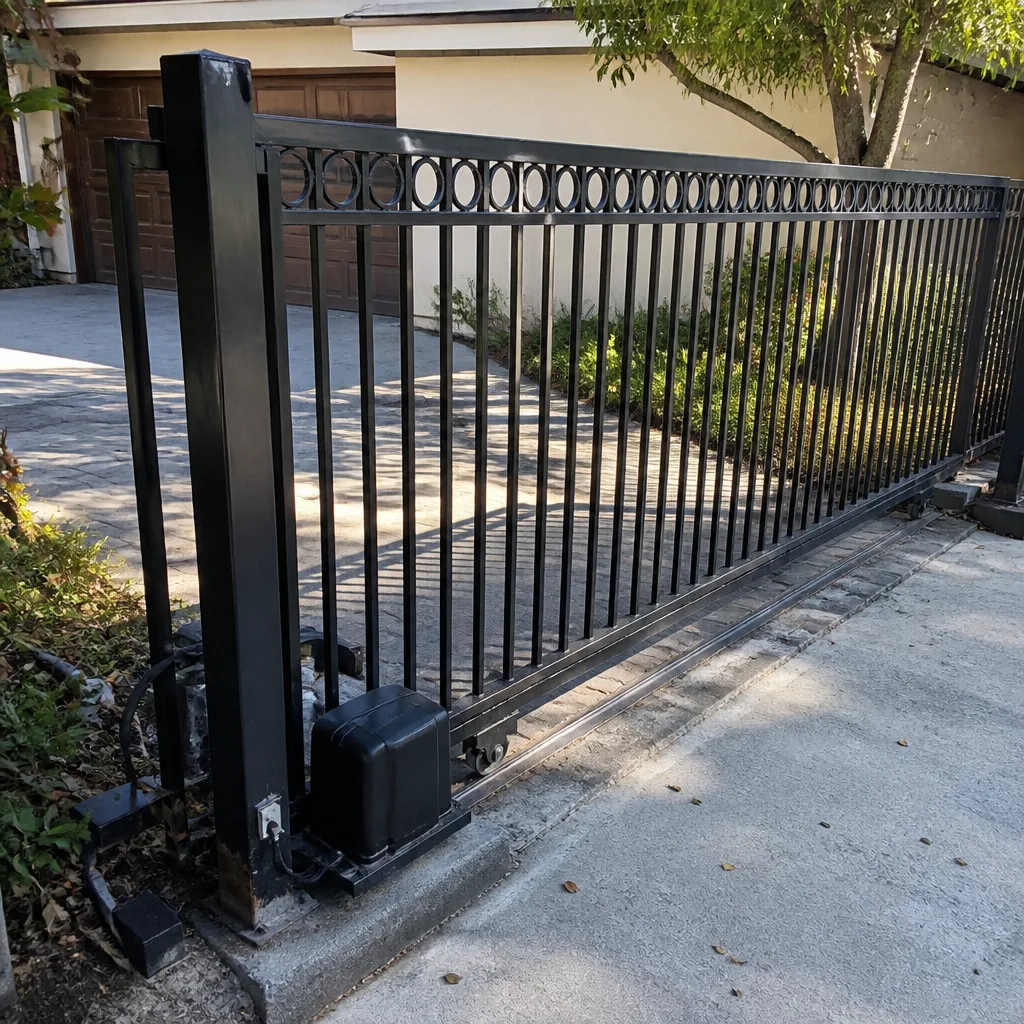 After
After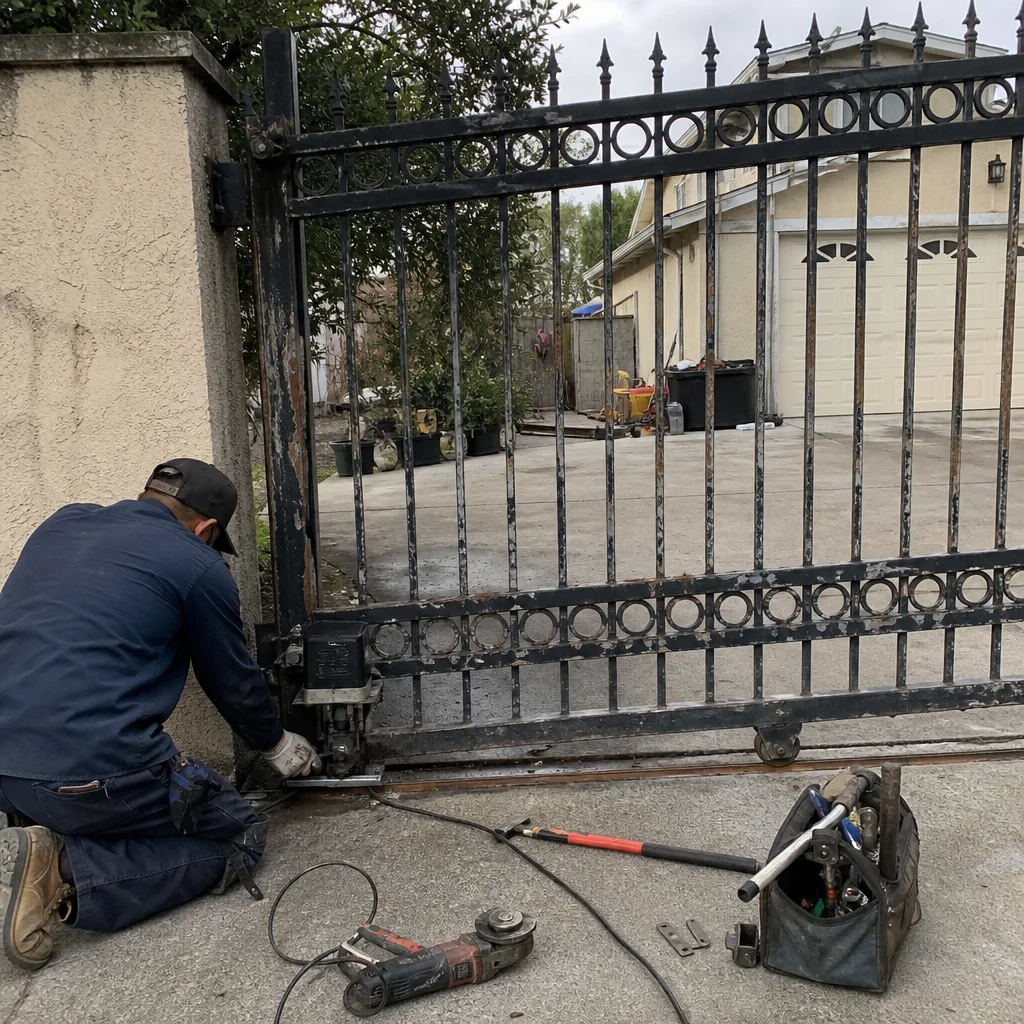 Before
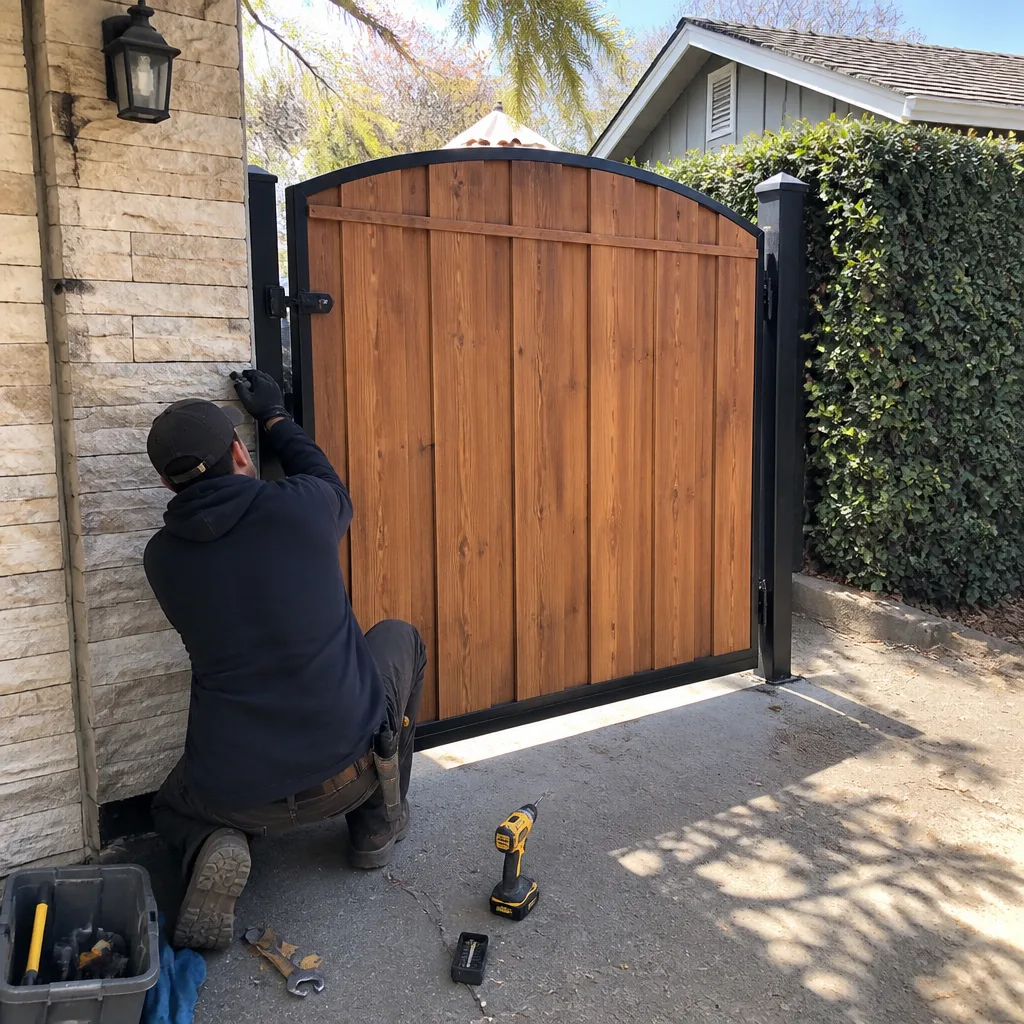 After
AfterThe Complete Guide to Gate Repair in Fremont
A gate that reopens on its own three weeks after a “fixed” board replacement wasn’t misdiagnosed once - it was never diagnosed at all. The repair receipt told the homeowner what was replaced, not what caused the failure. We’ve seen this exact scenario across Fremont, from the clay-heavy lots in Mission San Jose to the older ranch-style properties in Centerville, where a symptom patch costs twice what a root-cause repair would have run. In this guide, we’ll map every major gate system to its actual failure chain, show you how to read a technician’s invoice for diagnostic depth, and point you to more guides & resources on why Fremont’s soil conditions make certain failures predictable - and therefore preventable.
Quick Answer
Our Gate Repair services in Fremont typically address one of four documented root causes: mechanical wear from our clay-heavy soil expansion cycles, electrical faults in automation components, software or limit-switch misconfiguration, or structural settlement shifting hinge alignment. Most residential repairs in Fremont run $180-$650 depending on whether the issue is isolated to the operator, the gate structure, or both. A repair that sticks starts with a written diagnosis naming the failure chain, not just the broken part.
Table of Contents
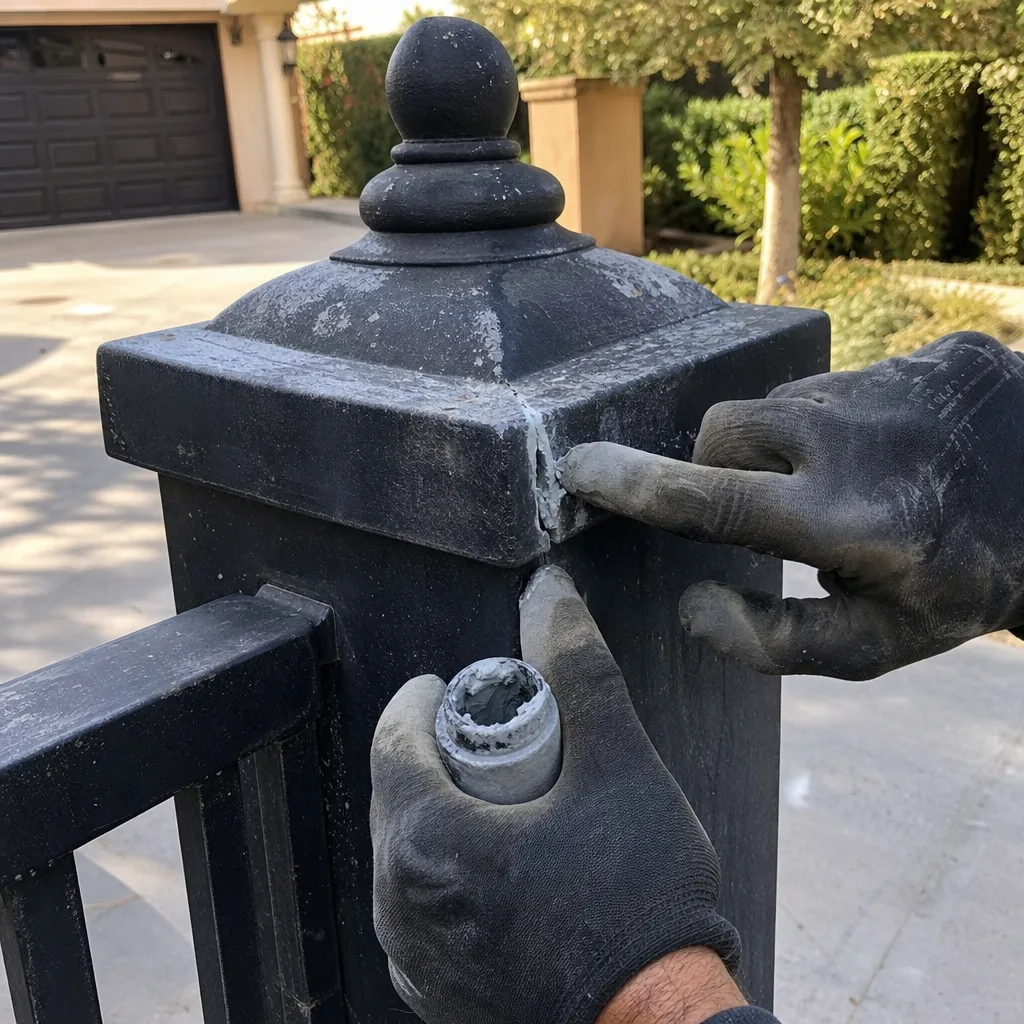
- The Four Documented Failure Chains in Fremont Gates
- How Fremont’s Soil Expansion Cycle Accelerates Gate Wear
- Operator Repair vs. Gate Structure Repair - Knowing the Difference
- How to Read a Gate Technician’s Invoice for Root-Cause Depth
- What a Complete Repair Record Should Contain
- Automation Brands and System-Specific Repair Patterns
- Gate Repair Costs in Fremont - What’s Typical
- Common Mistakes to Avoid
- When to Call a Professional
- Frequently Asked Questions
- The Bottom Line
 Before
 After
AfterThe Four Documented Failure Chains in Fremont Gates
Every gate failure we’ve documented since 2014 traces to one of four root causes. The technician who names the chain before ordering parts is the technician whose repair lasts. Here’s how to distinguish them.
1. Mechanical Wear
Mechanical wear is the gradual degradation of moving parts: hinges, rollers, chains, belts, and actuator arms. In Fremont, this chain accelerates faster than in many Bay Area cities because of our clay-dominant soil profile. When winter rains saturate the ground and summer heat bakes it hard, gate posts and footing shift microscopically. The gate frame twists against its hardware. Hinge pins wear oval. Roller wheels flatten on one side. We’ve replaced hinge sets in the Gate Repair in Fremont service area where the pin bore was visibly elongated after just four years - normal lifespan in stable soil is eight to twelve.
Signs of mechanical wear as root cause:
- Gate drags or binds at a specific point in its travel, consistently
- Hinge pins show polished flats or scoring where they contact the barrel
- Roller noise changes pitch seasonally - louder in late summer after soil contraction
- Manual operation requires noticeably more force than when the gate was new
The repair that sticks addresses the wear source and the alignment cause. Replacing a flattened roller without checking post plumb means the new roller wears the same way.
2. Electrical Fault
Electrical faults cover everything from failed capacitors in the operator cabinet to corroded terminal blocks, pinched low-voltage wiring, and photo-eye misalignment. Fremont’s proximity to the Bay brings salt air inland on certain wind patterns, especially in the lower-elevation neighborhoods toward the water. Terminal corrosion on outdoor-rated enclosures happens faster here than in inland Valley cities.
Electrical faults masquerade as mechanical problems. A gate that stops mid-travel and reverses might have a failing capacitor dropping voltage under load, not a binding track. The difference: a mechanical bind usually occurs at the same position every time. An electrical fault is more random, often temperature-dependent, and may clear after a power cycle.
Our diagnostic sequence for suspected electrical fault:
- Measure supply voltage at the operator terminals under no-load and loaded conditions
- Inspect all terminal blocks for green or white corrosion, especially on sea-facing installations
- Test photo-eye alignment with an opaque object, not just a hand - hands transmit infrared
- Check control board for diagnostic LED patterns; document the blink code before resetting
- Megger-test low-voltage loop wiring if intermittent faults persist after component replacement
3. Software and Limit Misconfiguration
Modern operators - LiftMaster, FAAC, BFT, and others - rely on limit switches or encoder counts to know where the gate is in its travel. When these drift, the gate behaves as if it’s broken. It might not fully open, might not latch, or might reverse unexpectedly because the controller thinks it hit an obstacle.
Limit misconfiguration often follows a power outage, a manual release operation, or a previous technician’s adjustment. We’ve arrived at Fremont calls where the “failed” operator simply needed its travel limits recalibrated - a twenty-minute procedure that some companies bill as a control-board replacement.
The diagnostic question: does the gate move smoothly through its full arc when operated manually? If yes, and the operator stops prematurely or exerts force at the wrong position, the root cause is almost certainly in the control logic, not the mechanics.
4. Structural Settlement
Structural settlement is the slow shift of gate posts, footings, or mounting pads due to soil movement, drainage changes, or inadequate original construction. This is the failure chain most often mistaken for mechanical wear. You can replace hinges annually and still have a dragging gate if the post has tilted two degrees.
In Fremont’s Ardenwood and Weibel areas, we’ve documented repeated settlement patterns tied to the old agricultural drainage systems that still channel water unpredictably during heavy rains. A post installed without understanding the subsurface flow will tilt within three to five years.
Structural settlement requires correction before any hardware replacement. Shimming a hinge on a leaning post is a temporary patch. The root-cause repair involves re-plumbing the post, sometimes re-pouring the footing, and only then reinstalling hardware with documented torque specs.
How Fremont’s Soil Expansion Cycle Accelerates Gate Wear
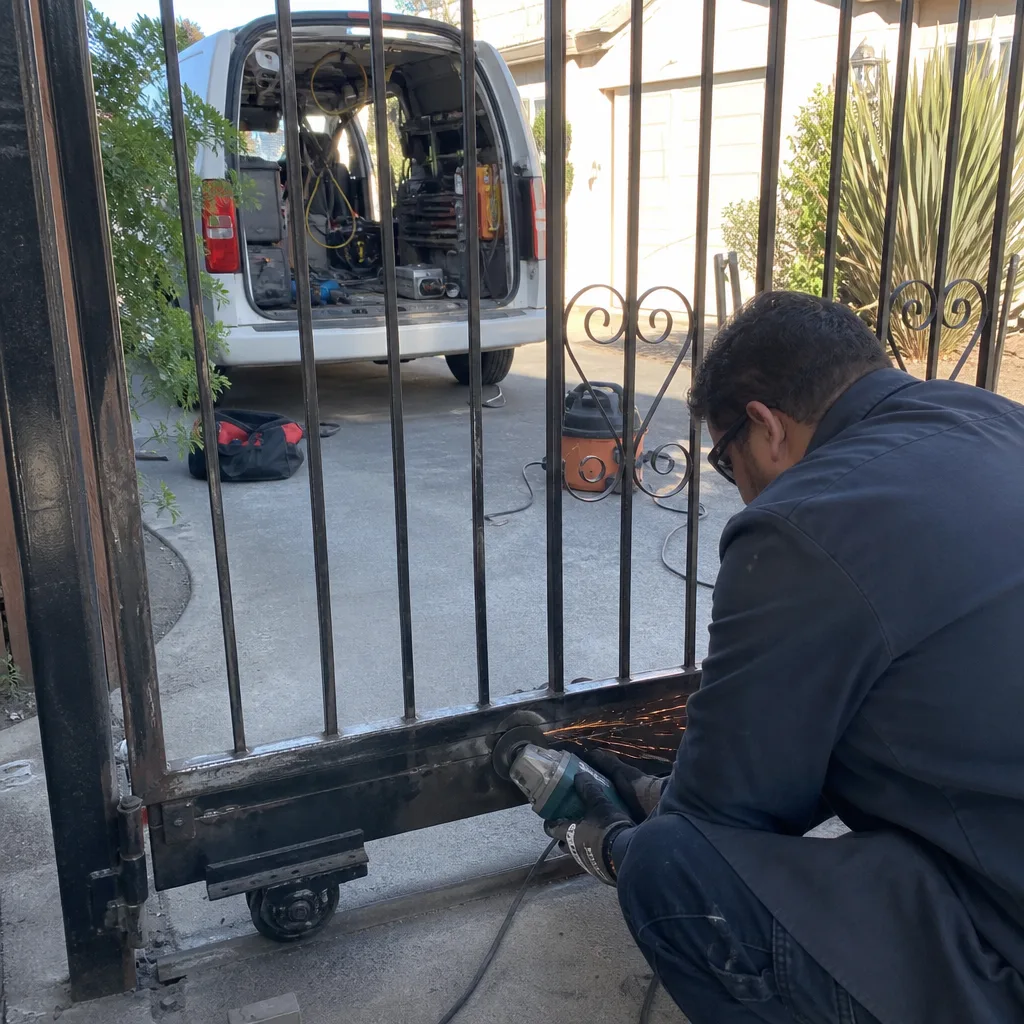
Fremont sits on a mix of Bay mud, alluvial deposits, and the clay-heavy soils of the East Bay hills. The clay content is what matters for gate longevity. Montmorillonite clays expand when wet and contract when dry, exerting pressure on anything embedded in them. A gate post is essentially a lever planted in slow-motion geology.
Here’s what we’ve measured in the field. A standard 4×4 steel post set in Fremont clay with standard drainage will shift approximately 3-8 millimeters seasonally. That doesn’t sound like much until you calculate the leverage: a 16-foot swing gate has a 160:1 mechanical advantage at the post. Three millimeters at the base becomes nearly half an inch at the latch end. Enough to miss the strike plate. Enough to drag the gate edge on the driveway. Enough to overload the operator’s torque limit and trigger premature failure.
The neighborhoods where we see this most:
- Mission San Jose: hillside clay with poor drainage, posts tilt toward the slope
- Centerville: older properties with original footings, often shallow by current standards
- Ardenwood: former farmland with layered soils and hidden drainage channels
- Weibel: newer construction on compacted fill, settlement continues for years
Preventive measures that actually work: deeper footings with gravel drainage beds, post bases isolated from surrounding soil with sleeve systems, and seasonal inspection of hinge alignment - not just hinge tightness. We document post plumb on every Gate Repair in Fremont visit and can show homeowners year-over-year drift if they’ve been with us multiple seasons.
Operator Repair vs. Gate Structure Repair - Knowing the Difference
This distinction is where homeowners most often pay twice. The operator is the motor, control board, and drive system that moves the gate. The structure is the gate frame, hinges, posts, track, and latch hardware. Problems in one domain can damage the other, but the repair scope is entirely different.
Operator-only symptoms: gate moves smoothly by hand but struggles, stops, or reverses under power. Motor hums without motion. Remote works intermittently but wall button is reliable. These point to electrical fault, limit misconfiguration, or mechanical failure inside the operator cabinet - arm gearbox, belt, or chain.
Structure-only symptoms: gate drags, binds, or requires excessive force to move manually. Hinges grind. Wheels jump track. Latch doesn’t align with strike. These require mechanical repair, alignment correction, or structural correction before any operator can function properly.
Mixed symptoms: operator strains, overheats, or fails prematurely because it’s working against structural resistance. This is the most expensive scenario if misdiagnosed. A new operator installed on a dragging gate will fail within months. We’ve replaced operators for Fremont homeowners who’d already been through two “warranty” motors from another company - the motors weren’t defective, the gate was fighting them.
The Haven Standard requires us to separate these scopes in writing. Our estimate names whether we’re repairing operator, structure, or both. If both, we specify which work happens first and why. Under Clause 1, that written scope and price is delivered before any tool is picked up.
How to Read a Gate Technician’s Invoice for Root-Cause Depth
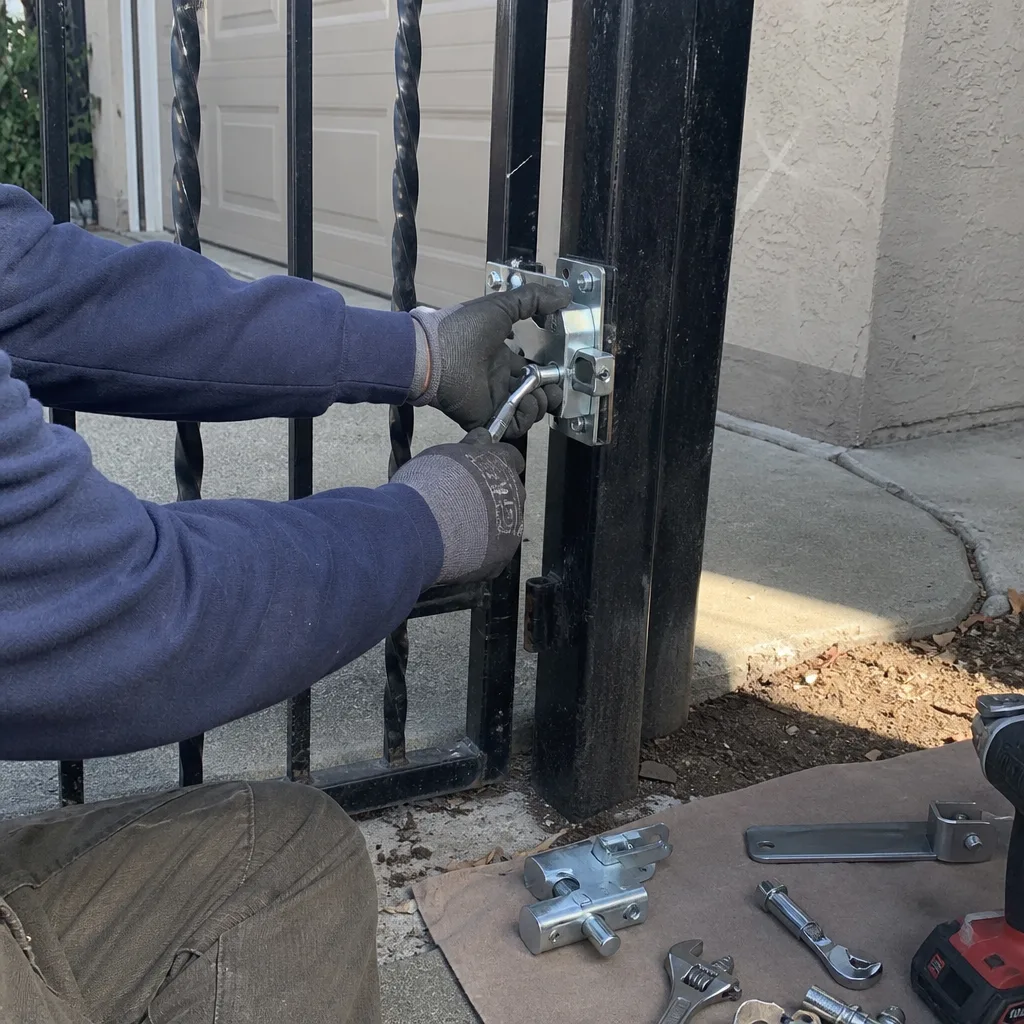
An invoice that names what was replaced tells you about parts. An invoice that names what was found, why it failed, and how it was corrected tells you about diagnosis. The difference predicts whether you’ll be calling again next season.
Here’s what to look for:
| Invoice Element | Symptom-Level Repair (Red Flag) | Root-Cause Repair (Green Flag) |
|---|---|---|
| Problem description | “Gate not working” or “opener failed” | “Limit switch drifted 12° past closed position due to manual release operation; recalibrated and photographed new settings” |
| Parts listed | Control board, motor, or “actuator” with no supporting diagnosis | Specific part numbers with condition noted: “capacitor 53-64μF measured 41μF under load” |
| Labor description | “Replaced part” or “fixed gate” | “Replaced worn hinge pin, re-plumbed post 0.5° using hydraulic jack, re-torqued all hardware to spec” |
| Documentation | None, or generic “warranty 90 days” | Photo references, wiring diagram updates, limit-switch readings, torque values |
| Preventive notes | None | “Recommend seasonal hinge inspection; post showing 2mm seasonal drift typical for this soil” |
If your invoice doesn’t mention measurements, it probably didn’t include any. If it doesn’t reference soil conditions on a Fremont property, the technician likely didn’t assess structural context. Our documentation habit - wiring diagrams, limit-switch readings, photographed adjustments - came from commercial access-control work where undocumented repairs create liability. We apply the same standard to every residential gate in Fremont.
What a Complete Repair Record Should Contain
A complete record protects the homeowner and every future technician who touches the gate. Under Haven Standard Clause 4, every Vance Gate Repair visit leaves documented evidence. Here’s what that includes and why it matters.
The Six Elements
- Wiring diagram of the installed system. Not the generic manufacturer diagram - the actual field wiring as found and as corrected. Colors, terminal numbers, splices. If a previous installer used blue for common and black for hot, the next technician needs to know before testing.
- Limit-switch or encoder readings. For swing gates, the open and closed angle positions. For slide gates, the rack position at full open and full closed. Documented numerically, not “adjusted.”
- Torque specifications for all structural fasteners. Hinge bolts, post anchor bolts, operator mounting hardware. What’s spec, what was found, what was applied.
- Photographic record: before, during, after. Condition of parts removed, installation of replacements, final alignment. Left with the homeowner and filed in the job record.
- Soil and drainage assessment. On Fremont properties, post plumb measurement and any visible drainage conditions that could affect future settlement.
- Written scope and price, signed by both parties. Haven Standard Clause 1. What was agreed, what was done, what was paid.
We’ve returned to gates in Fremont that we first serviced in 2016 and found our original wiring diagram still taped inside the operator cabinet. The homeowner had moved; the new owner had a different company out; that technician could see exactly what was installed without disassembling anything. That’s the point of documentation - it survives personnel changes and prevents redundant discovery charges.
Automation Brands and System-Specific Repair Patterns
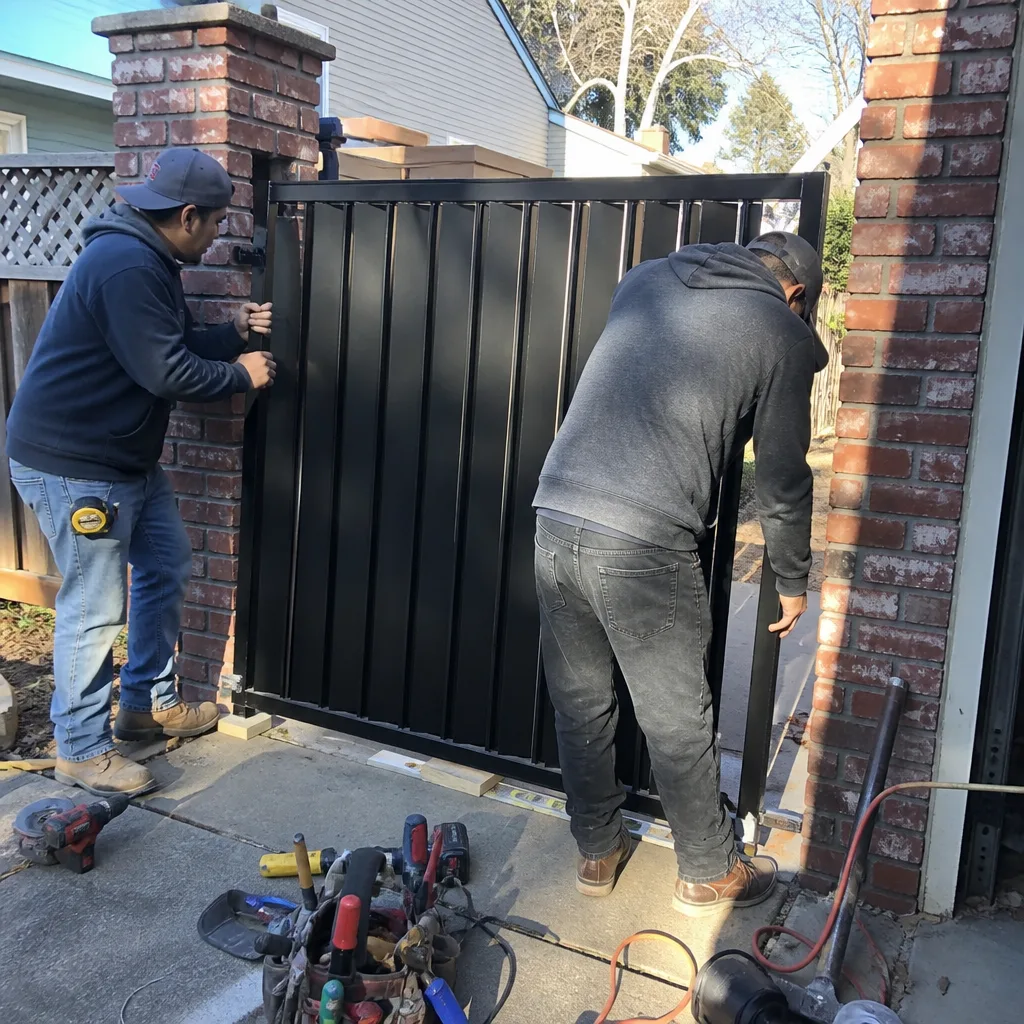
We service nine major automation brands in Fremont - Gate Motor & Opener in Fremont covers them all - and each has predictable failure modes that experienced technicians recognize. Here’s what we see most often, brand by brand.
LiftMaster: The most common residential operator in Fremont. Control-board capacitor failure after 5-7 years is typical; symptoms are random stopping or failure to start, especially in morning cool when the capacitor is stiff. Limit-switch drift following power outage. MyQ connectivity issues are usually Wi-Fi signal strength, not operator failure - we test with a dedicated access point before replacing boards.
FAAC: Italian hydraulics, common in higher-end Fremont installations. Hydraulic fluid leaks from actuator seals after 8-10 years; the repair is seal replacement and fluid recharge, not actuator replacement. Pressure relief valve calibration drifts, causing slow operation or overheating. Requires pressure gauge to set correctly - guessing produces callbacks.
BFT: Another European hydraulic and electromechanical line. Encoder-based limit systems are precise but sensitive to voltage fluctuation. After Fremont’s brief outages or brownouts, we’ve recalibrated dozens of BFT systems that lost their position reference. The repair is limit reprogramming, not motor replacement.
Mighty Mule: Popular DIY brand, often installed by homeowners who later call us when the system underperforms. Common issue: undersized actuator for gate weight, especially on solid-panel wood gates that weigh more than the spec assumes. The repair may involve actuator upgrade or gate weight reduction, not just “fixing” the operator.
We don’t steer customers toward replacement when repair is viable. If your existing operator is one of these nine brands, we can source parts and perform manufacturer-specified procedures. If replacement is genuinely required - catastrophic gearbox failure, obsolete parts, or repeated repair costs exceeding replacement value - we document why in writing before quoting a new unit.
Gate Repair Costs in Fremont - What’s Typical
We publish ranges because Clause 1 of the Haven Standard requires a written price before work starts - and we want homeowners to know the landscape before they call. These are typical Fremont ranges based on 22,000+ documented jobs since 2014. Your specific price depends on what we find during inspection.
| Repair Category | Typical Range | What Affects Price |
|---|---|---|
| Limit switch recalibration / software reset | $180-$260 | Brand accessibility, need for factory programming tool |
| Photo-eye realignment or replacement | $140-$220 | Wired vs. wireless, conduit condition, number of eyes |
| Hinge pin / bushing replacement (single) | $160-$280 | Post accessibility, need for post re-plumbing |
| Operator capacitor or control board | $240-$450 | Board availability, whether OEM or aftermarket |
| Actuator arm replacement (single swing) | $380-$650 | Brand, arm length, bracket condition |
| Full operator replacement | $850-$1,800 | Brand, horsepower, access control integration, solar option |
| Structural: post re-plumbing / footing repair | $450-$1,200 | Depth, concrete removal, drainage correction |
| Track realignment or section replacement (slide gates) | $320-$680 | Track length, ground condition, gate weight |
Every estimate we provide in Fremont is flat-price and final. If we find additional issues during repair, we stop, document, and present a supplemental scope with its own written price. No open-ended hourly billing. No “it took longer than expected” invoices. The price you approve is the price you pay.
We also offer free second opinions on any written estimate from another company. Bring the paperwork. We’ll review their scope against what we find and tell you where the gaps are - at no charge, no obligation.
Common Mistakes to Avoid
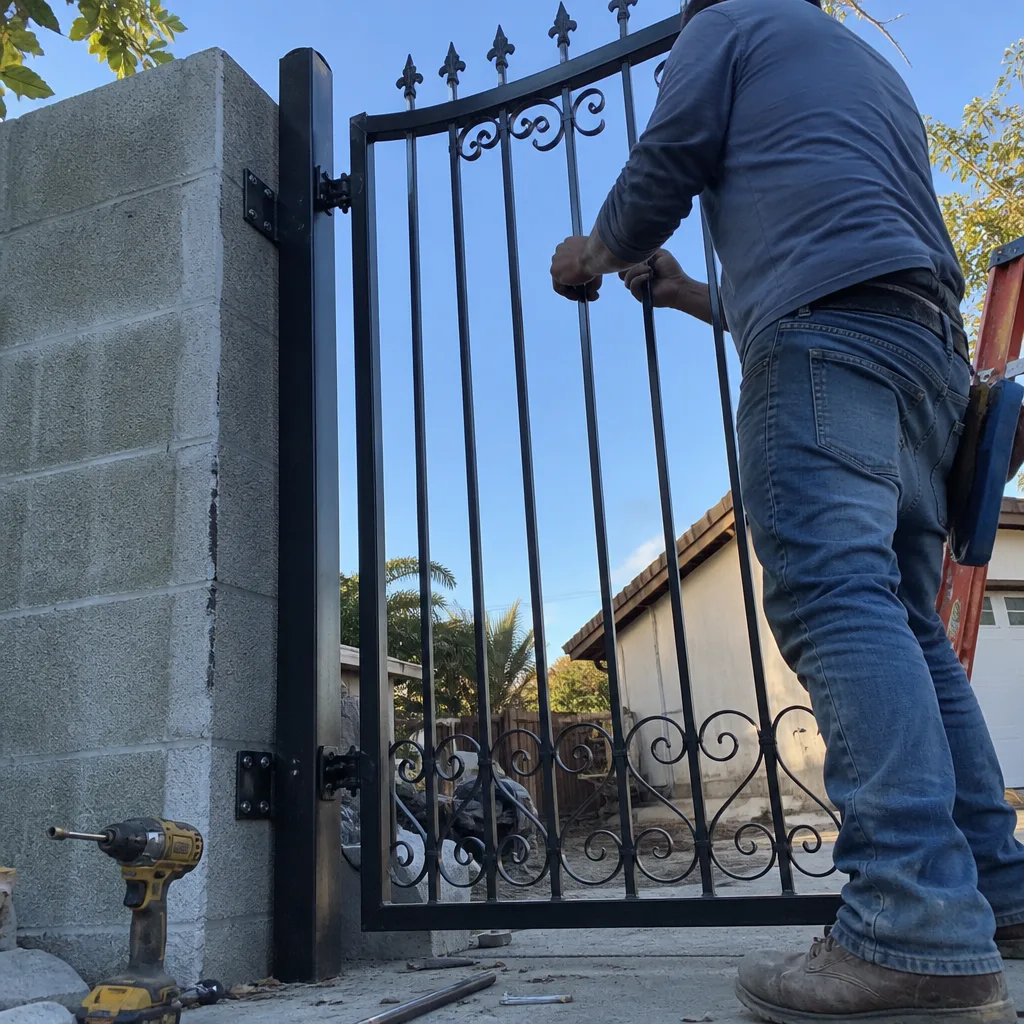
- Replacing the operator before checking gate movement manually. A $1,200 operator installed on a dragging gate fails within a year. Always verify free manual operation first.
- Ignoring seasonal patterns. If your gate only binds in August, the cause is soil contraction, not hinge wear. Replacing hinges won’t change the geometry.
- Accepting a verbal estimate for structural work. Post re-plumbing and footing work has too many variables for phone pricing. Any company that quotes this without seeing the site is guessing - and you’ll pay for the guesswork.
- Assuming all technicians document. Most don’t. Ask specifically: “Will I receive photos of what was found and what was changed?” If the answer is vague, the record won’t exist when you need it.
- Delaying repair until complete failure. A grinding hinge pin costs $180 to replace. A seized pin that tears the hinge boss off the gate frame costs $600+. The sound is the warning.
- Not verifying brand-specific expertise. A technician who only knows LiftMaster may default to replacing your functional FAAC system. Confirm experience with your specific brand before authorizing work.
When to Call a Professional
Call when the gate doesn’t move smoothly by hand, when the operator behaves unpredictably after a power event, when you hear new mechanical noise, or when any repair from another company didn’t last a full season. In Fremont’s climate, small problems become structural problems faster than in stable-soil regions.
Vance Gate Repair Fremont offers free estimates throughout Fremont - call (510) 826-3980. A live person answers 24 hours a day, seven days a week. We’ll dispatch a uniformed, background-checked technician with name and photo provided before arrival. You’ll get a written scope and flat price before any work starts, documented photographic evidence of everything we find and correct, and the 365-Day Done Right Promise covering all completed work.
Frequently Asked Questions
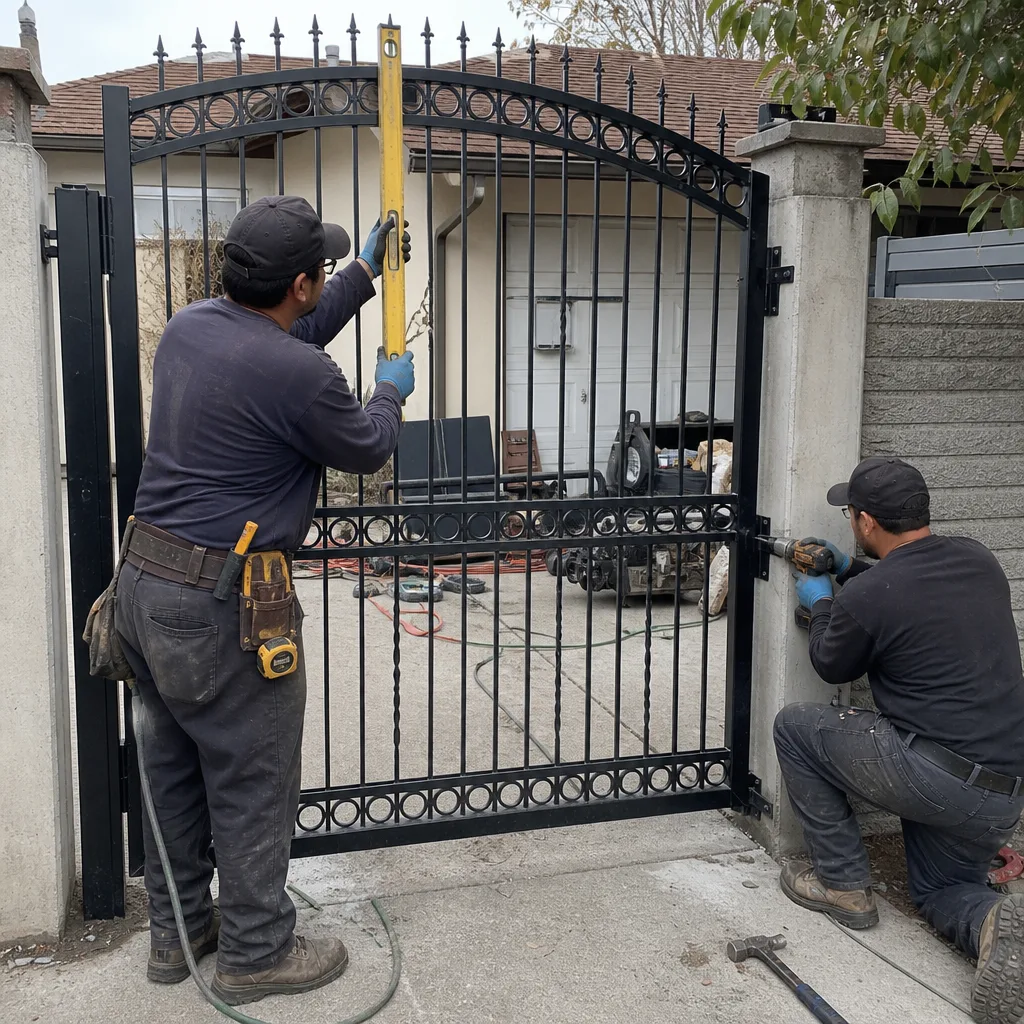
Most residential gate repairs in Fremont range from $180 for limit recalibration or photo-eye work to $650 for actuator replacement or structural hinge repair. See our Gate Repair Cost Breakdown: The Fremont Homeowner’s Reference for 2026 for detailed pricing factors. Full operator replacement typically runs $850-$1,800 depending on brand and features. We provide a flat, written price before any work begins - call (510) 826-3980 for a free estimate.
We stock common components for LiftMaster, FAAC, BFT, and other major brands, and many operator repairs in Fremont are completed same-day. Structural repairs requiring concrete work or specialty parts may need scheduling. We’ll tell you definitively during the estimate visit, not promise what we can’t deliver.
Fremont’s clay-heavy soil expands when wet and contracts when dry. Summer soil contraction tilts posts slightly, changing gate geometry. The root cause is structural settlement, not hinge wear. We measure post plumb seasonally and can show you the drift pattern - then correct it properly instead of replacing hardware that isn’t actually worn.
Operator repair addresses the motor, control board, and drive system. Gate repair addresses the frame, hinges, posts, track, and latch. A dragging gate will destroy a new operator. We always test manual operation first and separate these scopes in writing so you don’t pay for misdiagnosed work.
Yes. We repair operators, access control, and gate structure - including welding, hinge replacement, post correction, and track realignment. One scope, one written price, one documented record. You don’t need to coordinate separate contractors.
Under Haven Standard Clause 4, every visit includes a photographed record of what was found, what was adjusted, what was replaced, and the final settings. You’ll receive wiring diagrams, limit-switch readings, torque values, and before/after photos. This documentation stays with you and in our files for future reference.
The Bottom Line
A gate repair that lasts starts with naming the root cause in writing before any part is ordered. In Fremont, that means understanding clay-soil expansion cycles, distinguishing operator failure from structural resistance, and demanding documentation that outlasts the technician who provided it. The four failure chains - mechanical wear, electrical fault, software misconfiguration, and structural settlement - each require different expertise, different pricing, and different prevention. A repair receipt that only lists what was replaced leaves you vulnerable to the same failure next season. The Haven Standard exists so that never happens: written price first, documented evidence always, and a full year to hold us accountable for getting it right.
Written by Adrian Vance, Owner at Vance Gate Repair Fremont, serving Fremont since 2014.