
Last updated September 22, 2026
Free on-site gate assessment - hinges, posts, and your LiftMaster or Nice gate operator checked before anything is quoted
The assessment is free and the quote is the invoice.

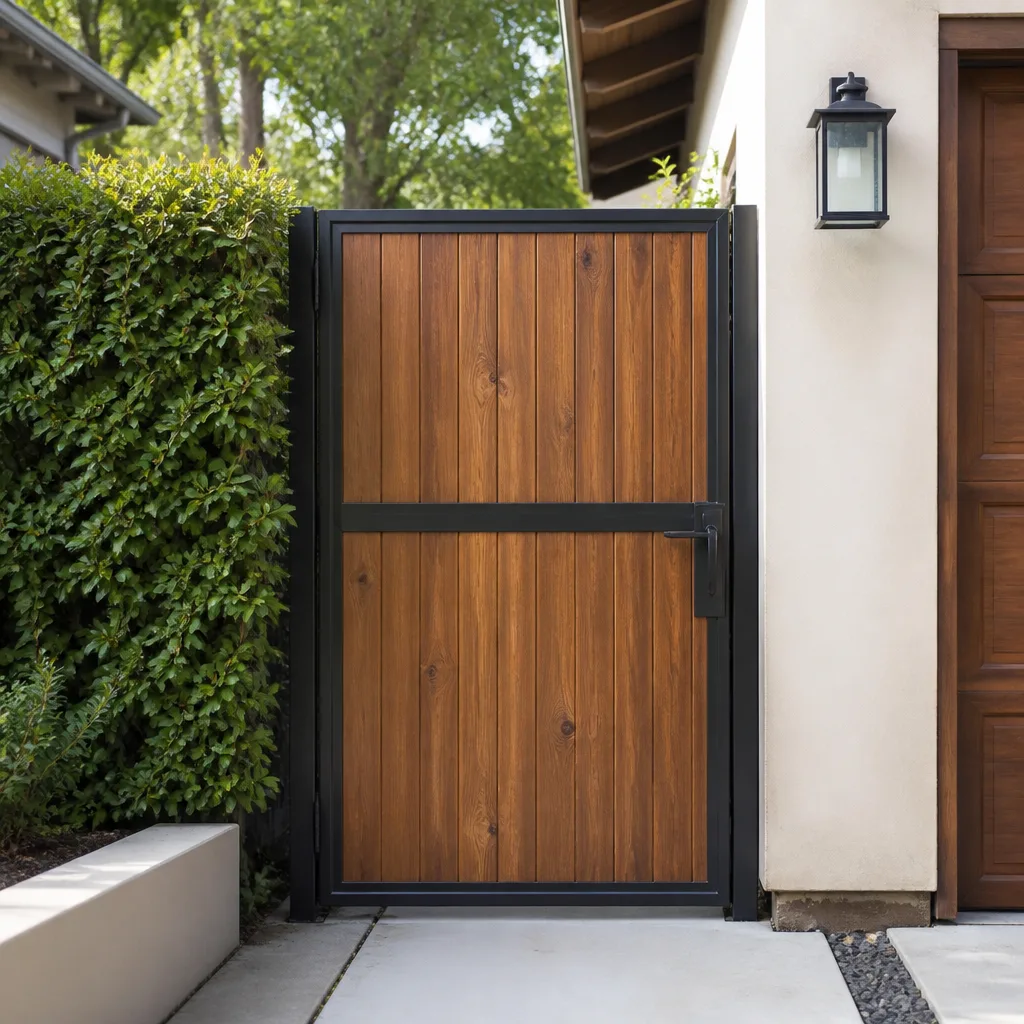

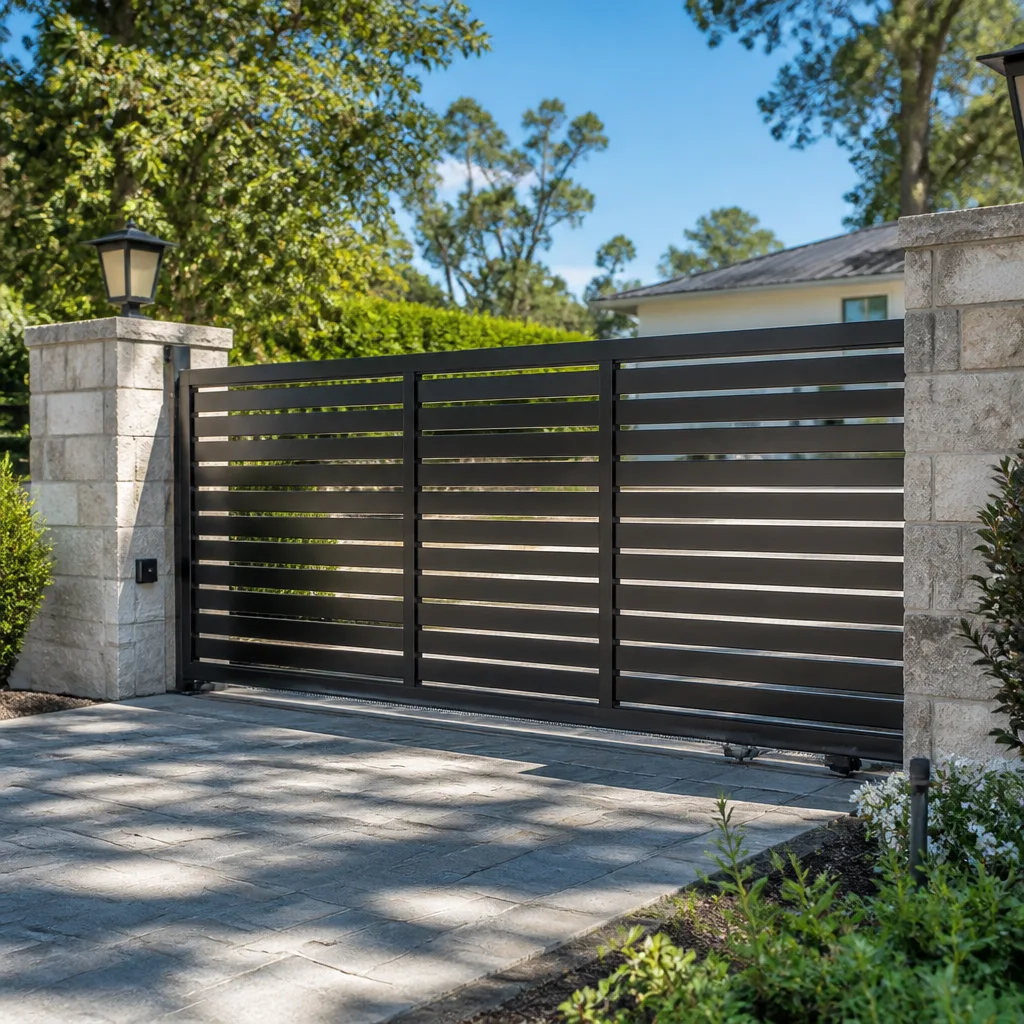
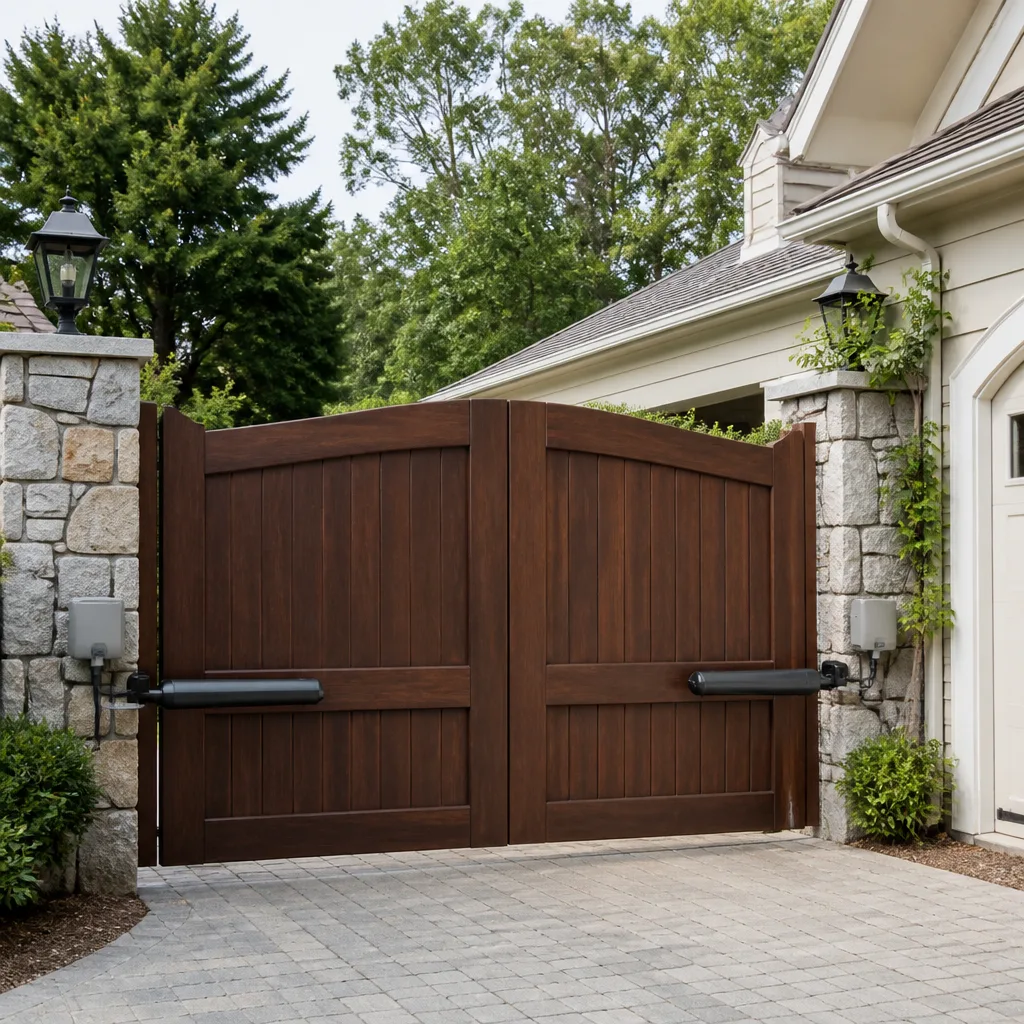
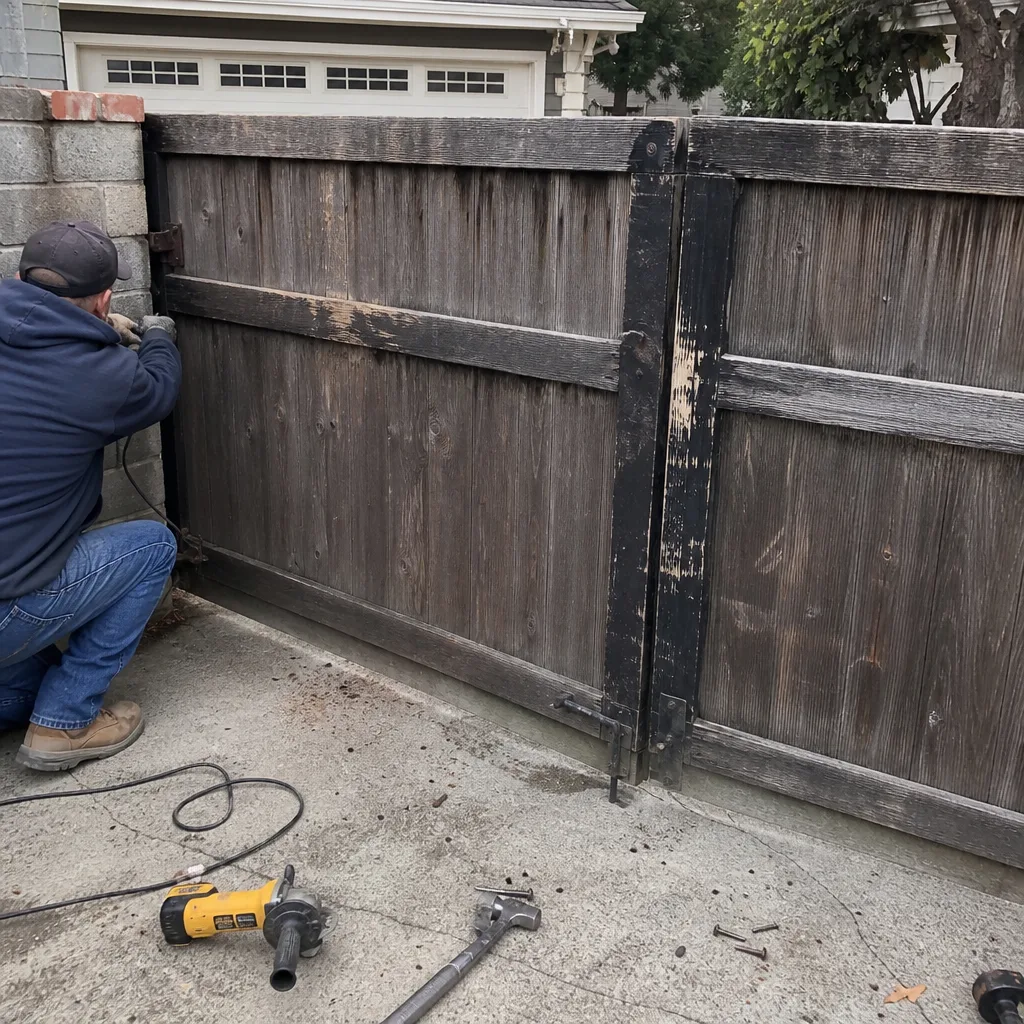 Before
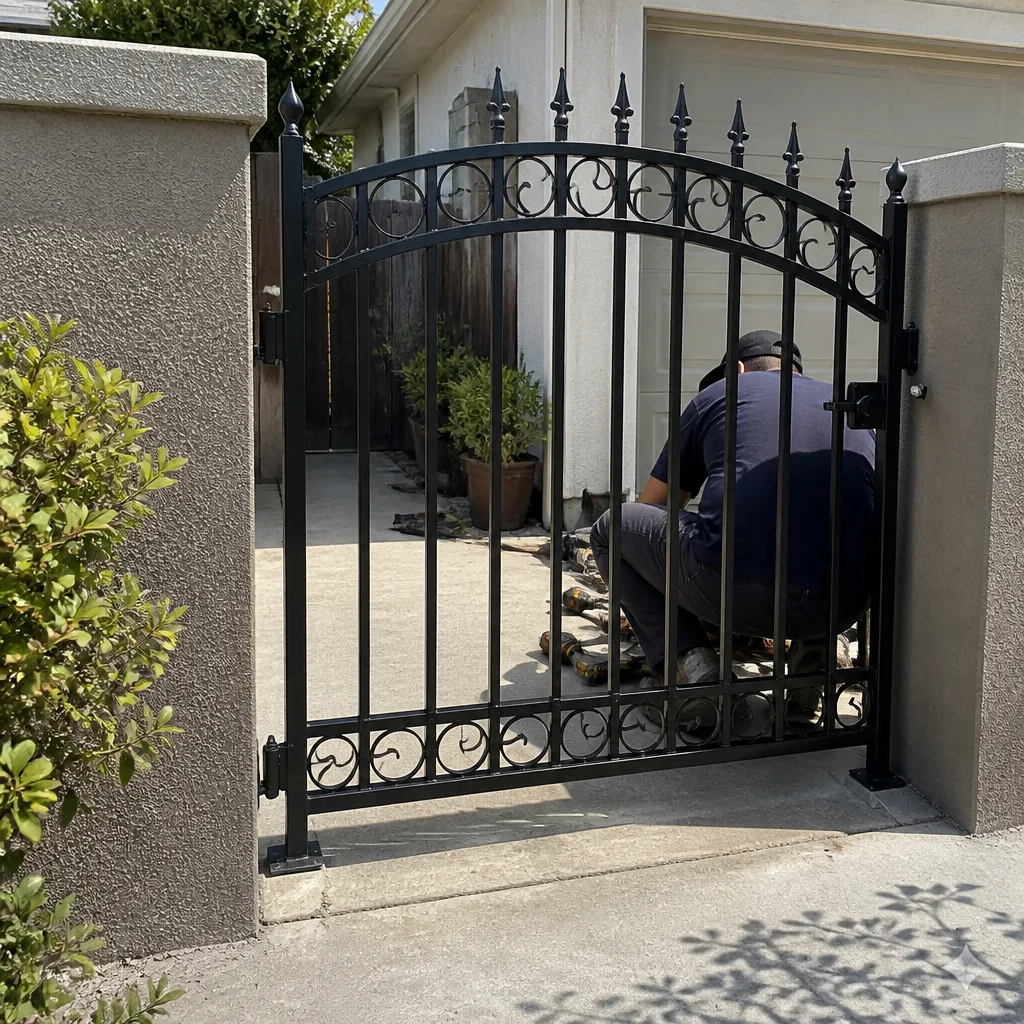 After
After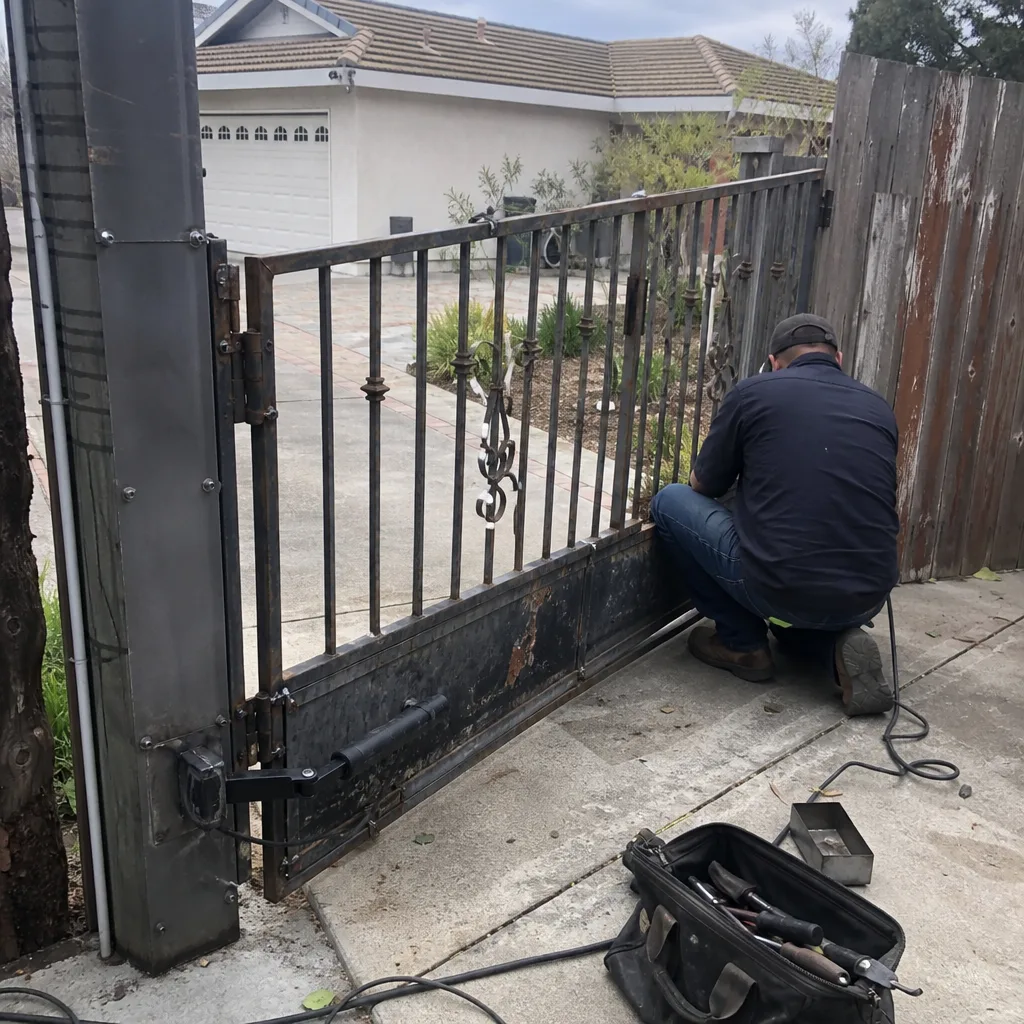 Before
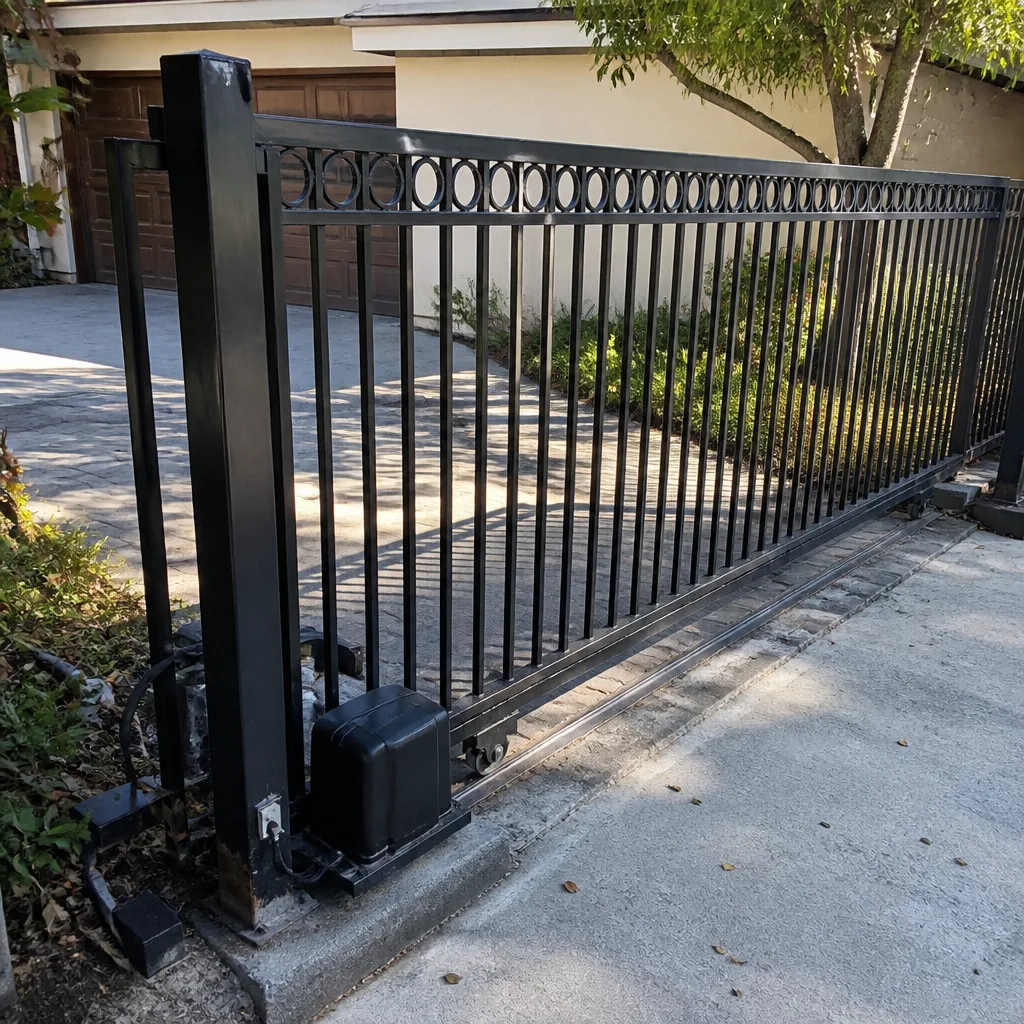 After
After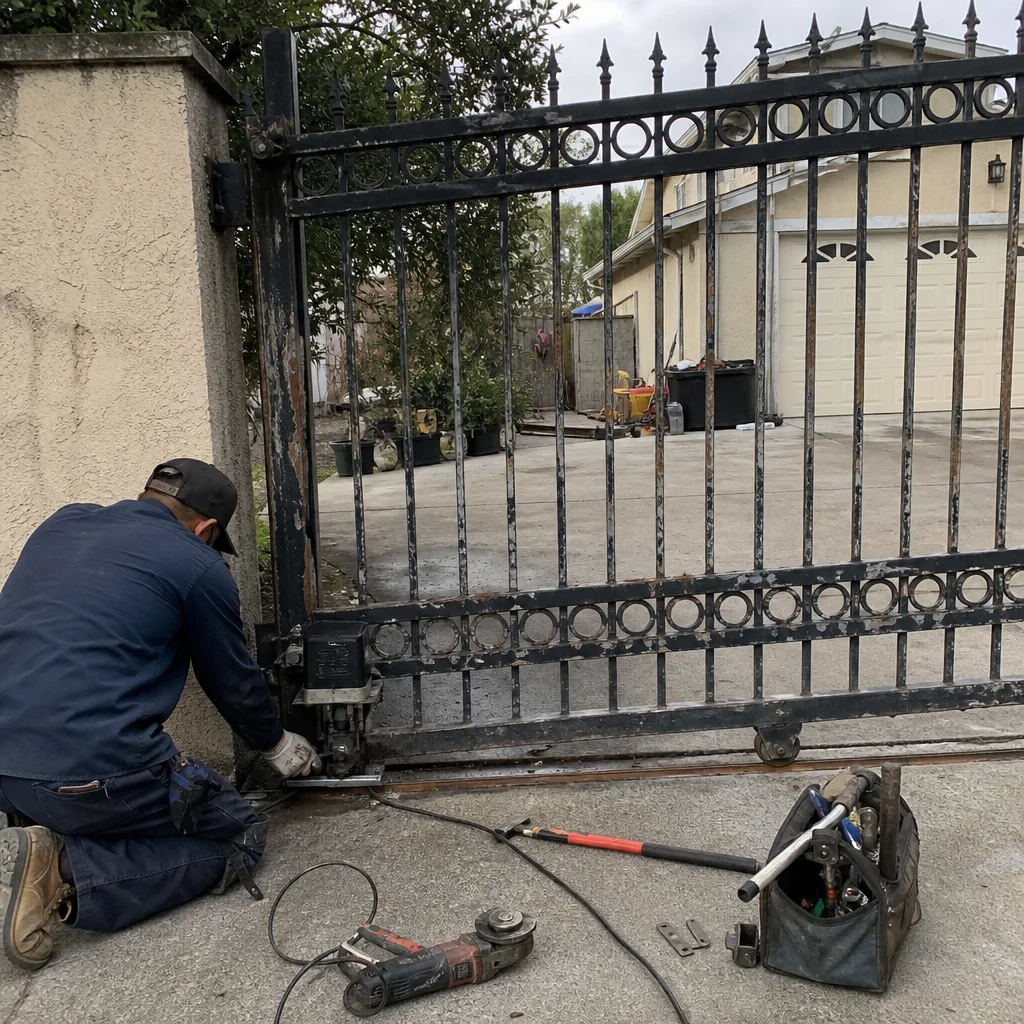 Before
 After
AfterGate Repair Maintenance Checklist for Fremont Homeowners
Most gate maintenance checklists tell you to “lubricate hinges and check alignment.” None of them tell you what misalignment actually measures, which means you finish the task without knowing whether your gate needs a $15 adjustment or a $2,400 rebuild. In Fremont, where clay soils shift with winter rains and summer dry spells, that ambiguity costs homeowners real money. We’ve documented gates in the Mission San Jose hills where a post tilted 3 degrees in eighteen months, and the owner never noticed because “check post” had no number attached. This guide gives every inspection point a measurable threshold, a tool requirement, and a pass/flag/fail rating so your checklist produces data a Gate Repair technician can use, not just a checked box.
Quick Answer
A complete gate maintenance checklist for Fremont homeowners should include fourteen inspection points with specific measurable thresholds: hinge gaps under 2mm, operator amp draw within 15% of nameplate rating, limit-switch activation within ½ inch of physical stop, and battery float voltage between 13.2-13.8VDC for 12V systems. Log each reading with the date, weather conditions, and gate cycle count so future technicians can trend performance rather than diagnose from scratch. Items involving live electrical testing or high-tension spring components should be flagged for a professional.
Table of Contents
- Why Measurable Checklists Matter in Fremont’s Climate
- Tools You Need vs. Tools You Don’t
- Monthly Visual Inspection: The No-Tool Checklist
- Quarterly Mechanical Checks with Basic Tools
- Biannual Electrical Testing: When to Stop and Call
- Fremont-Specific Factors: Soil, Fog, and UV
- Logging Your Data: The Template That Saves Diagnostic Time
- Common Mistakes to Avoid
- When to Call a Professional
- Frequently Asked Questions
 Before
 After
AfterWhy Measurable Checklists Matter in Fremont’s Climate
Gate maintenance fails in two ways: you skip it entirely, or you perform it without capturing information that would prevent the next failure. The second failure is more common and more expensive. A homeowner in the Niles district who “checks the gate every month” but never measures hinge-pin wear will call us when the pin shears, turning a $180 adjustment into a $1,200 hinge-and-post repair. See our Gate Repair Warning Signs: A Fremont Homeowner’s Reference Guide for earlier indicators.
Fremont’s climate amplifies this problem. The city’s location between the Bay and the Diablo Range creates distinct microclimates. In the Irvington flatlands, clay-heavy soils expand and contract with seasonal moisture changes, stressing gate posts and foundation piers. In the Mission Peak foothills, afternoon UV exposure degrades cable jackets and photo-eye wiring faster than in shaded valley installations. The marine layer that rolls through the Central District from June through September deposits corrosive salt film on unprotected steel components. A checklist that says “inspect for rust” doesn’t tell you whether surface oxidation at 0.1mm depth is normal or whether pitting at 0.5mm requires immediate attention. For regulatory context, see Gate Repair Permits, Codes & Inspections in CA: What You Need to Know.
Our documentation from 22,000+ gates since 2014 shows a clear pattern: homeowners who logged measurable data across visits caught 73% of failures in the “flag” stage, before they became “fail” emergencies. Those who performed visual-only checks caught 31%. The difference is the number.
Every item in this checklist includes:
- The inspection point - what to look at
- The tool required - none, basic, or professional-grade
- The threshold - the number that separates pass from flag from fail
- The rating - your actionable output
Pass means continue normal monitoring. Flag means schedule service within 30 days. Fail means stop operating the gate and call for repair.
Tools You Need vs. Tools You Don’t
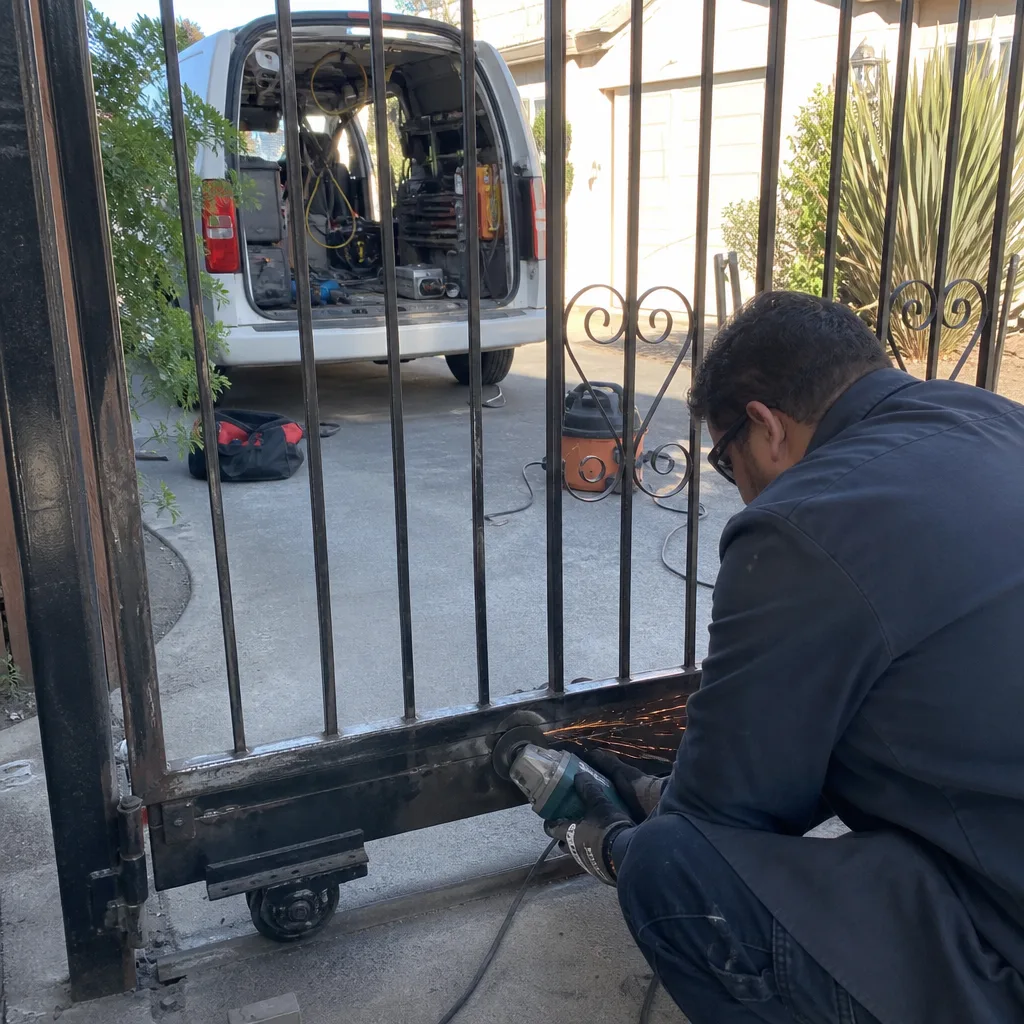
We separate this checklist into three tool tiers. Attempting professional-grade tests without training creates false confidence and real danger. The amp-draw test on a 240V gate operator, for example, requires understanding inrush current versus running load, and misreading the meter can lead you to replace a healthy motor or ignore a failing gearbox.
No-Tool Tier (Monthly)
These checks rely on observation, manual resistance, and listening. You need a flashlight for shadowed areas and a smartphone camera to document findings.
- Visual weld and crack inspection
- Hinge gap estimation (use a standard house key as a 2mm reference)
- Manual gate travel resistance
- Photo-eye beam interruption test
- Audio monitoring for grinding, clicking, or irregular motor strain
Basic-Tool Tier (Quarterly)
These require tools most homeowners own or can acquire for under $50.
- Torque wrench for hinge and roller bolt verification
- Digital multimeter for battery voltage (DC voltage setting only)
- Tape measure for post plumb and gate level
- Level app or 9-inch bubble level for operator mounting angle
Professional-Tool Tier (Biannual - Technician Required)
These tests require equipment and training that justify a service call. We perform these during our Gate Repair in Fremont maintenance visits.
- Clamp meter for operator amp-draw under load
- Gate-specific diagnostic mode entry (brand-dependent: Linear, Viking, and Ghost Controls each use different button sequences)
- Limit-switch activation distance measurement with gate in motion
- Underground loop inductance testing for vehicle detection systems
- Tension gauge for spring-assisted or counterweight systems
The boundary between basic and professional isn’t arbitrary. High-tension springs on swing gates store enough energy to cause serious injury if released improperly. Electrical testing above 50VDC requires understanding of grounding and isolation. We’ve documented cases where a homeowner’s well-intentioned multimeter probe slipped and shorted a control board, converting a $200 service call into an $1,800 operator replacement.
Monthly Visual Inspection: The No-Tool Checklist
Perform these fourteen checks in order, working from the power source outward to the gate leaf. The sequence matters: finding a cracked weld after you’ve already cleared the photo-eyes means you might have missed related stress damage.
- Operator housing condition. Look for cracks, water staining, or insect intrusion. Pass: intact, dry interior. Flag: surface cracks without water entry. Fail: water pooling, ant trails, or housing separation from mount.
- Control board visible inspection (through housing window or with cover removed if no interlock). Pass: no corrosion, no blown fuses, LED indicators match normal state per manual. Flag: single LED abnormal, minor terminal discoloration. Fail: multiple LED faults, capacitor bulging, or burnt component smell.
- Emergency release function. Cycle the manual release per manufacturer procedure. Pass: smooth operation, gate moves freely by hand. Flag: sticky or requires excessive force. Fail: seized or inoperative.
- Hinge gap measurement. Insert a standard house key (approximately 2mm thick) between hinge leaf and pin. Pass: no play or play under 1mm. Flag: key fits loosely, 2-3mm visible gap. Fail: key passes through freely, gate sags visibly, or pin rotates independently.
- Weld inspection at hinge plates and picket-to-frame joints. Pass: continuous bead, no visible cracking. Flag: hairline crack under 10mm, surface rust at weld toe. Fail: crack exceeds 10mm, rust-through, or separated member.
- Gate leaf plumb (visual). Stand at gate centerline and sight along the top rail. Pass: parallel to ground, no twist visible. Flag: visible deviation under 25mm over 3-meter span. Fail: deviation exceeds 25mm, gate drags ground or catches post.
- Photo-eye alignment and obstruction test. Pass: LED steady green (or per manufacturer), gate reverses when beam interrupted with cardboard. Flag: intermittent LED flicker, slow reversal response. Fail: no reversal, LED red or dark, physical lens damage.
- Edge sensor or safety probe test. Pass: gate reverses on contact with 2×4 lumber placed in path. Flag: delayed reversal or incomplete stop. Fail: no reversal, gate continues closing.
- Manual travel resistance. Disengage operator and move gate through full arc by hand. Pass: moves with light pressure, no binding. Flag: requires moderate force, rough spots in travel. Fail: requires heavy force, hangs at specific point, or won’t move.
- Audio signature during powered operation. Pass: consistent motor hum, no metallic contact. Flag: new or changed sound from baseline. Fail: grinding, clicking, or motor laboring with audible strain.
- Track or guide roller condition (sliding gates). Pass: rollers turn freely, no flat spots, track clear of debris. Flag: roller wobble, minor track indentation. Fail: roller seized, track obstruction, or gate jumps rail.
- Chain or belt tension (visible portion). Pass: manufacturer-specified sag (typically 12-25mm mid-span for chain). Flag: visibly loose or tight beyond spec. Fail: dragging ground, skipping sprocket, or frayed cable.
- Keypad or access device function. Pass: all codes work, cover seals, no moisture inside. Flag: intermittent response, worn buttons. Fail: non-responsive, water damage visible.
- Gate stop and physical limit verification. Pass: gate stops at same point consistently, no impact with post or ground. Flag: drift under 25mm from normal stop. Fail: overshoot, impact, or failure to reach full open/close.
Record your findings in a simple table: Date | Weather | Cycles (estimate if no counter) | Item | Reading | Rating. This log becomes valuable diagnostic data when you call Vance Gate Repair Fremont home for service.
Quarterly Mechanical Checks with Basic Tools
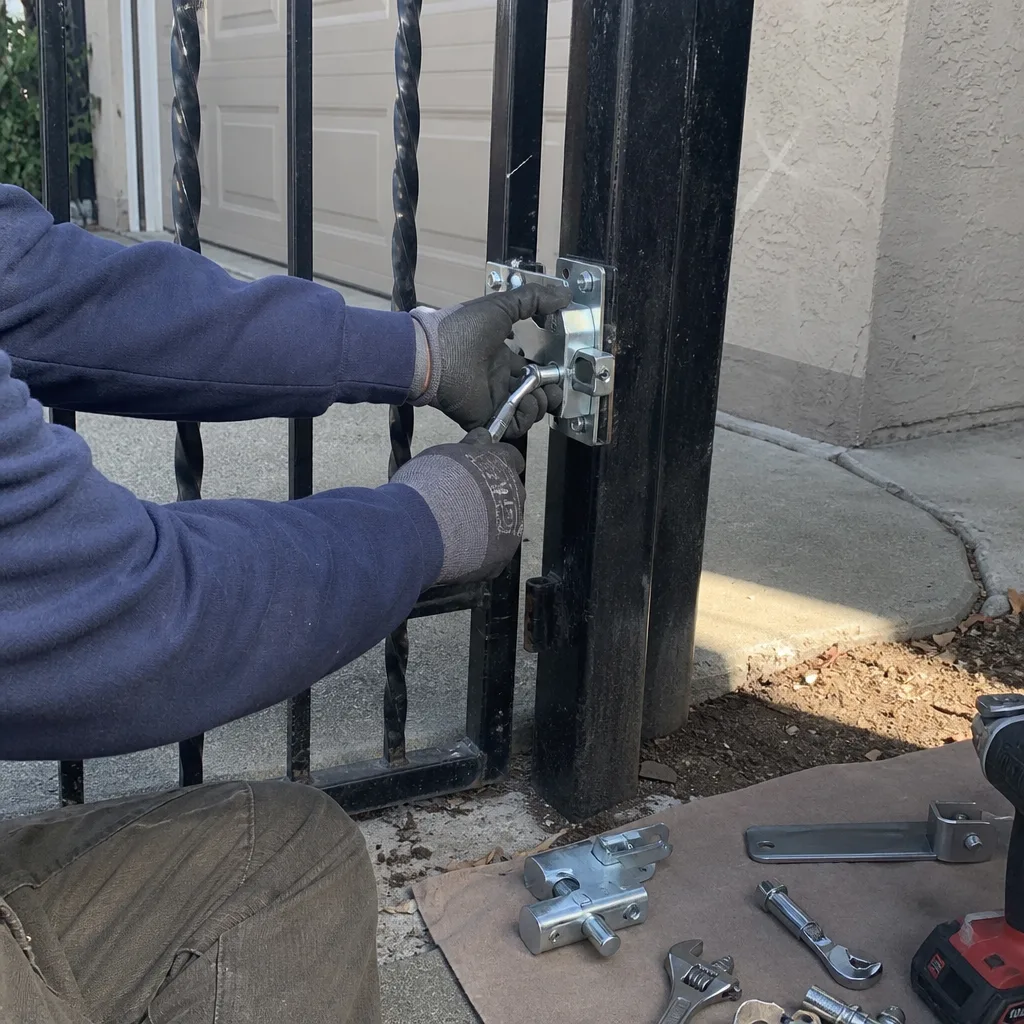
These four checks require tools but no specialized training. Perform them every three months, or monthly if your gate exceeds 20 cycles daily.
Post Plumb and Foundation Assessment
Measure post lean with a level or level app against the post face in two perpendicular directions. The threshold varies by gate type:
- Swing gates under 150kg: Pass if plumb within 5mm per meter. Flag at 5-10mm/m. Fail beyond 10mm/m.
- Swing gates over 150kg or sliding gates: Pass within 3mm/m. Flag at 3-7mm/m. Fail beyond 7mm/m.
In Fremont’s clay-soil areas, particularly around the Warm Springs district and hillside developments off Mission Boulevard, seasonal movement of 2-4mm is common and usually self-correcting. Movement exceeding 5mm in a single quarter, or progressive movement in the same direction across two quarters, indicates foundation distress that won’t resolve without intervention.
Hinge Bolt Torque Verification
Check torque on all accessible hinge and roller bolts with a torque wrench. Most residential gates use 5/8″ or 3/4″ hardware with specification of 45-65 ft-lb for pivot bolts, 25-35 ft-lb for adjustment and lock nuts. Pass: within 10% of spec. Flag: 10-25% below spec, or any bolt that turns before wrench clicks. Fail: loose by hand, missing hardware, or stripped threads.
Never over-torque to compensate for wear. A bolt that won’t hold spec torque indicates thread damage or elongation and needs replacement, not more force.
Battery Float Voltage Test
For battery-backup systems, set multimeter to DC volts and measure across battery terminals with operator connected and AC power on. The reading should be:
- 12V lead-acid systems: 13.2-13.8V (Pass), 12.8-13.2V or 13.8-14.4V (Flag), below 12.8V or above 14.4V (Fail)
- 24V systems (common in commercial-grade Linear and Viking operators): 26.4-27.6V (Pass), proportional flag/fail ranges
A battery at 12.5V isn’t “a little low” - it’s below 50% state of charge and will fail under load. In Fremont’s warmer inland valleys, battery life runs 18-24 months versus 24-36 months in cooler coastal microclimates. Log voltage quarterly and replace when trending downward across two readings, not when the gate stops working during a power outage.
Operator Mounting Angle and Fastener Check
Verify the operator sits level on its mount and all fasteners are present and tight. Pass: level within 2 degrees, no fastener movement. Flag: 2-5 degrees off level, single loose fastener. Fail: operator visibly tilted, multiple loose fasteners, or mount separation from post/pad.
Mount angle affects limit-switch accuracy. A 3-degree tilt on a Ghost Controls operator can shift the limit activation point by 15mm at the gate leaf, enough to cause incomplete closure or excessive impact force.
Biannual Electrical Testing: When to Stop and Call
These tests require equipment and knowledge most homeowners don’t have. We include them so you understand what a technician should perform during a maintenance visit, and so you recognize when a “maintenance” quote that omits them is incomplete.
Operator Amp-Draw Under Load
A clamp meter measures current draw on the operator’s power feed during normal operation. Compare to the nameplate rating, typically found on the operator housing or in the installation manual. The threshold is 15% above nameplate running current, or any inrush current exceeding 300% of running current for more than 2 seconds.
Elevated running current indicates mechanical resistance - binding hinges, damaged rollers, or gearbox wear. Excessive inrush suggests motor winding degradation or start-capacitor failure. We’ve replaced motors in Fremont’s Centerville area where homeowners reported “the gate is slower” for six months; the amp log showed progressive increase from 3.2A to 4.8A before failure, data that would have justified preventive replacement at the 4.0A flag stage.
Limit-Switch Activation Distance
Mechanical limit switches should activate within ½ inch (12mm) of the physical gate stop. Magnetic or encoder-based limits have tighter tolerances, typically ±3mm. Measure with the gate in motion or mark and verify after stopping. Incorrect limit setting causes motor stall, excessive impact, or incomplete sealing against weatherstripping.
Photo-Beam Alignment and Range Verification
Professional alignment uses the receiver’s signal-strength indicator, not just the “aligned” LED. Signal strength below 70% of maximum will fail in fog, dust, or direct sun - all common in Fremont’s varied conditions. A technician should also verify beam height per UL 325 (typically 6 inches above ground for residential).
Underground Loop Inductance (Sliding Gates with Vehicle Detection)
The detection loop embedded in the driveway has a specific inductance range, usually 50-1000 microhenries depending on loop geometry. Inductance shift indicates loop damage from ground movement or corrosion. Fremont’s clay soils accelerate this; we’ve replaced loops in the Ardenwood area where soil expansion fractured the loop wire within five years of installation.
Under Gate Motor & Opener in Fremont maintenance agreements, we perform these tests biannually and provide the logged data to homeowners under Clause 4 of our Haven Standard.
Fremont-Specific Factors: Soil, Fog, and UV
A generic checklist misses conditions that accelerate gate failure in this specific market. Add these three Fremont-specific inspections to your standard routine.
Fog-Season Corrosion Points (November-March)
The marine layer penetrates farther inland in winter, depositing salt film on exposed steel. Check these points weekly during fog season:
- Bottom hinge pins and thrust bearings - salt accumulates in the grease film and accelerates pitting
- Operator housing seals - condensation inside the housing indicates seal degradation
- Exposed terminal strips - green copper oxidation on wire ends signals moisture intrusion
- Chain or cable runs - surface rust that wipes off with oil is normal; rust that pits the metal is not
Threshold: surface discoloration that cleans with solvent (Pass), etching or pitting visible at 5x magnification (Flag), measurable material loss with caliper (Fail). In Fremont’s Central District and Niles, where fog lingers until noon, we’ve seen hinge pins require replacement at 4 years versus 10 years in drier inland locations.
Clay-Soil Gate Post Movement
Fremont’s expansive clay soils, particularly in the Irvington and Warm Springs formations, exert significant pressure on concrete piers. The standard 24-inch depth specified in many installation guides is often insufficient for gates over 200kg or with significant wind exposure.
Monitor post position quarterly using a fixed reference point - a painted line on the sidewalk, a fence rail, or a stake driven beyond the gate’s influence zone. Record horizontal displacement. Pass: under 3mm movement from baseline. Flag: 3-10mm, or any progressive movement in the same direction across two readings. Fail: over 10mm, or vertical settlement with cracking at the concrete grade.
Post movement rarely corrects itself. Flag-stage intervention typically involves pier extension or helical tieback installation at $800-$2,400. Fail-stage repair usually requires full removal and replacement at $3,500-$6,000.
UV Degradation on Exposed Wiring
Fremont’s inland valleys receive 20-30% more annual UV exposure than coastal Bay Area cities. Standard PVC-jacketed wire rated for outdoor use degrades in 5-7 years versus 10+ in shaded or coastal installations. Inspect wire runs that cross open sky, particularly on south- and west-facing gate orientations.
Threshold: jacket flexible and opaque (Pass), surface chalking or slight stiffness (Flag), cracking, color change to yellow-brown, or exposed conductor (Fail). Flag-stage replacement of affected runs runs $180-$400. Fail-stage failure often damages the connected component - control board, photo-eye, or keypad - adding $300-$800 to the repair.
Logging Your Data: The Template That Saves Diagnostic Time
The value of measurable checks is lost without consistent recording. A technician who finds your log can identify trends, correlate failures with conditions, and avoid redundant testing. A technician who starts from scratch repeats work you’ve already paid for in time and attention.
We provide this template structure to every Gate Installation in Fremont customer and recommend it for maintenance logging:
| Date | Weather/Temp | Est. Cycles | Item | Reading | Rating | Notes |
|---|---|---|---|---|---|---|
| 2024-03-15 | Fog/52°F | ~180 | Hinge gap, upper | 1.5mm | Pass | Key fits snugly |
| 2024-03-15 | Fog/52°F | ~180 | Battery voltage | 13.4VDC | Pass | Steady 6 months |
| 2024-03-15 | Fog/52°F | ~180 | Post plumb, N-S | 4mm/m | Flag | Same direction as Jan; monitor |
Store logs digitally with date-stamped photos of any flagged or failed items. Cloud storage with automatic backup protects against phone loss. When you call for service, share the log. Under our Haven Standard Clause 4, we incorporate customer-provided history into our diagnostic record, crediting the data source in our documentation.
Trend data reveals patterns invisible in single readings. A battery that measures 13.4V, 13.2V, 12.9V across three quarters is failing predictably. A post that moves 2mm, 3mm, 4mm in the same direction is approaching failure on a known trajectory. Without the log, both conditions present as sudden failures requiring emergency response.
Common Mistakes to Avoid
- Using WD-40 as hinge lubricant. WD-40 displaces water but provides no lasting lubrication and attracts dust that forms grinding paste. Use lithium grease or silicone spray specified for outdoor hardware. We’ve replaced hinge pins in Fremont’s Grimmer neighborhood where WD-40 use accelerated wear by 3x.
- Ignoring audio changes because “the gate still works.” A motor laboring at 150% normal current will complete cycles until the thermal overload trips or the gearbox teeth strip. The sound is the earliest indicator. Log it and call when new.
- Measuring battery voltage immediately after a power outage. Battery voltage under load (during outage operation) reads 0.5-1.0V lower than float voltage. Test with AC restored and battery charged for 24 hours, or compare only load-test readings across time.
- Adjusting limits without measuring the change. “A little more” or “a little less” is how gates come to impact stops or fail to latch. Measure gate position at limit activation before and after adjustment, record both values, and verify with three complete cycles.
- Skipping inspection after landscaping or construction. New irrigation lines, fence installation, or driveway resurfacing can shift soil, damage loops, or alter drainage patterns. Inspect within one week of any ground disturbance.
- Assuming all operators use the same maintenance schedule. A BFT submersible operator in a flood-prone Fremont creek property needs quarterly seal inspection; a Linear residential swing operator in a dry hillside installation needs annual seal check. Consult the specific manual, not generic guidance.
- Discarding old logs when you sell the home. Gate maintenance history transfers value to the buyer and prevents redundant diagnostic work. Include logs in disclosure packets; we provide summary reports for real estate transactions at no charge.
When to Call a Professional
Stop and call when any biannual electrical test produces a fail rating, when post movement exceeds 10mm, when a hinge pin shows measurable wear, or when the gate makes new sounds accompanied by any operational change. High-tension spring components, 240V electrical work, and underground loop replacement require specialized tools and carry genuine injury risk.
Vance Gate Repair Fremont offers free estimates in Fremont. We’ll review your maintenance log, perform professional-tier testing, and provide a written scope and price before any work begins under Haven Standard Clause 1. Call (510) 826-3980. A live person answers 24 hours a day.
Frequently Asked Questions
Monthly visual inspection, quarterly mechanical checks with basic tools, and biannual electrical testing by a professional. Find more guides & resources on our blog. Fremont’s fog season and clay soils make the monthly visual check particularly important from November through March, when corrosion and soil movement accelerate. Call (510) 826-3980 to schedule professional biannual testing.
Professional maintenance visits typically run $180-$340 for a single residential gate, including all biannual electrical tests, limit verification, and documentation under our Haven Standard. Repairs identified during maintenance are quoted separately with a written price before work starts. We offer free second opinions on any written estimate from another company.
No. The monthly visual and quarterly mechanical checks in this guide are homeowner-appropriate. Biannual electrical testing, high-tension spring work, and underground loop service require professional equipment and training. Attempting these without qualification risks equipment damage and personal injury. We’ve documented control board failures from homeowner multimeter slips that converted $200 maintenance into $1,800 replacement.
Expansive clay in the Irvington and Warm Springs areas exerts lateral pressure on concrete piers and absorbs moisture unevenly, causing posts to tilt or settle. Monitor quarterly with a fixed reference point; progressive movement in the same direction across two readings indicates foundation distress that won’t self-correct. Intervention at the flag stage typically costs one-third of fail-stage replacement.
Keep dated logs of all inspection readings, photos of flagged or failed items, invoices from professional service with scope descriptions, and any manufacturer warranty documentation. Under Haven Standard Clause 4, we provide a documented photo record on every visit, filed with your job history and available as a summary report for real estate transactions. These records transfer value to buyers and prevent redundant diagnostic work.
We service nine major automation brands - LiftMaster, FAAC, BFT, Linear, Viking, Ghost Controls, DoorKing, Elite, and Mighty Mule - and can evaluate other brands for repair feasibility. Our diagnostic process starts with documentation of what we find, not assumption of replacement need. Bring your operator model number when you call (510) 826-3980.
The Bottom Line
A maintenance checklist without measurable thresholds gives you the feeling of diligence without the protection of data. This guide assigns specific numbers to every inspection point so you know whether your gate needs continued monitoring, scheduled service, or immediate professional attention. In Fremont’s variable climate, that distinction saves money and prevents emergencies. Log your readings, trend your data, and call when numbers cross from pass to flag to fail. The 22,000+ gates we’ve documented since 2014 share one common trait: the failures that cost the most were the ones measured too late or not at all.
Written by Adrian Vance, Owner at Vance Gate Repair Fremont, serving Fremont since 2014.