
Last updated September 22, 2026
Free on-site gate assessment - hinges, posts, and your LiftMaster or Nice gate operator checked before anything is quoted
The assessment is free and the quote is the invoice.
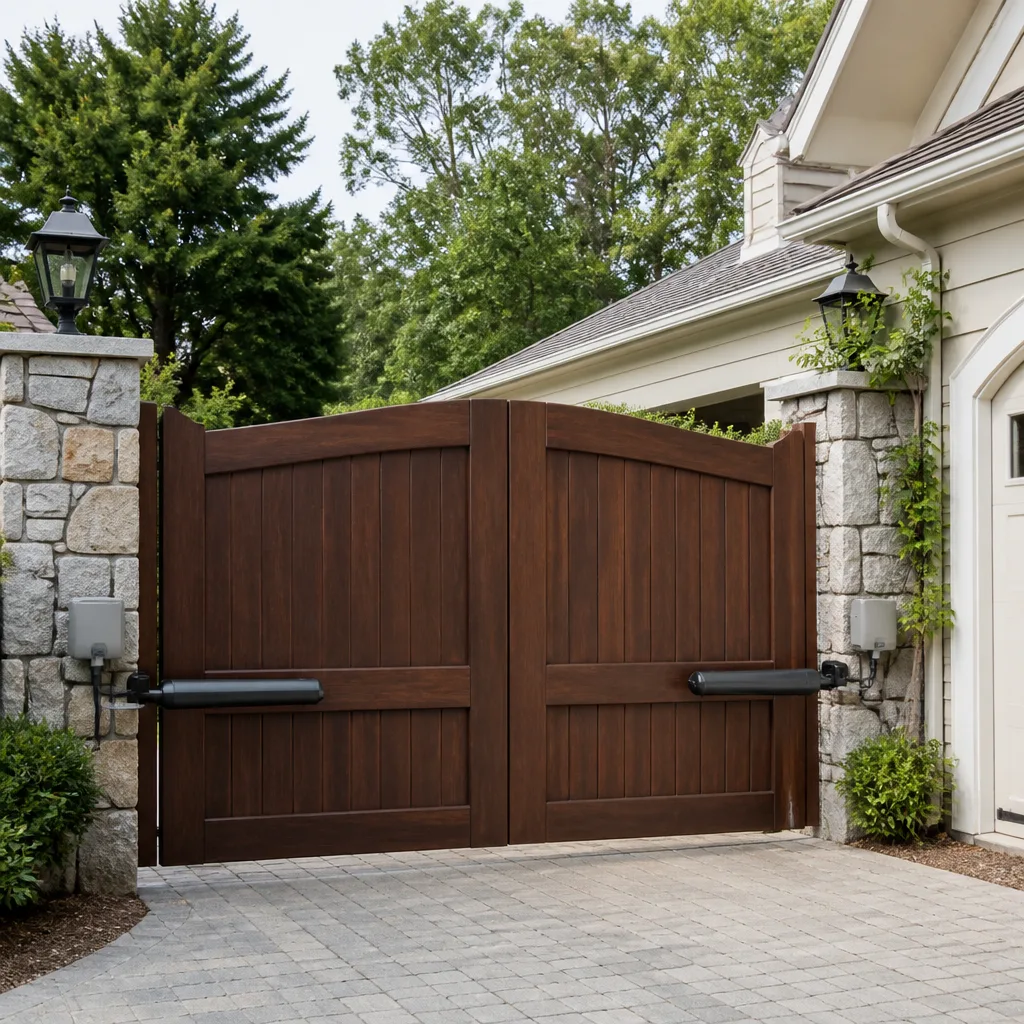
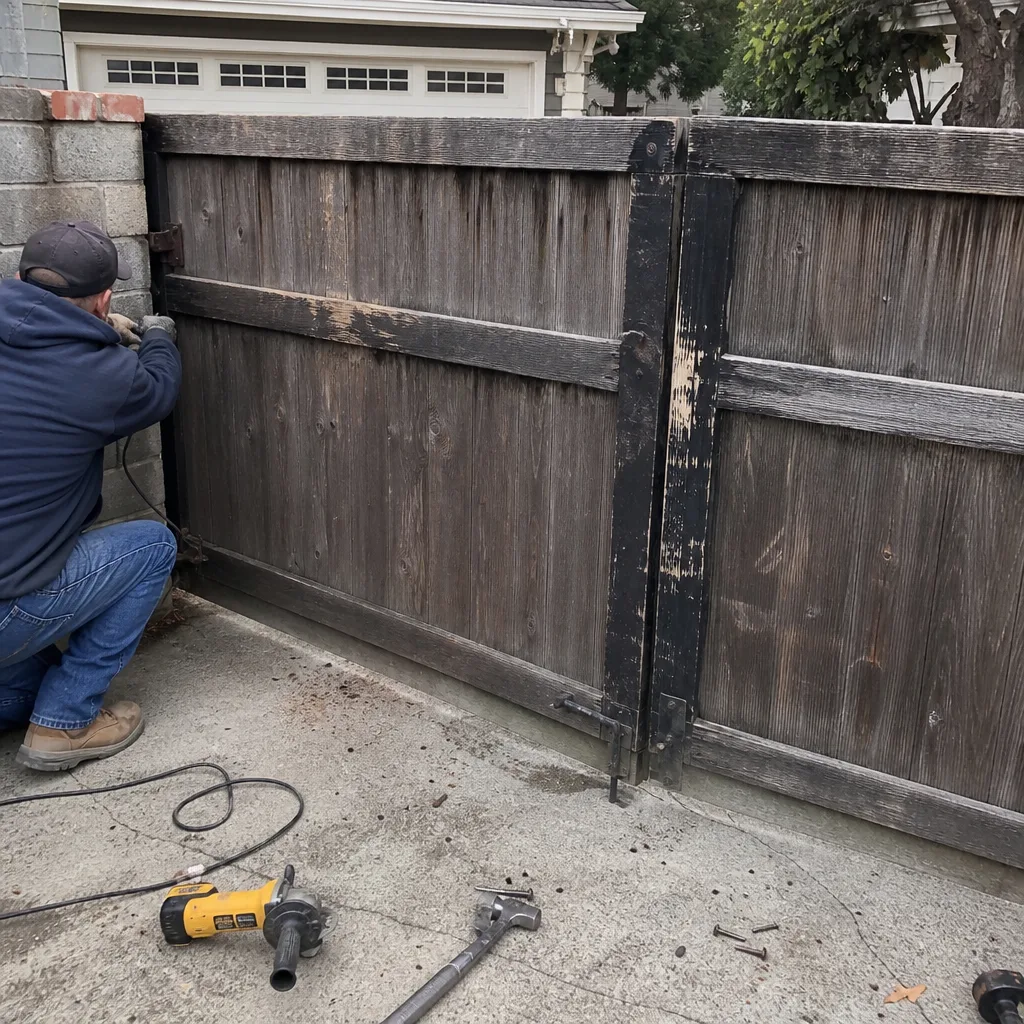 Before
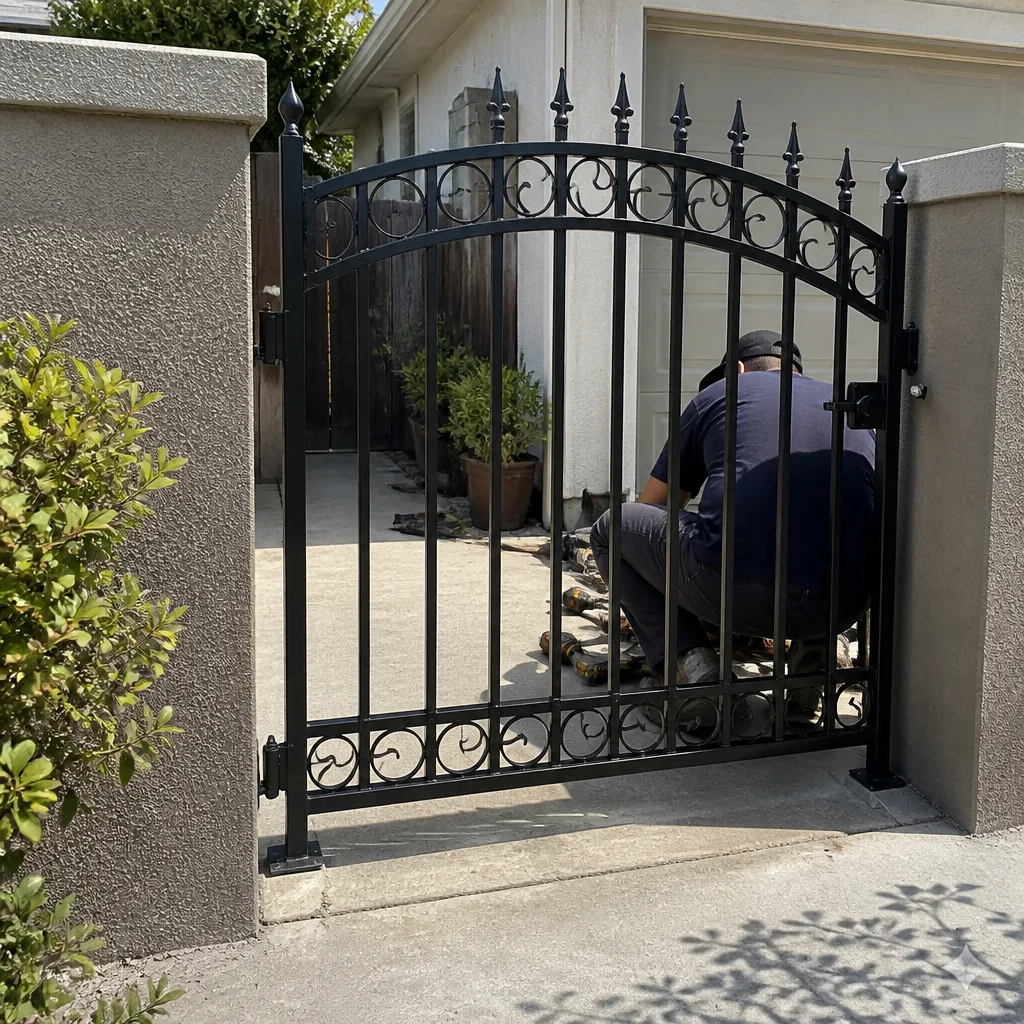 After
After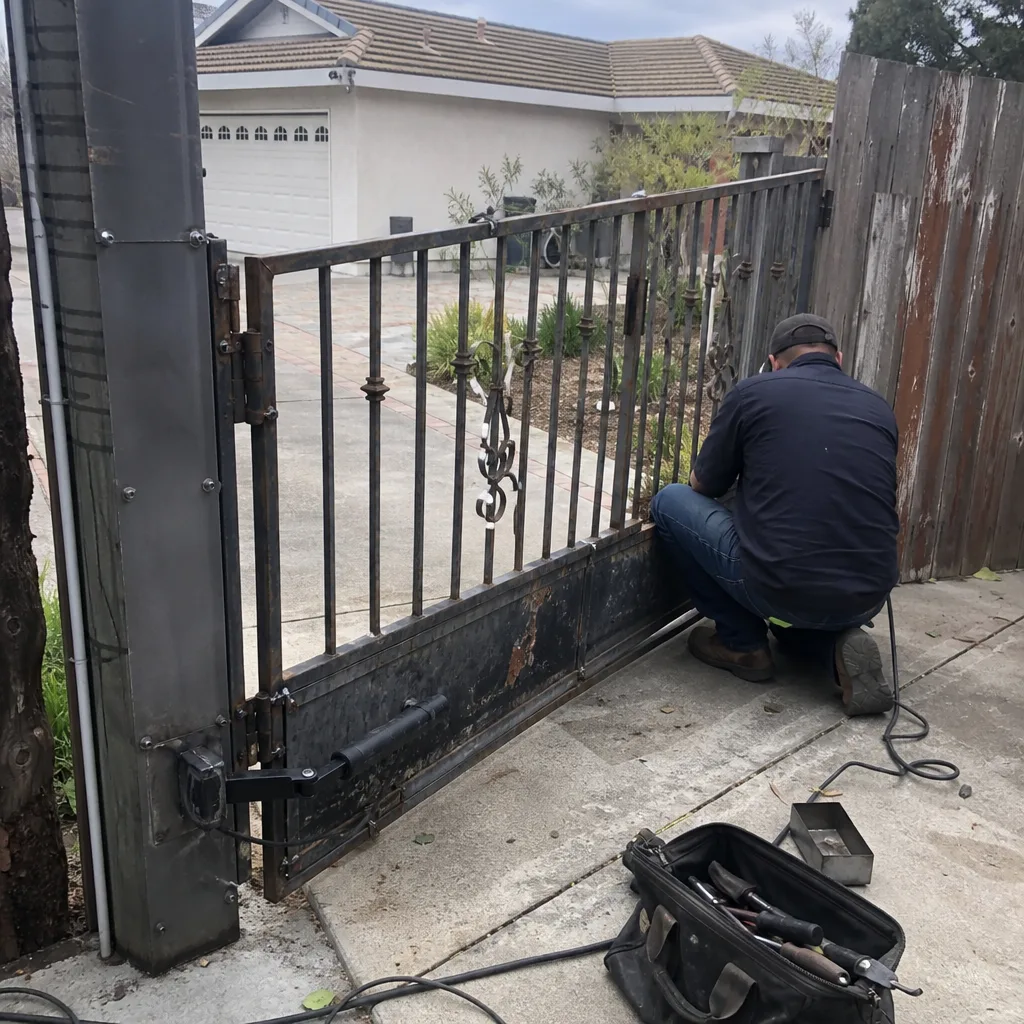 Before
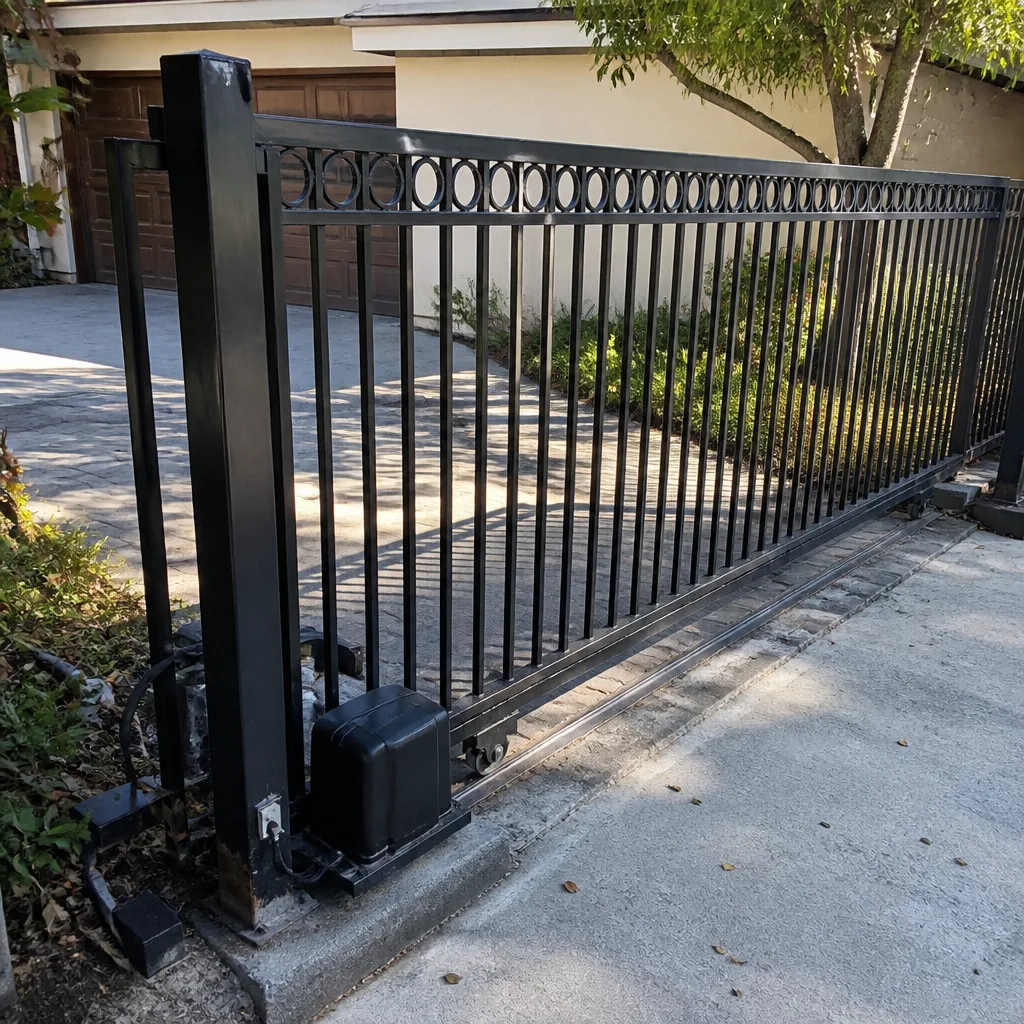 After
After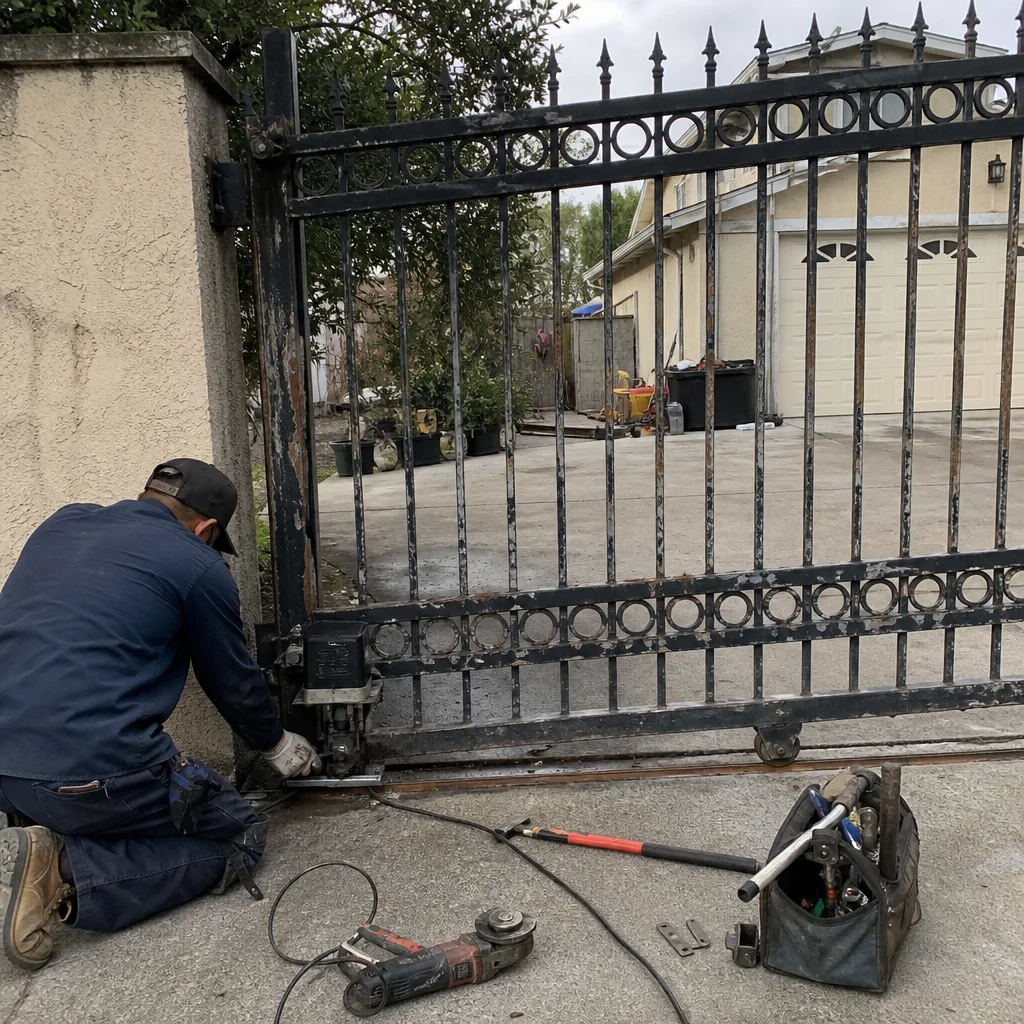 Before
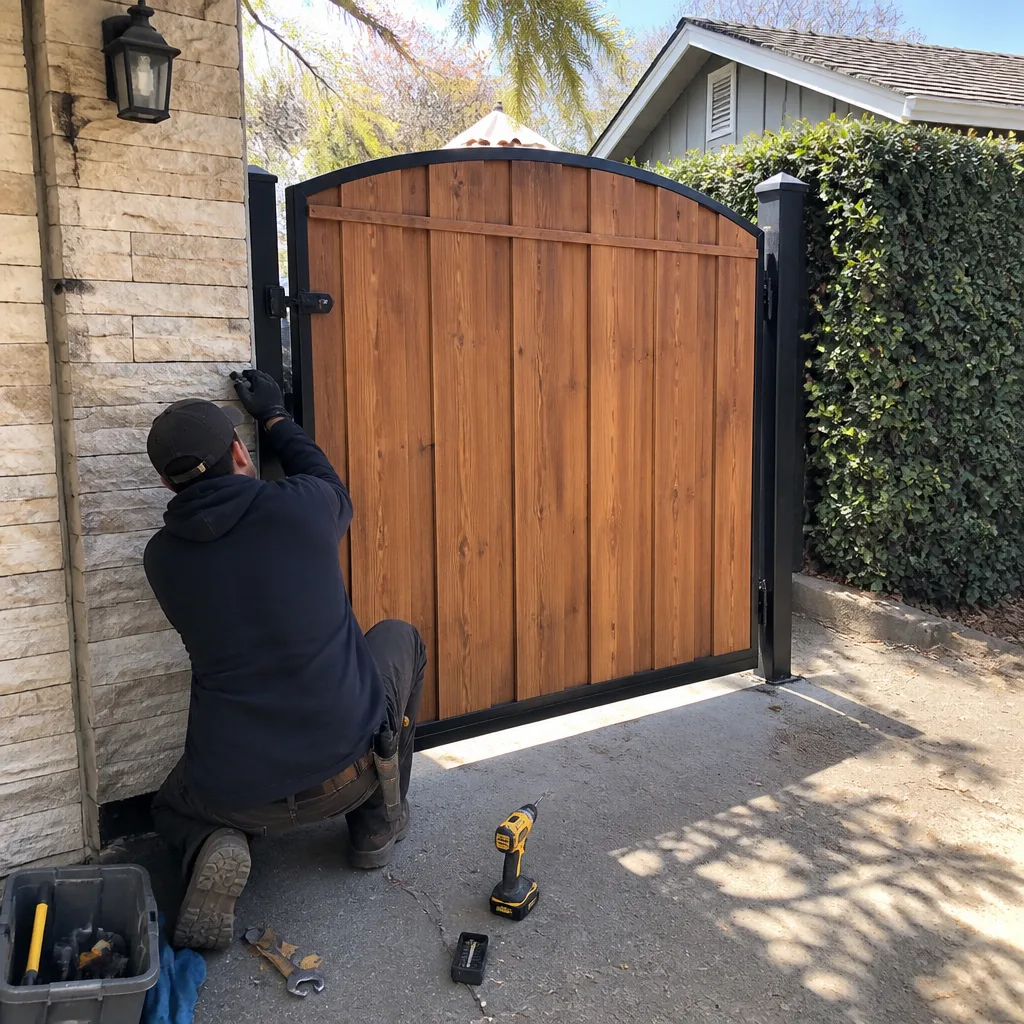 After
AfterSeasonal Gate Repair Care for Fremont: Year-Round Homeowner’s Guide
Fremont’s Mediterranean microclimate is mild enough that most homeowners skip seasonal gate care entirely. The repair data tells a different story: the majority of preventable gate failures in the East Bay cluster in two windows - late February and early October - both tied to ground movement, not weather damage. In this guide, you’ll learn the specific annual stress calendar that affects gates in Fremont’s clay-heavy soil zones, from Niles to Mission San Jose, and the exact maintenance tasks that prevent the misalignment, corrosion, and operator strain we document on hundreds of gate repair service calls each year.
Quick Answer
Seasonal gate repair care in Fremont means timing maintenance to four distinct local climate phases: fog-season corrosion protection (November-February), post-rain post-plumb checks (February-March), dry-season baseline documentation (May-June), and pre-rain operator prep (September-October). Most Fremont gate failures we see stem from skipped February post-plumb checks and October battery load tests - both preventable in under 30 minutes with a tape measure and a visual inspection. For step-by-step help, see our Complete Guide to Gate Repair in Fremont.
Table of Contents
- The Fremont Annual Gate Stress Calendar
- Fog Season: Corrosion Protection That Actually Works
- The Critical Post-Rain Window: February Post-Plumb Checks
- Dry Season: Baseline Documentation for Fall Comparison
- Pre-Rain Prep: October Operator and Drainage Tasks
- The One-Page Homeowner Log: Measurements That Save Diagnostic Time
- Common Mistakes to Avoid
- When to Call a Professional
- Frequently Asked Questions
 Before
 After
AfterThe Fremont Annual Gate Stress Calendar
Fremont sits on a patchwork of Bay mud, alluvial fill, and the shrinking-swelling clay soils that run from Warm Springs through Centerville. Unlike inland California, we don’t get freeze-thaw cycles cracking concrete. What we get is subtler and more predictable: winter saturation followed by dry-season desiccation. Clay soil can expand by 10 percent when saturated, then contract through summer. That movement translates directly into gate post tilt, hinge binding, and operator strain.
We’ve tracked our service calls across Fremont since 2014. The pattern is consistent enough that we now warn customers by neighborhood. In the hillside zones above Mission Peak, where drainage runs faster but clay layers hold moisture, we see post tilt accelerate in March after the last heavy rains. In the flatlands near Central Park, where water tables stay high, corrosion on lower hinge hardware outpaces the hills by roughly 40 percent.
Here’s how the stress maps to seasons:
- November-February: Marine layer saturation. Fog deposits conductive moisture on exposed steel. Photo-eye lenses film over. Control boxes without sealed gaskets accumulate condensation.
- February-March: Peak soil expansion. Posts reach maximum tilt. Hinges bind. Operators strain against misaligned travel paths.
- May-June: Soil begins contracting. Gates that were binding in March may suddenly slam or overrun their limits. This is when limit-switch drift appears.
- September-October: First rains return to dry-shrunk soil. Rapid re-expansion begins. Battery capacity drops with cooler nights. Drainage channels clog with dry-season debris.
The takeaway: Fremont gate care isn’t about dramatic weather events. It’s about tracking incremental soil movement and catching misalignment before the operator compensates itself into failure.
Fog Season: Corrosion Protection That Actually Works
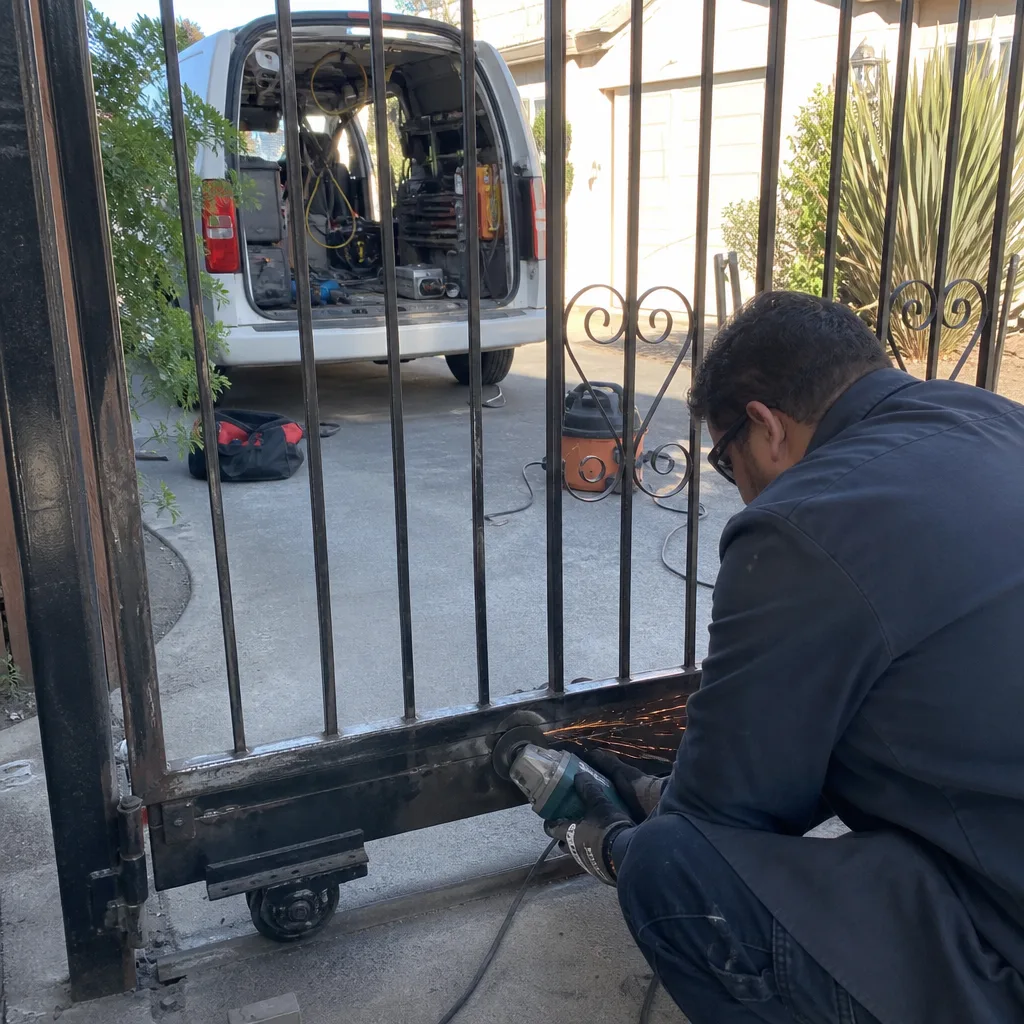
From November through February, Fremont’s marine layer rolls in most mornings and some evenings. The absolute humidity isn’t extreme, but the persistence matters. A gate component that stays damp for 12 hours daily for three months accumulates corrosion faster than one soaked intermittently. We’ve replaced hinge pins in Fremont that looked fine in October and were seized by January.
The components most vulnerable to fog-season corrosion, in order of what we replace most:
- Bottom hinge pins and bushings: These sit closest to soil splash and rarely dry fully. On swing gates in the flatlands near Irvington, we see 3/4-inch pins reduced to 5/8-inch effective diameter in two fog seasons.
- Chain and sprocket assemblies on slide gates: Factory grease attracts airborne salt and grit. The paste that forms is abrasive, not lubricating.
- Terminal strips and low-voltage connections in control boxes: Condensation wicks into screw-terminals on FAAC and older Linear operators. The corrosion is often invisible until the gate starts intermittent-failing on cold mornings.
- Photo-eye housings: Not the electronics, but the adjustment brackets. Rust-swollen brackets can’t hold alignment. The gate starts “seeing” obstacles that aren’t there.
What protection is actually effective versus cosmetic:
- Effective: Annual disassembly and re-grease of hinge pins with lithium-based grease, not spray-on chain lube. Sealed dielectric grease on control-box terminals. Brushed-on cold-galvanizing compound on exposed steel where factory plating has worn.
- Cosmetic: Spray-wax “protectant” on visible surfaces. It beads water for a week, then traps moisture underneath. WD-40 on hinges - it displaces water briefly, then evaporates and leaves metal bare.
One specific Fremont note: gates within half a mile of the bayfront trail or any salt-pond remnant see accelerated corrosion. If you’re in the Baylands-adjacent zone, shorten the inspection interval to every 18 months instead of every 24.
The Critical Post-Rain Window: February Post-Plumb Checks
This is the most important 30 minutes of gate maintenance most Fremont homeowners skip entirely.
By late February, the clay soil has absorbed its maximum winter moisture. Posts are at their most tilted. Hinges are at their tightest. The gate is fighting its own path every cycle. If you check and correct now, before the dry-season shrinkage begins, you prevent the operator from learning bad habits - specifically, over-torquing to complete a cycle and drifting limit switches to compensate for binding.
Here’s the exact procedure we teach customers who want to self-monitor:
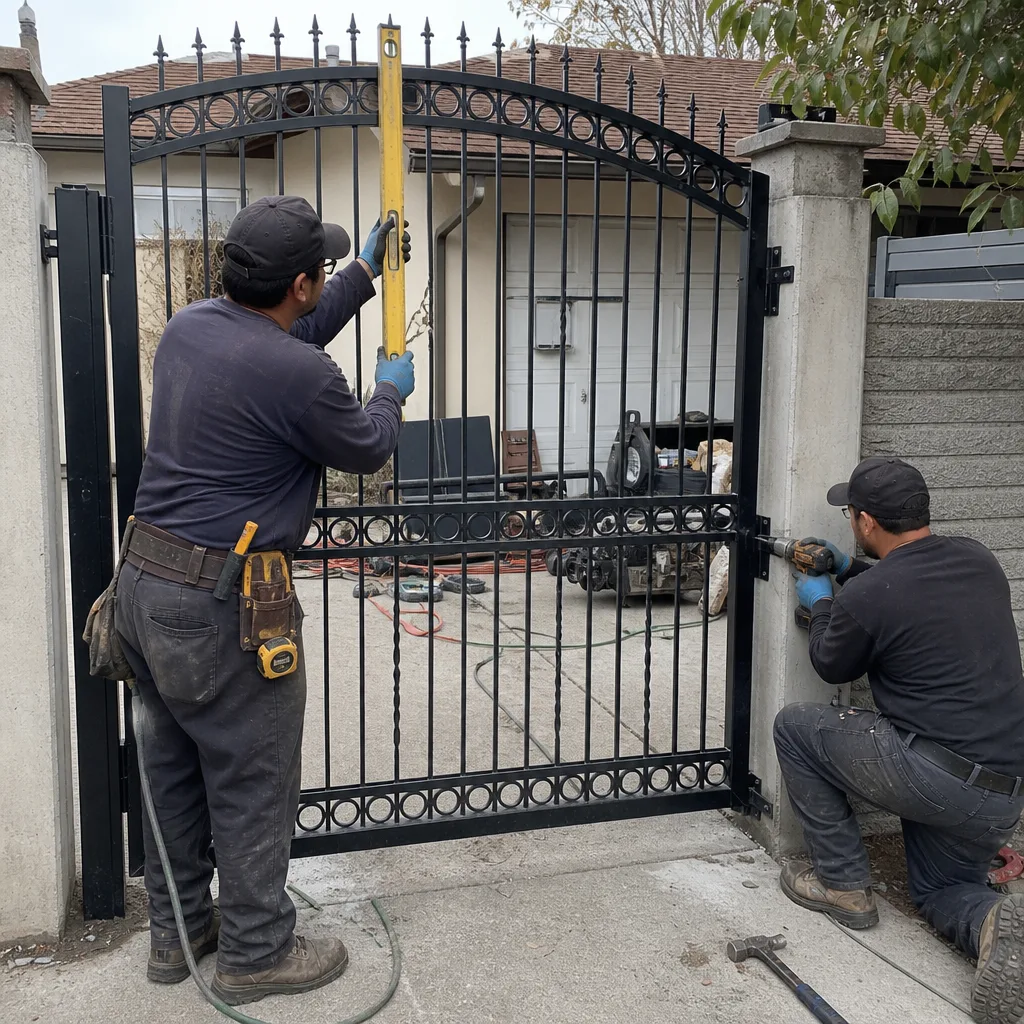
- Measure post plumb on both axes. Hold a level against the post face nearest the hinge. Note the bubble position. Then hold it against the perpendicular face. A post can be plumb in one direction and racked in the other. Record both readings in degrees or “bubble lines off center.”
- Check hinge gap with the gate closed. The gap between gate frame and post should be consistent top to bottom. In February, we often see the bottom gap compressed to nothing while the top shows 3/8 inch. That’s post tilt, not hinge wear.
- Cycle the gate manually (power off, disconnect operator arm if swing; release clutch if slide). It should move freely through full travel. Any binding you feel now will become operator strain in April.
- Check operator mounting bolts. Post movement loosens these first. A bolt that was torqued to 45 ft-lbs in dry soil can back off 1/4 turn when wet soil shifts the post.
The critical detail: if you find post tilt beyond 2 degrees off plumb, or hinge gap variance over 1/4 inch, this is not a DIY correction. The post needs re-plumbing or replacement, and the gate needs re-hanging. Continuing to operate stresses the operator and converts a $400 post job into a $1,200 operator replacement. We’ve documented this exact progression on gates in Ardenwood and Glenmoor.
Under Gate Repair in Fremont, we list the specific neighborhoods where soil type accelerates this problem. The February check is non-negotiable in those zones.
Dry Season: Baseline Documentation for Fall Comparison
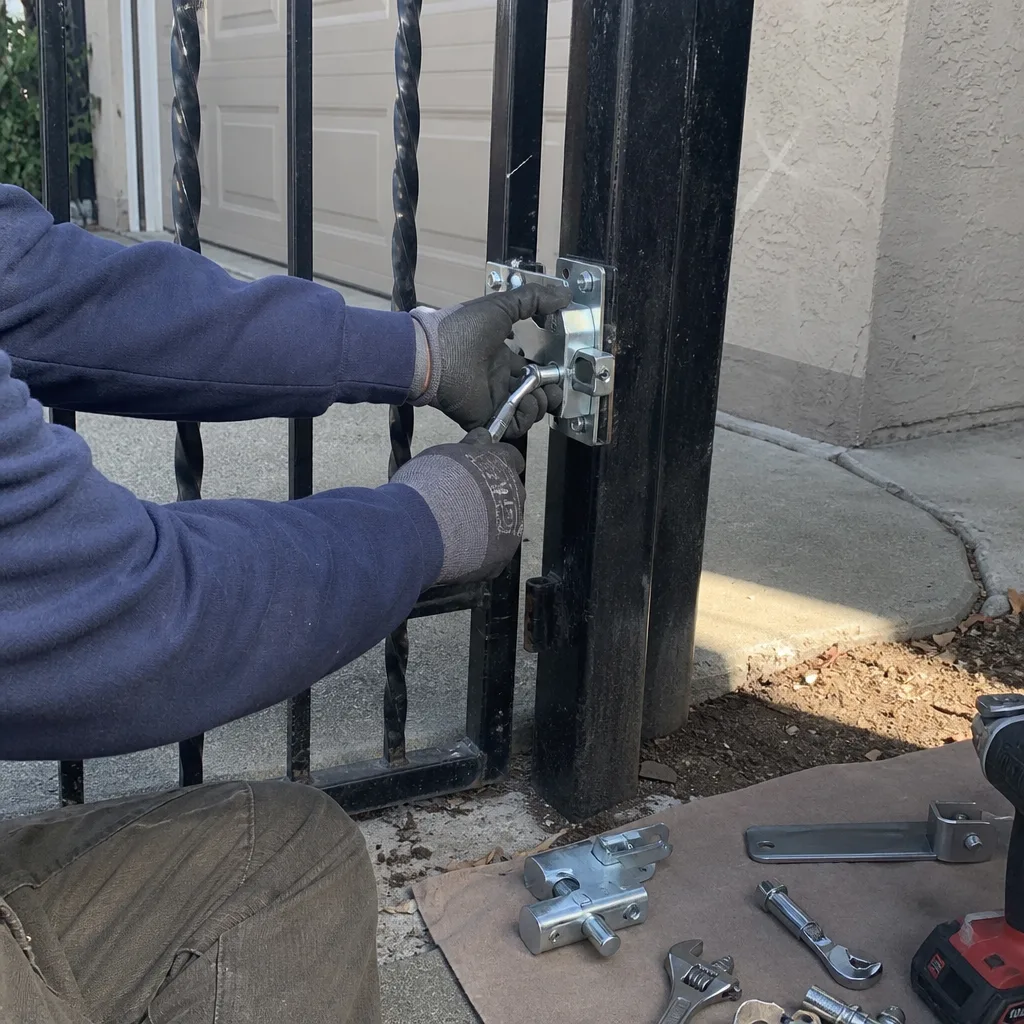
May and June are the calm period. Soil has shrunk to near-minimum moisture. Posts are as plumb as they’ll get all year. The gate cycles smoothly. This is when you record baseline measurements that will save diagnostic time if problems surface in October.
Why this matters: when a customer calls in October saying “the gate started slamming last week,” the first question is whether the post moved or the limit switch drifted. If we have spring baseline photos and measurements, we can answer in minutes instead of hours. Without them, we’re guessing, and the customer pays for exploratory diagnosis.
The one-page log we recommend every Fremont homeowner maintain:
| Measurement | Spring Baseline (Date: ___) | Fall Check (Date: ___) |
|---|---|---|
| Post plumb, hinge face (degrees) | ||
| Post plumb, perpendicular face (degrees) | ||
| Hinge gap, top (inches) | ||
| Hinge gap, bottom (inches) | ||
| Limit switch position (photo) | ||
| Operator amp draw at start (if known) | ||
| Battery voltage under load (V) |
The limit switch photo is the most valuable single piece of documentation. On Viking and BFT operators, the cam position is visible through a sight window. On Linear and FAAC units, the mechanical stop position can be marked with tape and photographed. When October re-expansion changes gate travel by even 1/2 inch, the photo reveals whether the operator adapted or the gate moved.
We leave a blank copy of this log with every Gate Installation in Fremont we complete. Customers who use it call us earlier, with better information, and their repairs are faster because we’ve eliminated the diagnostic phase.
Pre-Rain Prep: October Operator and Drainage Tasks
Early October is the second failure cluster we see annually. The first rains hit desiccated soil, which re-expands rapidly. Cooler nights reduce battery capacity. Summer dust and spider webs clog drain channels. The gate that worked fine on September 30th fails on October 15th, and the homeowner assumes it’s “the rain” when it’s actually three separate, predictable issues converging.
The October checklist, in priority order:
- Battery load test. Gate operator batteries are lead-acid, rated for 3-5 years. In Fremont’s climate, we see actual replacement need at 4 years on average, but capacity degradation starts earlier. A battery that delivered 12.5 volts in June may drop to 11.8 under load in October. The operator still opens the gate, but slower, and the control board interprets the voltage sag as a fault. The result: beeping, flashing, or refusal to close. A $40 battery prevents a $180 service call.
- Drainage channel clearance. Slide gates need their track trough clear. Swing gates need the area beneath the sweep edge graded so water doesn’t pool and freeze (rare in Fremont, but the pool itself promotes corrosion). Check that downspouts near the gate dump water away from the post footing, not toward it.
- Limit-switch reset to spring baseline. If you recorded the May/June position, compare now. If travel has shifted by more than 1/2 inch, reset the limits to match the spring position, not the current over-travel. This prevents the operator from ramming the mechanical stop.
- Photo-eye alignment verification. Summer ground shrinkage can tilt the mounting brackets. Re-align and tighten. Fog season is coming; misaligned eyes fail more often when lenses film over.
- Control box gasket inspection. The foam or rubber seal on FAAC, BFT, and some Linear boxes hardens in dry heat. Replace if it’s cracked. A $5 gasket prevents a $400 control board.
One Fremont-specific note: the rapid temperature swings of early October, when 85-degree days follow 50-degree nights, cause condensation inside boxes with marginal seals. We see more control-board failures in the second week of October than any other single week. The gasket check is preventive, not cosmetic.
For Gate Motor & Opener in Fremont, we stock batteries and gaskets for all nine brands we service, including the less common Viking and Ghost Controls units that most competitors don’t carry parts for.
The One-Page Homeowner Log: Measurements That Save Diagnostic Time
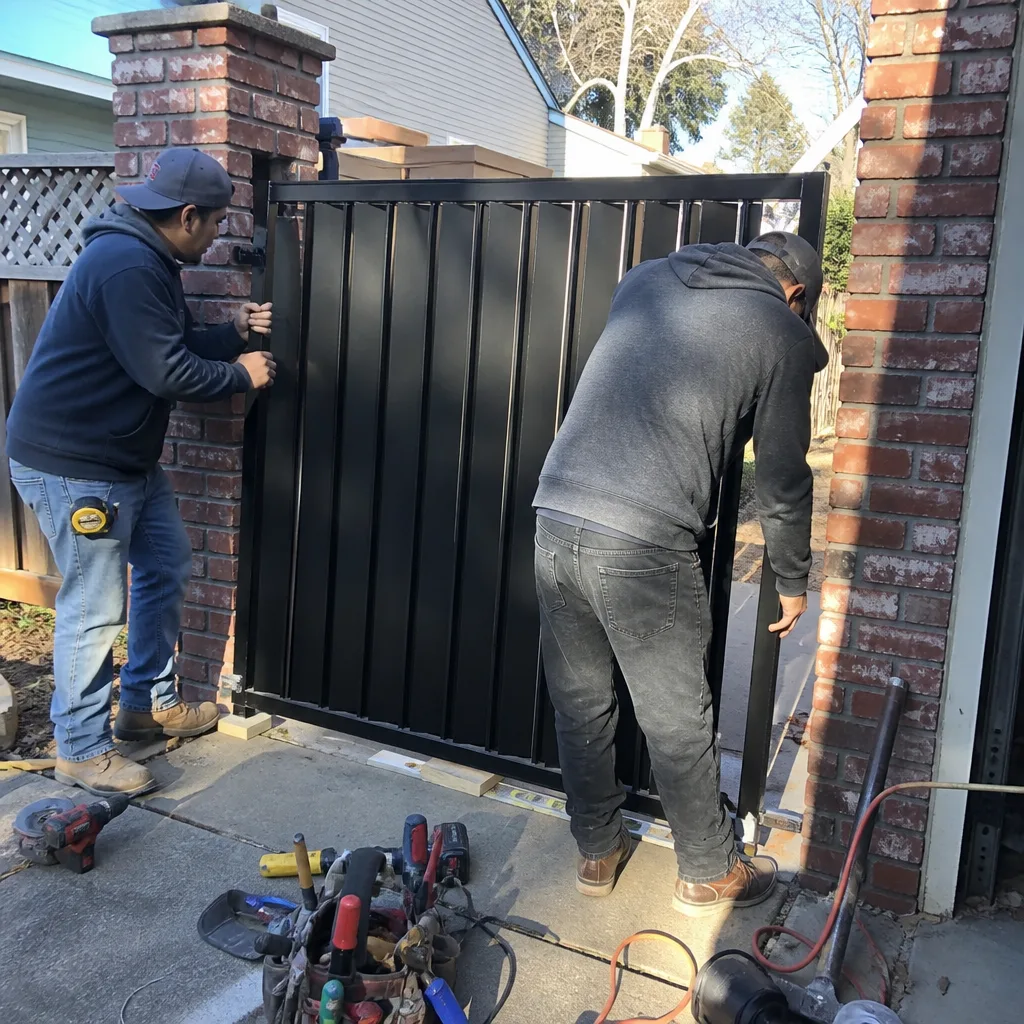
We’ve referenced this log throughout. Here’s the complete format, designed to fit on one printed page and live on a clipboard near your electrical panel or gate control box.
FREMONT GATE BASELINE LOG
Property address: _______________ Gate type: Swing / Slide Brand: _________
| Item | How to Measure | Spring (May/Jun) | Fall (Oct) |
|---|---|---|---|
| Post plumb, hinge face | 4-ft level, record bubble position | ||
| Post plumb, side face | Same, perpendicular | ||
| Top hinge gap | Tape measure, gate closed | ||
| Bottom hinge gap | Same | ||
| Gate height at latch | Measure from ground to latch center | ||
| Operator cam/stop position | Photo through sight window | ||
| Battery voltage (unloaded) | Multimeter at battery terminals | ||
| Battery voltage (gate running) | Multimeter during open cycle | ||
| Any new noise or binding? | Describe |
The height-at-latch measurement catches post settlement that plumb readings miss. A post can remain plumb while sinking 1/2 inch. The latch no longer engages, or engages only with lift pressure. Recording height gives you that data before the latch fails entirely.
When you call for service, read the log to the dispatcher. A technician arriving with baseline data starts diagnosis at the point of change, not from zero. Under Clause 4 (Evidence on every job), we photograph the current condition and add it to your job record, so next year’s comparison has three data points instead of two.
Common Mistakes to Avoid
- Waiting for the gate to fail completely before calling. A gate that binds in February and is ignored will typically seize an operator clutch by April. The $220 hinge adjustment becomes a $890 operator replacement. In Fremont’s clay soils, early intervention pays 4:1.
- Using spray lubricant on gate hinges and calling it maintenance. Spray lube (WD-40, Liquid Wrench) evaporates in 72 hours and leaves a residue that attracts grit. We’ve disassembled hinges in the Niles district packed with abrasive paste that was originally spray lubricant plus Bay dust.
- Ignoring the battery until the gate stops working. Lead-acid batteries give warning signs: slower operation, beeping during cycle, intermittent remote response. Fremont homeowners often adapt to these signs for months, then are surprised when the battery fails entirely on a rainy October morning.
- Re-setting limit switches without checking post plumb first. If the gate moved because the post tilted, re-setting limits masks the problem. The operator now drives the gate into a misaligned path with full force. We see bent gate arms and stripped gears from this exact sequence.
- Assuming “mild climate” means “no maintenance needed.” Fremont’s lack of freezing weather is irrelevant to the soil movement and corrosion patterns that actually cause failures. The homeowners who skip seasonal care are overrepresented in our February and October service call data.
- Not documenting which technician did what, when. Without a written record or photo log, every future technician starts from zero. Under the Haven Standard, we leave documented evidence on every visit. If your current provider doesn’t, you’re paying to rediscover the same information.
When to Call a Professional
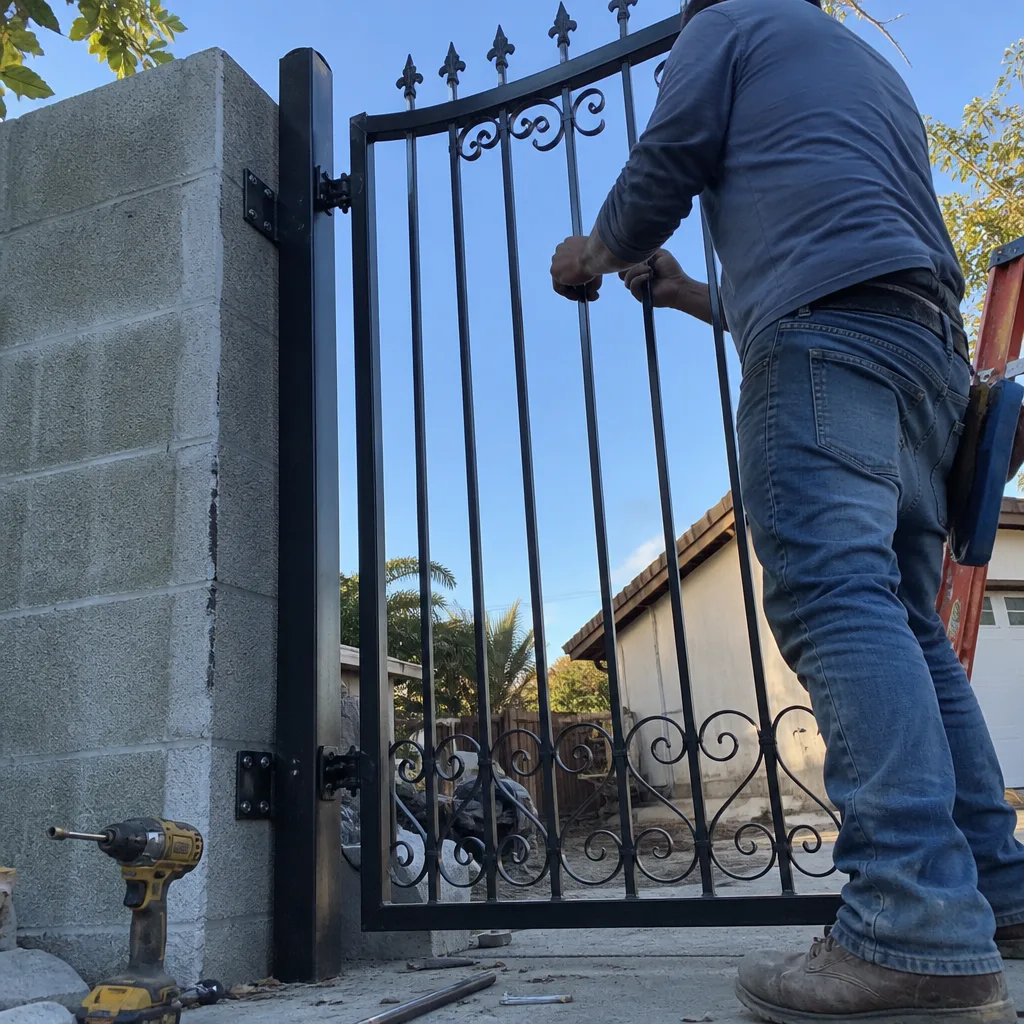
Call when post plumb exceeds 2 degrees, hinge gap variance exceeds 1/4 inch, or the gate binds during manual cycling. Call when the operator makes new noises, beeps, or flashes fault codes you don’t recognize. Call when you’ve completed the October checklist and the battery voltage under load drops below 11.5 volts - replacement is cheaper than a service call for a dead gate.
High-tension spring-assisted gates and any gate with a high-torsion counterbalance system should never be disassembled without proper tools and training. The stored energy can cause serious injury. If your gate uses a spring-assist mechanism and you suspect spring fatigue, do not attempt adjustment.
Vance Gate Repair Fremont offers free estimates in Fremont - call (510) 826-3980. We dispatch background-checked, uniformed technicians with name and photo provided before arrival. Every estimate is written under Haven Standard Clause 1 before any work begins. We service all nine major automation brands, including FAAC, BFT, Linear, and Viking, and we carry common batteries, gaskets, and hinge hardware on every truck.
Frequently Asked Questions
Twice yearly: once in late February after the rainy season peaks, and once in early October before the first rains return. A 30-minute visual inspection and measurement recording at each point catches the two failure clusters we see most often. Call (510) 826-3980 if your measurements show change from spring to fall - estimates are free.
Marine layer moisture causes corrosion on exposed steel and condensation in control boxes, while saturated clay soil tilts posts and binds hinges. The problems aren’t dramatic, but they’re persistent. Fog deposits conductive moisture daily for weeks, and clay expansion can shift a post 1/4 inch by March. Both issues are invisible until the operator starts faulting.
Visual inspection, measurement recording, battery voltage testing, and photo-eye cleaning are within most homeowners’ ability. Post-plumbing correction, hinge replacement, limit-switch calibration on automated systems, and any work involving high-tension springs require professional tools and training. We offer a free second opinion on any written estimate from another company - bring the paperwork and we’ll review it at no cost.
Most preventive service calls in Fremont run between $180 and $340, depending on access, gate type, and whether parts (battery, gasket, hinge pin) need replacement. A written price is provided before any work starts under Haven Standard Clause 1. We do not charge diagnostic fees separately when you proceed with recommended service.
With proper maintenance, 12-15 years is typical for residential swing and slide operators in Fremont’s mild, non-freezing climate. Without seasonal care, we see failures at 7-9 years, usually from operator strain compensating for misaligned gates or from control-board damage due to condensation. The motor itself rarely fails first; it’s the control electronics and mechanical drive components that wear prematurely.
We service nine major automation brands: LiftMaster, FAAC, BFT, Linear, Viking, Ghost Controls, DoorKing, Elite, and Mighty Mule. We carry parts for all nine and do not steer customers toward replacement when repair is viable. If your operator is one of these brands, we can service it. If it’s an older or less common unit, call (510) 826-3980 with the model number and we’ll confirm parts availability.
The Bottom Line
Fremont’s gate failure calendar is predictable: late February post-rain misalignment, and early October convergence of battery degradation, rapid soil re-expansion, and clogged drainage. The homeowners who avoid emergency repairs are the ones who treat these two windows as maintenance appointments, not as optional checks. Record spring baselines. Check post plumb in February. Test batteries and clear drains in October. The 30 minutes invested twice yearly prevents the majority of preventable failures we document. For more guides & resources, a written estimate and documented repair record beats guessing - which is why we built the Haven Standard and apply it to every gate we touch in Fremont.
Written by Adrian Vance, Owner at Vance Gate Repair Fremont home, serving Fremont since 2014.