
Last updated September 22, 2026
Free on-site gate assessment - hinges, posts, and your LiftMaster or Nice gate operator checked before anything is quoted
The assessment is free and the quote is the invoice.
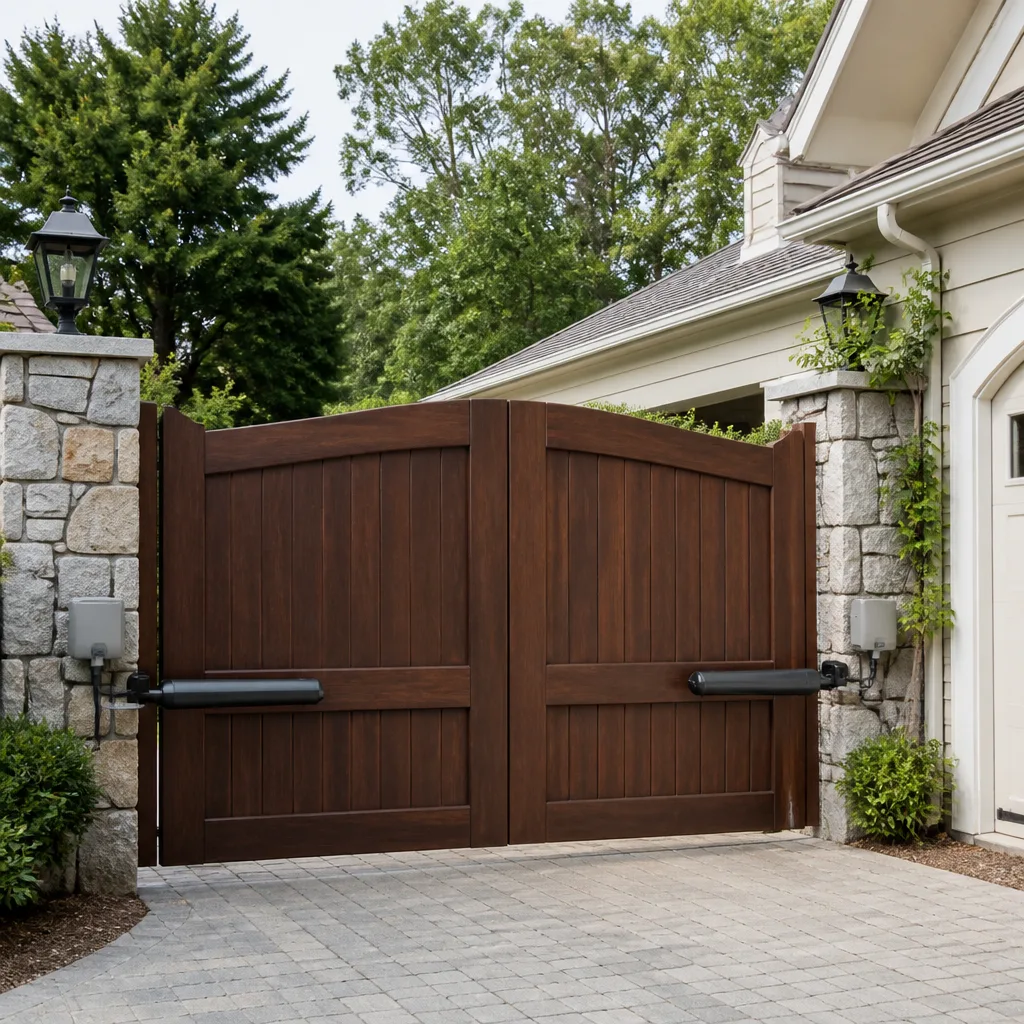
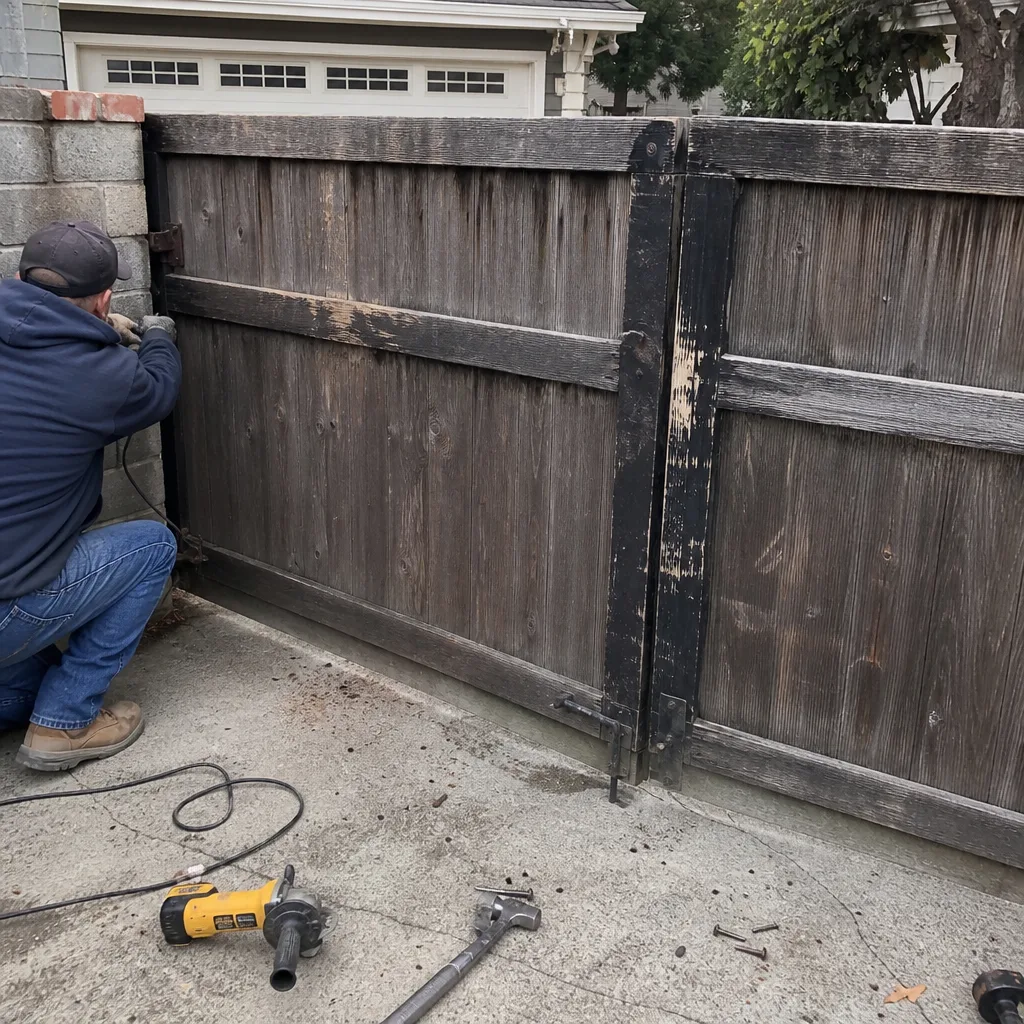 Before
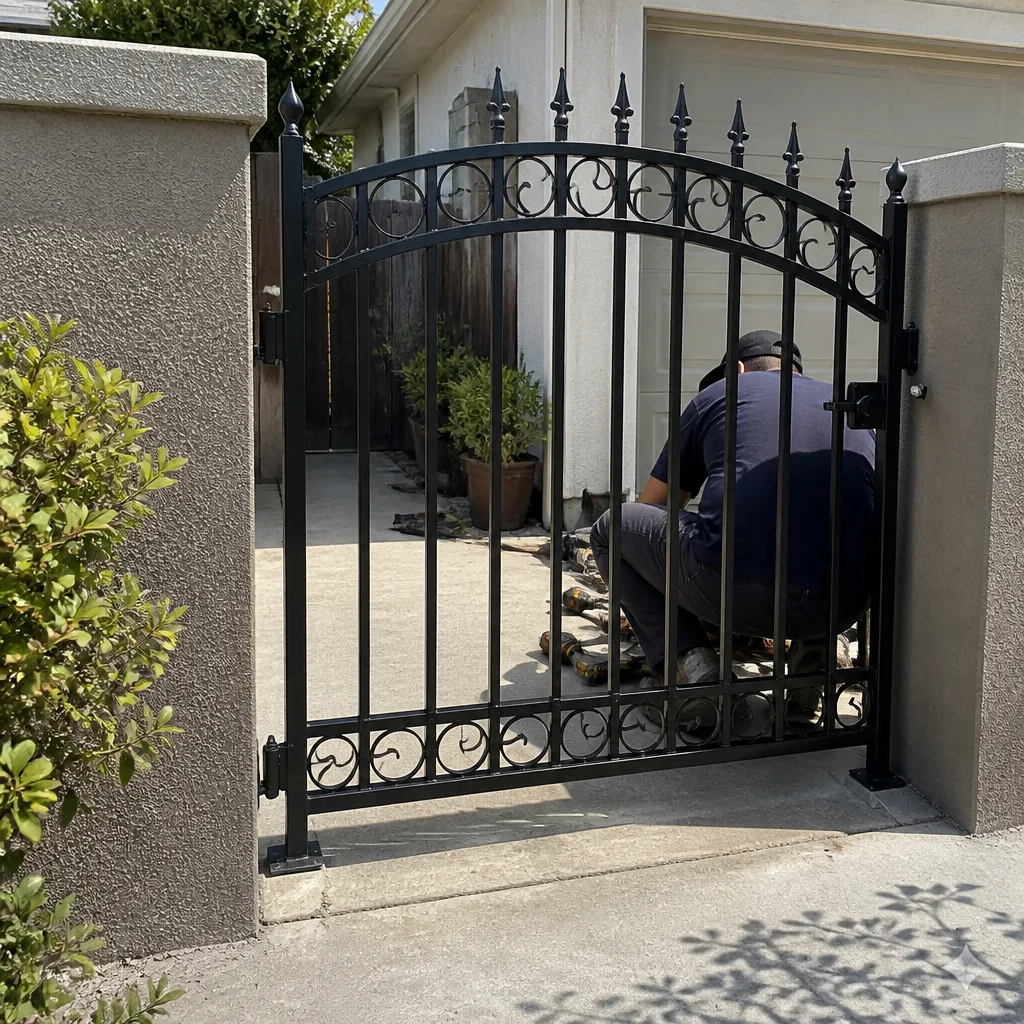 After
After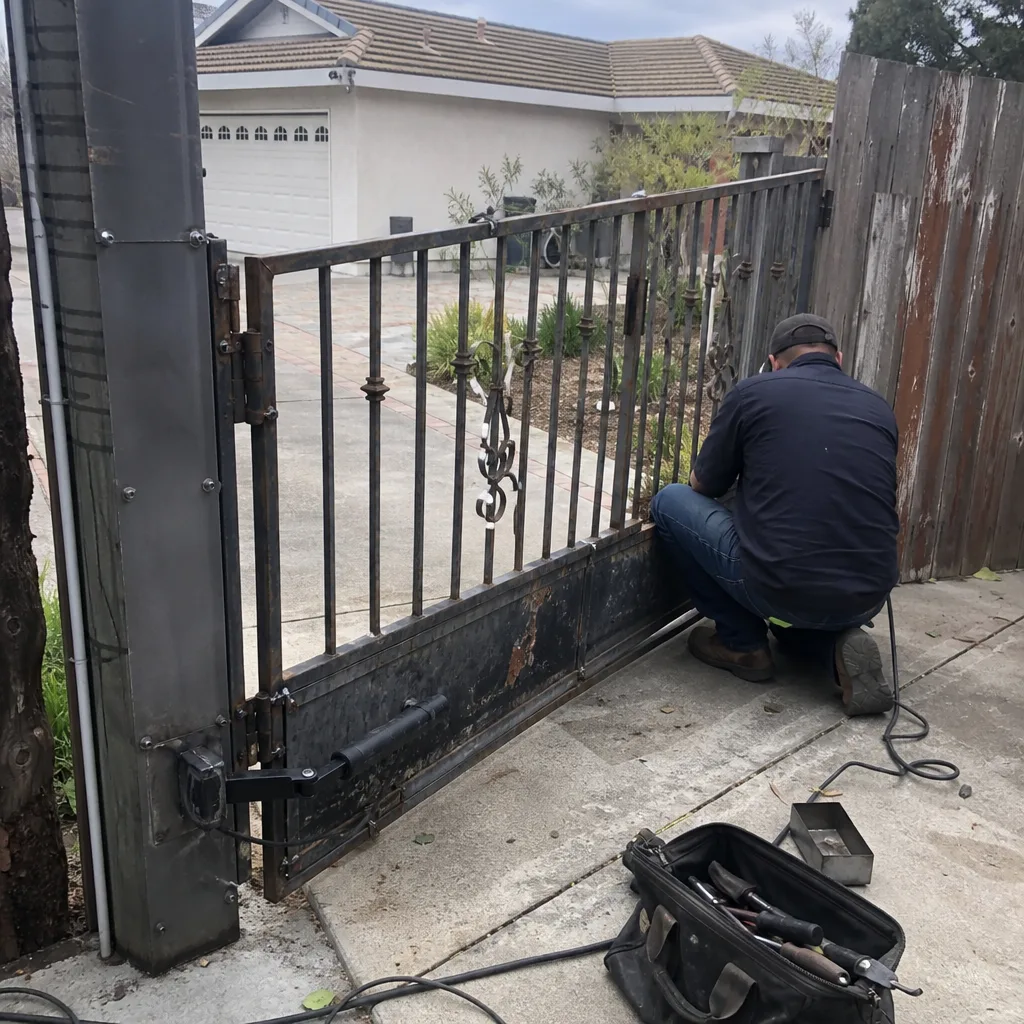 Before
 After
After Before
 After
AfterGate Repair Warning Signs: A Fremont Homeowner’s Reference Guide
A gate that pauses mid-travel and then continues looks like an intermittent sensor fault. It reads like a motor drawing 4.2 amps on a system rated for 2.8 - which means the motor is failing, not the sensor, and the repair cost difference between catching it now and catching it seized is roughly $600. In Fremont, where most residential gates see 4-6 cycles per day between school drop-offs, commute hours, and evening returns, that motor can go from “a little slow” to locked rotor in under three weeks. This guide sorts what you can see from what you can only measure, and shows you which measurements matter.
Quick Answer
Gate warning signs fall into two groups: observable symptoms (slow travel, grinding noise, reversal before closing, failure to latch) and hidden diagnostic readings (amp draw, limit switch position, battery voltage under load, photo-eye alignment offset). The observable signs tell you something is wrong; the diagnostic readings tell you whether the fix is a $180 adjustment or a $1,400 motor replacement. Most expensive failures in Fremont gates we service give observable warnings for 2-4 weeks before catastrophic failure.
Table of Contents
- Observable Symptoms vs. Hidden Diagnostic Readings
- Symptom-to-Cause Matrix: What Each Behavior Means
- Safe to Monitor vs. Immediate Safety Risk Under UL 325
- How to Document a Warning Sign Before Calling
- Failing vs. Misadjusted: The Tests You Can Do Without Tools
- Fremont-Specific Factors: Climate, Soil, and Code
- Common Mistakes to Avoid
- When to Call a Professional
- Frequently Asked Questions
 Before
 After
AfterObservable Symptoms vs. Hidden Diagnostic Readings
Every gate repair call starts with a story. “It was fine yesterday.” “It started making a noise last Tuesday.” “It reverses sometimes, then it doesn’t.” These are observable symptoms - what a homeowner sees, hears, or feels. They’re real, but they’re also ambiguous. A grinding noise could be dry rollers, a failing gearbox, or a loose chain slapping the track. Reversing before the close limit could be a misaligned photo-eye, a weak motor, or a physical obstruction in the track.
The hidden readings are what a technician measures with tools: amp draw at the motor, voltage at the battery under load, the precise angle of the limit switch cam, the millisecond response time of the safety edge circuit. These readings turn ambiguity into certainty. They also separate a $200 maintenance visit from an $1,800 emergency replacement.
Here’s how the two categories map in practice:
| Observable Symptom | Hidden Reading That Confirms Cause | Cost to Fix Now vs. Later |
|---|---|---|
| Gate slows mid-travel, especially on uphill swing | Motor amp draw exceeds nameplate rating by >30% | $280-$450 adjustment vs. $1,200-$1,800 motor replacement |
| Reverses 6-12 inches before fully closed | Photo-eye alignment offset >0.5 inches; or safety edge resistance >10 ohms | $150-$220 alignment vs. $400-$650 if edge circuit fails completely |
| Grinding noise during travel | Roller bearing resistance >5 in-lbs; or chain tension < specification | $180-$320 roller/chain service vs. $800-$1,400 if rail distorts |
| Remote works intermittently, especially in afternoon | Control board capacitor voltage droop >15% under load; or transformer output < 24VAC | $220-$380 board repair vs. $900-$1,500 full control replacement |
| Gate drifts open 2-4 inches after stopping | Solenoid brake holding torque < 50% of rated; or limit switch overrun > 3 degrees | $200-$350 brake/solenoid vs. $600-$900 if gate strikes vehicle |
In our experience across Fremont’s hillside developments - Mission Hills, the slopes above Warm Springs, the grades near Vargas Plateau - the uphill motor strain pattern is the most commonly misdiagnosed. Homeowners describe “a little hesitation,” technicians who don’t measure amp draw replace the remote battery twice, and the motor fails six weeks later. Under Haven Standard Clause 4, we photograph the amp reading and leave it with the homeowner. The next technician, even if it isn’t us, sees exactly what we saw.
Symptom-to-Cause Matrix: What Each Behavior Means
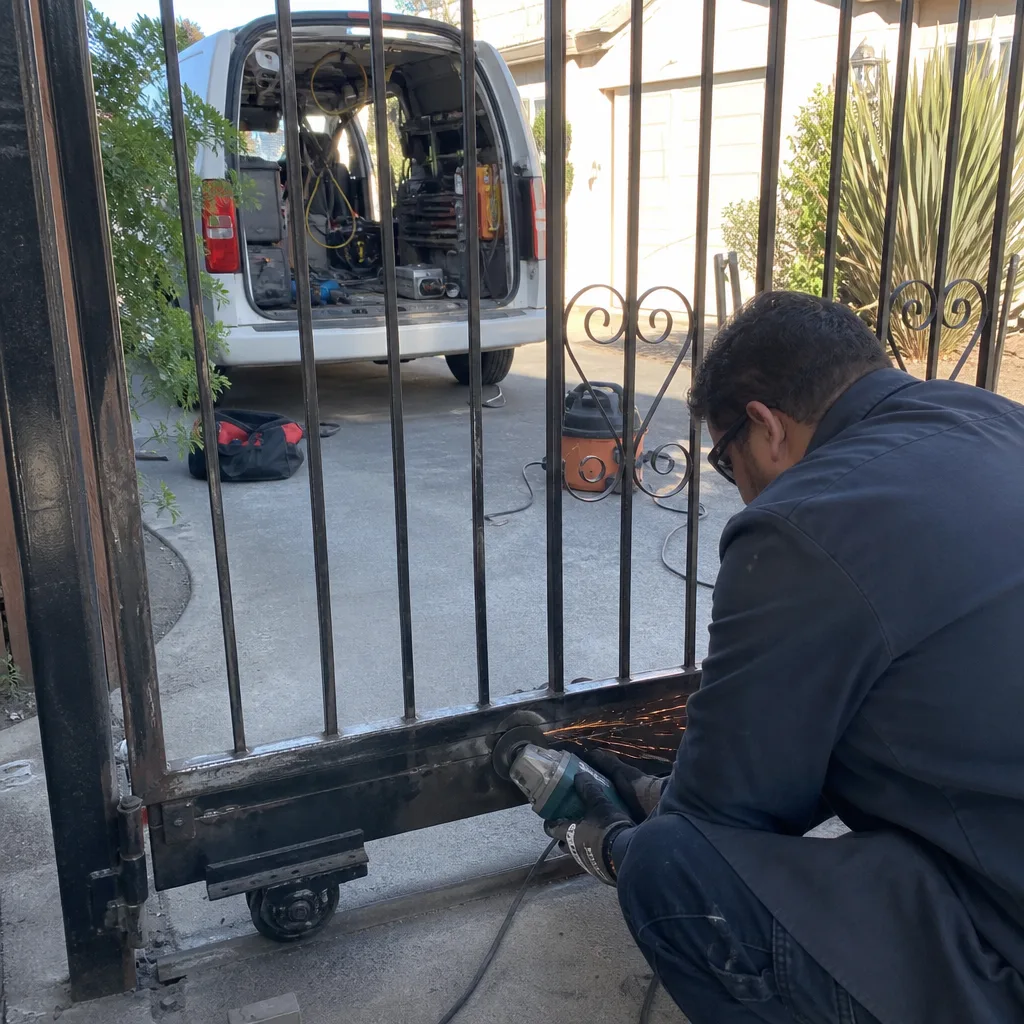
The same symptom can point to three different failures. Without diagnostic readings, you’re guessing. Here’s the matrix we use on every gate repair in Fremont, with the specific test that resolves the ambiguity.
Slow Travel
Observable: Gate takes 4-5 seconds longer than usual to complete its cycle. Often worse in cold mornings or on the opening stroke (uphill for swing gates).
Three possible causes, three readings to distinguish them:
- Motor weakening: Amp draw at the motor exceeds the nameplate rating during normal travel. A healthy LiftMaster CSW200UL draws 2.8 amps at rated load; we start watching closely at 3.5 amps and recommending replacement planning at 4.2 amps. The motor still moves the gate - until it doesn’t.
- Control board reducing speed: The board receives a fault signal (often from a safety edge with degraded resistance) and enters “creep mode” as a protective response. The board’s LED fault code and the edge circuit resistance reading confirm this.
- Mechanical binding: Roller bearings, hinge pins, or track alignment create drag. We measure with a spring scale at the gate’s leading edge; healthy swing gates need 8-15 pounds of force to move manually, slide gates 12-20 pounds. Above that, we find the bind.
In Fremont’s older Mission San Jose installations, we regularly see cause #3 masquerading as cause #1. The 1980s wrought-iron gates with original brass hinge pins seize gradually; the motor compensates until it can’t. Measuring manual force takes 30 seconds and prevents a needless motor replacement.
Reversing Before Close
Observable: Gate reaches 90-95% of its close cycle, then reverses to open. Sometimes consistent, sometimes random.
- Photo-eye misalignment: The infrared beam (photo-eye) is interrupted by vibration, thermal expansion of the mounting bracket, or debris. We measure alignment with a digital level: the transmitter and receiver must be within 0.5 inches of parallel at the beam’s farthest point. In Fremont’s wind-prone spring afternoons, we’ve seen brackets flex 0.3 inches just from gust loading.
- Safety edge circuit fault: The resistive edge on a sliding gate, or the pneumatic edge on a swing gate, develops an internal break. The ohmmeter reading should be steady; a reading that fluctuates with temperature or gate position means replacement.
- Mechanical obstruction in final inches: Track debris, a shifted stop plate, or a warped picket contacts the gate. The motor’s stall amp spike confirms this - typically 150-200% of normal draw for 0.3-0.5 seconds before the board reverses.
Grinding or Rattling Noise
Observable: Metallic grinding, chain rattle, or rhythmic clicking during travel.
- Dry or failed roller bearings: The roller spins but the bearing doesn’t; metal-on-metal contact produces a consistent grinding. We spin the roller by hand after disconnecting the gate - roughness or play confirms replacement.
- Chain or belt too loose: Slap against the rail cover or sprocket teeth skipping. Chain sag should be 0.5-1 inch at mid-span; more than that, and the sprocket wears asymmetrically.
- Gearbox wear: A clicking that accelerates with gate speed, especially in the final third of travel. The gearbox backlash measurement (rotational play at the output shaft) should be < 5 degrees; more means internal gear wear.
On a recent call in the Glenmoor neighborhood, a homeowner described “a clicking that got worse over two months.” The gearbox backlash was 18 degrees. Caught at 8 degrees, the gearbox could have been rebuilt for $340. At 18 degrees, the gear teeth had damaged the housing - $890 replacement. The observable symptom was identical; only the reading changed the outcome.
Failure to Latch
Observable: Gate reaches the close limit but doesn’t engage the magnetic or mechanical latch. Often accompanied by a “clunk” as the motor times out.
- Limit switch overrun: The gate travels 1-2 inches past the latch position, then rebounds. The limit switch cam angle, measured with a protractor on the output shaft, shows the overrun.
- Weak or misaligned latch magnet: Magnetic latches need 15-25 pounds of pull force at rated gap. A gauss meter reading below 800 gauss at the face means degraded magnetism.
- Gate frame distortion: Settlement, impact, or thermal cycling has shifted the latch plate. We measure with a straightedge and feeler gauges; gaps > 0.25 inches prevent consistent latching.
Safe to Monitor vs. Immediate Safety Risk Under UL 325
UL 325 is the safety standard governing gate automation. It defines entrapment risk - a gate that can injure a person or vehicle because a safety device has failed. Some warning signs are inconvenient. Others violate UL 325 and create liability exposure for the homeowner.
Safe to Monitor (Schedule Service Within 1-2 Weeks)
- Slow travel with normal amp draw - likely mechanical binding or control board speed reduction
- Intermittent remote response, consistent with range or battery issues
- Cosmetic rust on gate frame with no structural deformation
- Slight noise increase, with no change in travel time or force
- Keypad button wear or display fading
Immediate Safety Risk - Stop Using, Call Same Day
- Gate reverses inconsistently or not at all when encountering an obstruction - failed safety edge or photo-eye circuit
- Gate moves without command (ghost operation) - control board fault or wiring short
- Safety edge visibly damaged, crushed, or detached from gate edge
- Gate does not stop when photo-eye beam is broken during close cycle - photo-eye bypass or wiring fault
- Manual release fails to disengage motor - entrapment hazard if power fails during emergency
- Gate free-falls or drops when manually released - brake failure on vertical lift or slide gate
The last item deserves emphasis. In 2019, a Fremont homeowner in the Central District manually released a slide gate during a power outage. The gate, with a failed solenoid brake, rolled down a 4% grade and struck their vehicle. The brake had shown no observable symptom - the gate stopped normally under power - but a holding torque test would have revealed 30% of rated capacity. We now test brake holding torque on every gate repair in Fremont that includes a motor or control board service.
Under Haven Standard Clause 4, any UL 325 safety risk found during a visit is documented with photographs, the homeowner is notified in writing, and the gate is disconnected from power if the risk cannot be resolved immediately. No exceptions.
How to Document a Warning Sign Before Calling
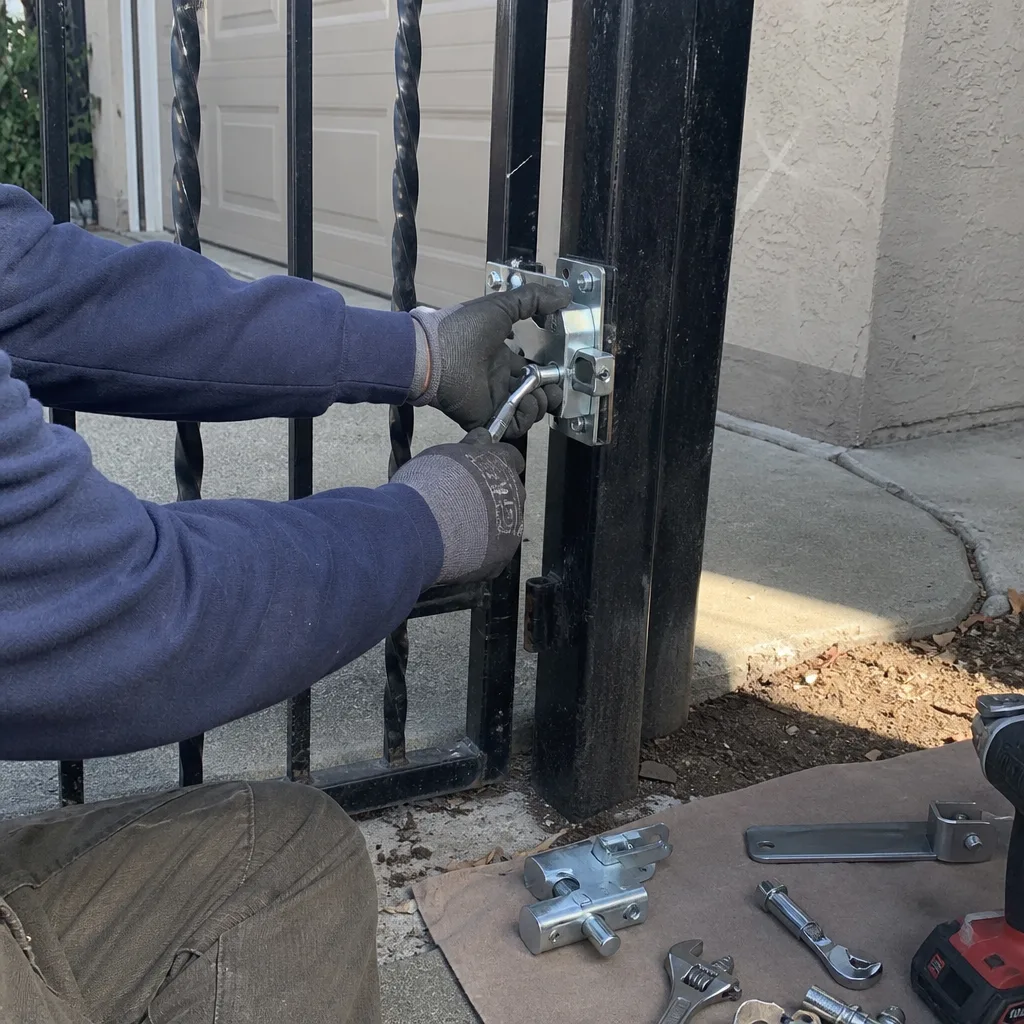
A photograph that helps diagnosis contains specific information. Most homeowner photos we receive show a gate from 20 feet away, centered in the frame, with no context. That’s decorative. Here’s what makes a photo diagnostically useful:
- Photo the symptom in context. If the gate reverses before closing, photograph the gap between gate and post when reversal occurs. Include a tape measure or known object (a water bottle, a shoe) for scale.
- Photo the control board LED status. Every major brand - LiftMaster, DoorKing, Elite, Mighty Mule - displays fault codes via LED color and flash pattern. A clear photo of the LED during the fault condition saves 15 minutes of phone description.
- Photo the nameplate data. Motor model, serial number, manufacture date, and electrical ratings. This is usually on a metal tag riveted to the motor housing. It determines whether parts are available and what the correct amp draw should be.
- Photo the photo-eye alignment. Stand behind the receiver and photograph the transmitter through the lens. If the red alignment light is visible, include it. If brackets are bent or cables damaged, show that.
- Record the conditions. Time of day, temperature, whether the fault is consistent or intermittent, and whether it affects open, close, or both cycles. Text this to us or include it in the email.
We receive these photo sets at Vance Gate Repair Fremont and can often narrow the probable cause before dispatching. On three occasions in 2023, a photo set showed a fault code indicating a failed safety edge - we arrived with the correct replacement edge, completed the repair in 45 minutes, and the homeowner paid for one hour of labor rather than two.
Failing vs. Misadjusted: The Tests You Can Do Without Tools
Not every problem is a failure. Some are misadjustments - settings that drifted from specification without component degradation. The difference matters because misadjustments cost $150-$300 to correct; failures cost $600-$1,800 to replace. These tests require no tools beyond your hands and attention.
Test 1: Manual Force Required
Disconnect the gate from the motor (every automated gate has a manual release - usually a key switch or lever). Push the gate through its full travel. It should move smoothly, with steady resistance, no binding or catching. If it sticks at one point, the problem is mechanical, not the motor. If it moves freely but the motor struggles, the motor or control is suspect.
For swing gates: the manual force should feel like pushing a heavy shopping cart. For slide gates: like moving a loaded file cabinet on wheels. Significantly more, and there’s a bind; significantly less (gate drifts), and the brake or counterbalance is failing.
Test 2: Consistency Check
Cycle the gate ten times, noting which cycles show the symptom. A truly random pattern suggests electrical (loose connection, failing relay, control board). A pattern - every third cycle, only in afternoon heat, only on close - suggests thermal or mechanical. Record it; the pattern is diagnostic.
Test 3: Obstruction Response
Place a solid object (a cardboard box, a foam cooler) in the gate path during close. The gate should stop and reverse on contact. If it doesn’t, or reverses inconsistently, the safety system has failed. Do not repeat this test; the first failure is sufficient evidence. The gate is unsafe to operate automatically.
Test 4: Remote Range and Angle
Test the remote from 10 feet, 50 feet, and 100 feet, with direct line of sight and then from inside a vehicle. A remote that works only at close range, or only from certain angles, has a weak battery or damaged antenna - not a motor problem. Replace the battery before calling service; we estimate 15% of our “intermittent operation” calls in Fremont are resolved with a $5 battery.
Test 5: Listen at the Motor
Stand at the motor housing during a cycle. A healthy motor produces steady mechanical noise; a failing motor produces variations in pitch, momentary silence (brush arcing), or a smell of hot insulation. The smell test is real and reliable - overheated motor windings produce a distinctive acrid odor that doesn’t dissipate quickly.
Fremont-Specific Factors: Climate, Soil, and Code
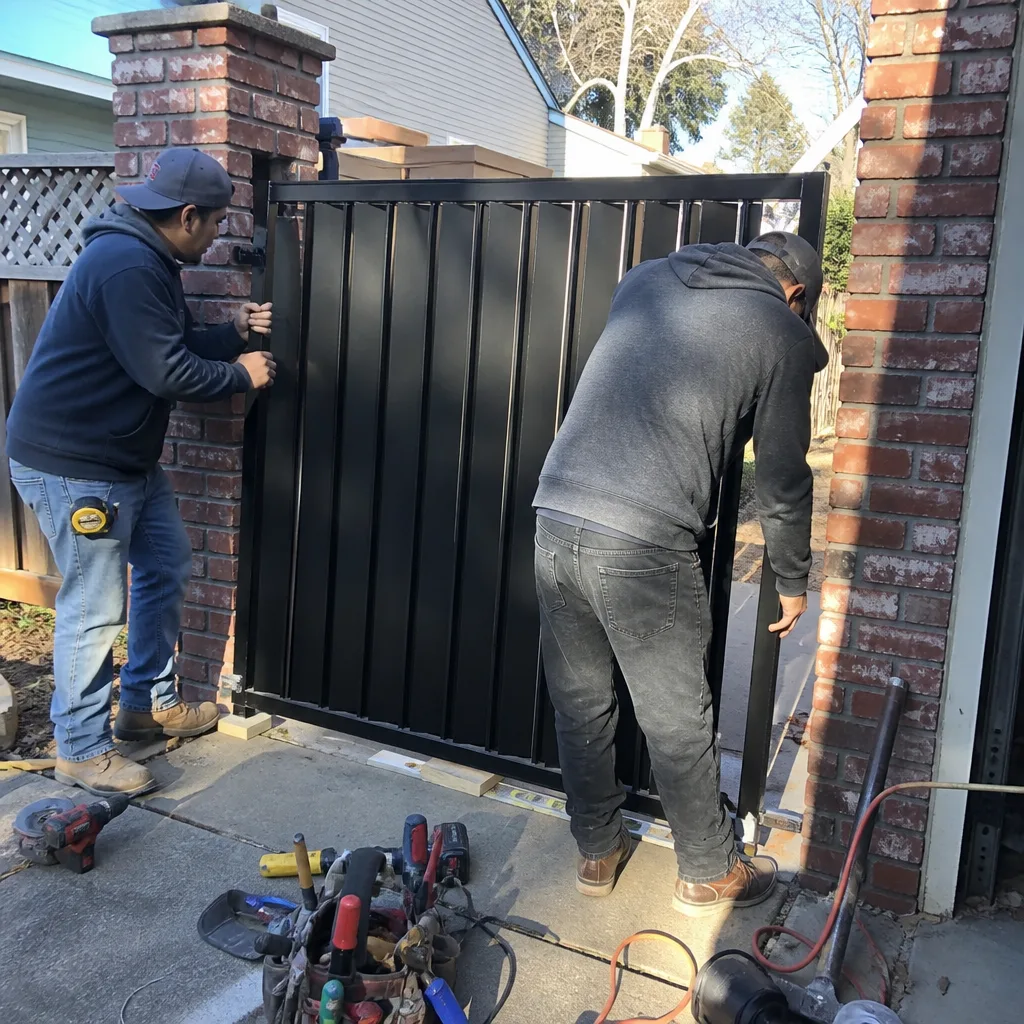
Fremont’s location at the eastern edge of the Bay Area creates specific gate failure patterns that don’t appear in generic guides.
Soil and foundation movement: The Mission San Jose and Warm Springs areas sit on expansive clay soils that shrink and swell with moisture. We’ve measured gate post movement of 0.5-1.5 inches seasonally in these neighborhoods. The observable symptom is a gate that latches in winter but not in summer, or a slide gate that binds in September after a dry summer. The fix isn’t motor replacement - it’s post stabilization or track realignment. A technician who doesn’t ask about seasonal patterns will sell you a motor you don’t need.
Corrosion from marine air: The Niles and Bayfront districts see salt air carried on afternoon westerlies. Aluminum gates corrode at weld points; steel gates rust from the inside of hollow sections. The observable symptom is paint bubbling at welds or rust streaks from weep holes. The hidden reading is wall thickness - we ultrasonic-test hollow steel sections below 14-gauge, and recommend replacement when thickness drops below 60% of original.
Thermal cycling of electronics: Fremont’s 40-degree daily temperature swings in summer (55°F dawn, 95°F afternoon) stress control board capacitors. The observable symptom is afternoon intermittent operation, especially 2-5 PM, that clears by evening. The hidden reading is capacitor ESR (equivalent series resistance), which we measure with an ESR meter. Capacitors with ESR > 2 ohms at 100 kHz are degraded; they pass simple voltage tests but fail under thermal load.
Local code requirements: Fremont adopts the California Building Code with amendments. Gate installations require permits when the gate is part of a fence over 7 feet or when automation is added to an existing gate. Repairs to existing automation typically don’t require permits, but replacement of the motor or control board on a gate that predates current UL 325 standards may trigger a code upgrade requirement - soft edges instead of contact edges, for example, or additional photo-eyes. We note this on every written estimate under Haven Standard Clause 1, so there’s no surprise inspection failure.
For new gate installation in Fremont, we handle permit documentation as part of the written scope.
Common Mistakes to Avoid
- Ignoring a change in cycle time. A gate that took 12 seconds to open and now takes 18 is not “just getting older.” The motor is compensating for increased load or internal degradation. Measure or call; don’t wait for failure.
- Applying lubricant to a grinding noise without finding the source. Spray lubricant on a failing bearing and the noise stops for two weeks - then the bearing seizes, taking the roller and possibly the track with it. We name the component, then lubricate if appropriate.
- Replacing the remote twice before testing the receiver. In Fremont’s RF-dense environment - WiFi extenders, solar panel inverters, amateur radio - receiver desensitization is common. A $280 remote replacement doesn’t fix a $180 receiver adjustment.
- Assuming a gate that “usually works” is fine. Intermittent faults in automation are nearly always progressive. The “usually” interval shrinks until it becomes “never.” The repair cost doubles when the failure becomes constant, because secondary damage accumulates.
- Accepting a verbal estimate for motor or control replacement. Without a written scope, you don’t know if the price includes the power run, the safety edge verification, the limit switch adjustment, or the photo-eye realignment. Under Haven Standard Clause 1, we itemize every component and labor line before work starts.
- DIY adjustment of limit switches or force settings. These controls set the entrapment force the gate will apply before reversing. Incorrect adjustment violates UL 325 and creates liability. We document the original and adjusted settings with photographs.
- Neglecting the manual release test. Every homeowner should verify quarterly that the manual release disengages the motor and allows free gate movement. In a power outage or emergency, this is your exit path. A seized release is an entrapment hazard.
When to Call a Professional
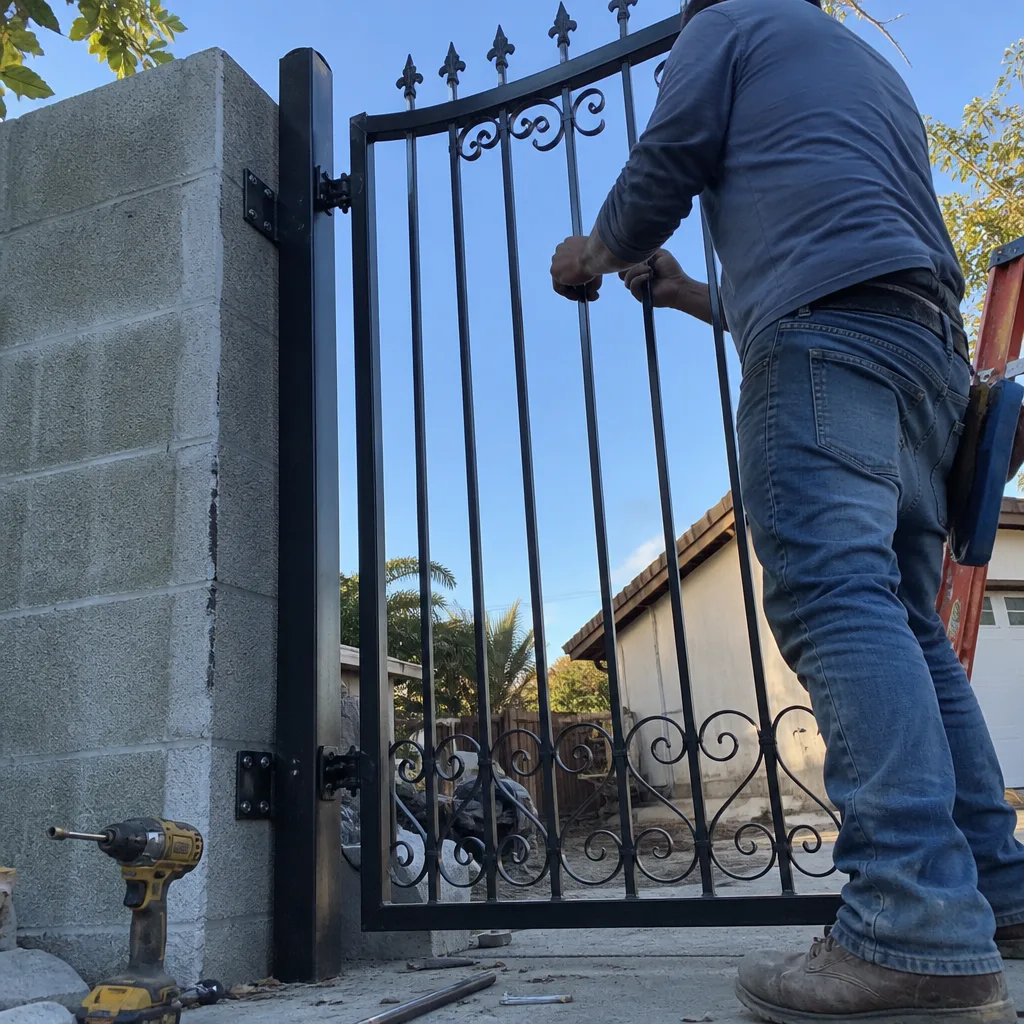
Call when a symptom persists for more than three cycles, when any safety test fails, or when you cannot identify the cause with the tests above. Same-day response matters for safety failures; scheduled service is appropriate for performance degradation. Vance Gate Repair Fremont offers free estimates in Fremont - call (510) 826-3980. A live person answers 24 hours a day. We’ll ask for your symptom description, any photos you’ve taken, and the gate brand if you know it. If the fault is unclear, we schedule a diagnostic visit with a written estimate before any repair work. Under the 365-Day Done Right Promise, if the repair doesn’t resolve the symptom, we return at no charge to make it right.
Frequently Asked Questions
Most gate motor repairs in Fremont run $280-$650, depending on whether the issue is control board, capacitor, or mechanical. Full motor replacement, when the winding or gearbox has failed, typically ranges $850-$1,400 including installation and limit switch adjustment. We provide a written, itemized price before any work starts under Haven Standard Clause 1. Call (510) 826-3980 for a free estimate.
You can check for obvious photo-eye misalignment - clean the lenses, verify the brackets are tight, ensure nothing blocks the beam path. If the problem persists, the cause could be safety edge resistance, control board logic, or motor strain - all of which require diagnostic tools. We don’t recommend adjusting force settings or limit switches without training; incorrect settings create entrapment hazards under UL 325. Call for a diagnostic with written estimate.
Thermal expansion of metal components, capacitor degradation in the control board, or voltage drop in a solar-charged battery system are the three most common causes in Fremont’s climate. The afternoon temperature peak stresses marginal components that pass at cooler temperatures. A technician with an ESR meter and thermal camera can identify which component is failing. Document the exact times and temperatures when failure occurs - this pattern is diagnostically valuable.
Amp draw is the decisive reading. If the motor draws within 15% of nameplate rating under normal load, repair (capacitor, brushes, control board) is usually viable. If draw exceeds 30% above rating, or if the motor housing shows thermal discoloration, replacement is more cost-effective than repeated repair. We measure and photograph the amp reading, then explain both options with written prices for each. For gate motor and opener service in Fremont, we service nine major brands including LiftMaster, DoorKing, and Elite.
Stop cycling it and call for service. Continued operation turns a $200 roller replacement into an $800 rail and roller job, or a $350 gearbox service into a $1,200 motor replacement. The grinding is metal-on-metal contact somewhere in the drive system; every cycle causes incremental damage. If you must open the gate for vehicle access, use manual release and push the gate by hand.
We service nine major automation brands: LiftMaster, FAAC, BFT, Linear, Viking, Ghost Controls, DoorKing, Elite, and Mighty Mule. We don’t steer customers toward replacement with a different brand; we repair what’s installed. If your brand isn’t on this list, call anyway - many regional brands use compatible control boards or motor assemblies. We carry common components for all nine brands on our service vehicles in Fremont.
The Bottom Line
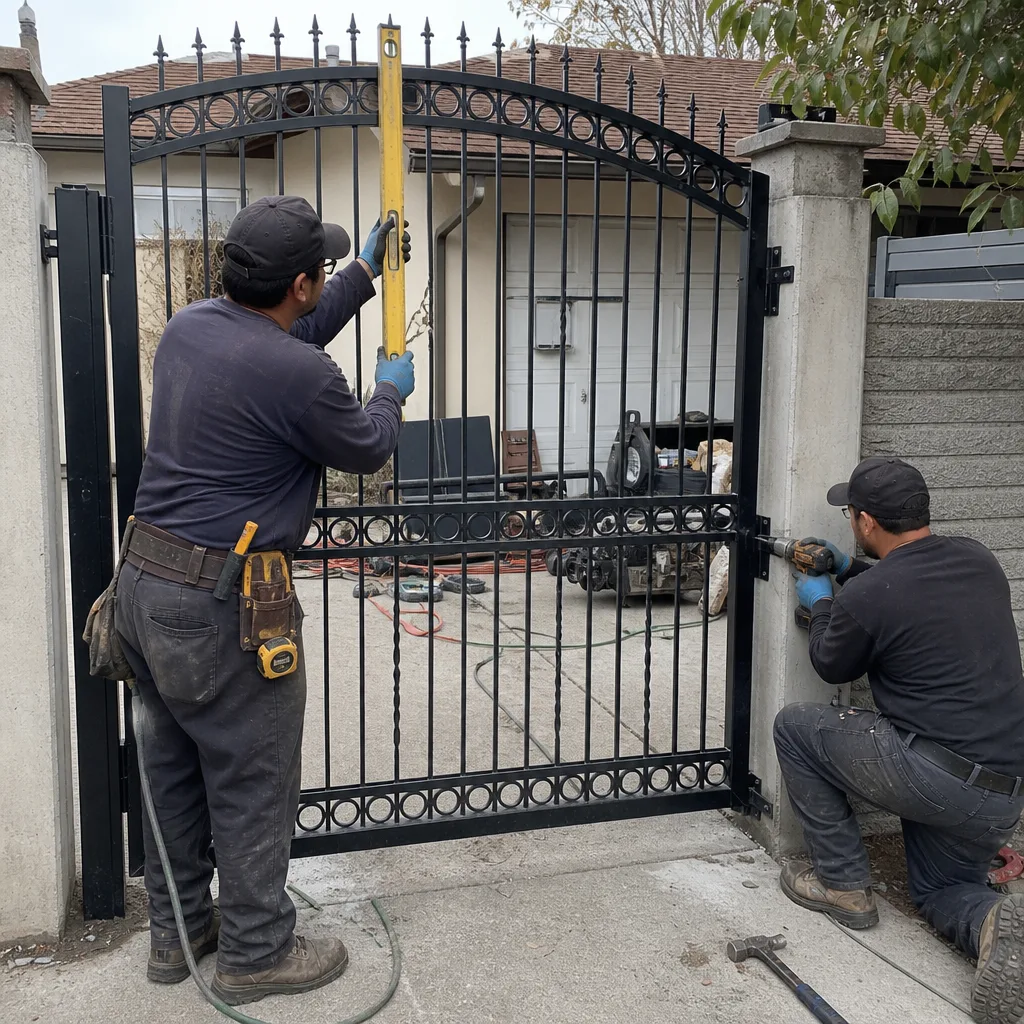
Gate warning signs are not mysterious. They’re data - observable behavior and hidden measurements - that point to specific component conditions. The homeowner who documents what they see, who understands which symptoms indicate safety risk versus performance decline, and who demands diagnostic readings from any technician they hire, avoids the most expensive failure mode in gate automation: paying twice to discover the same problem. In Fremont’s specific climate and soil conditions, seasonal patterns and thermal stress add local nuance that generic advice misses. Every gate repair we complete leaves a written record and photographic evidence under Haven Standard Clause 4, so the next technician - us or someone else - starts from knowledge, not guesswork. The 365-Day Done Right Promise means that record is backed by a full year of accountability.
Written by Adrian Vance, Owner at Vance Gate Repair Fremont, serving Fremont since 2014.