
Last updated September 22, 2026
Free on-site gate assessment - hinges, posts, and your LiftMaster or Nice gate operator checked before anything is quoted
The assessment is free and the quote is the invoice.
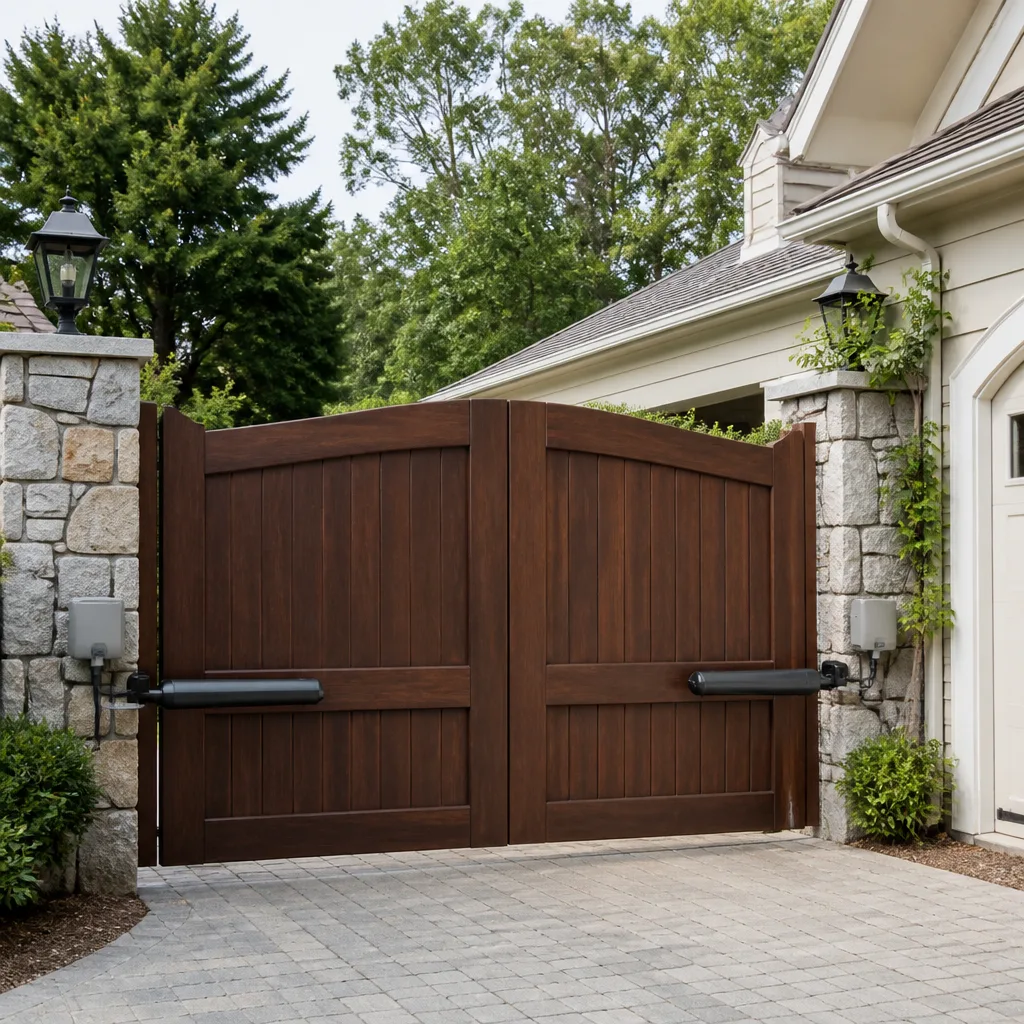
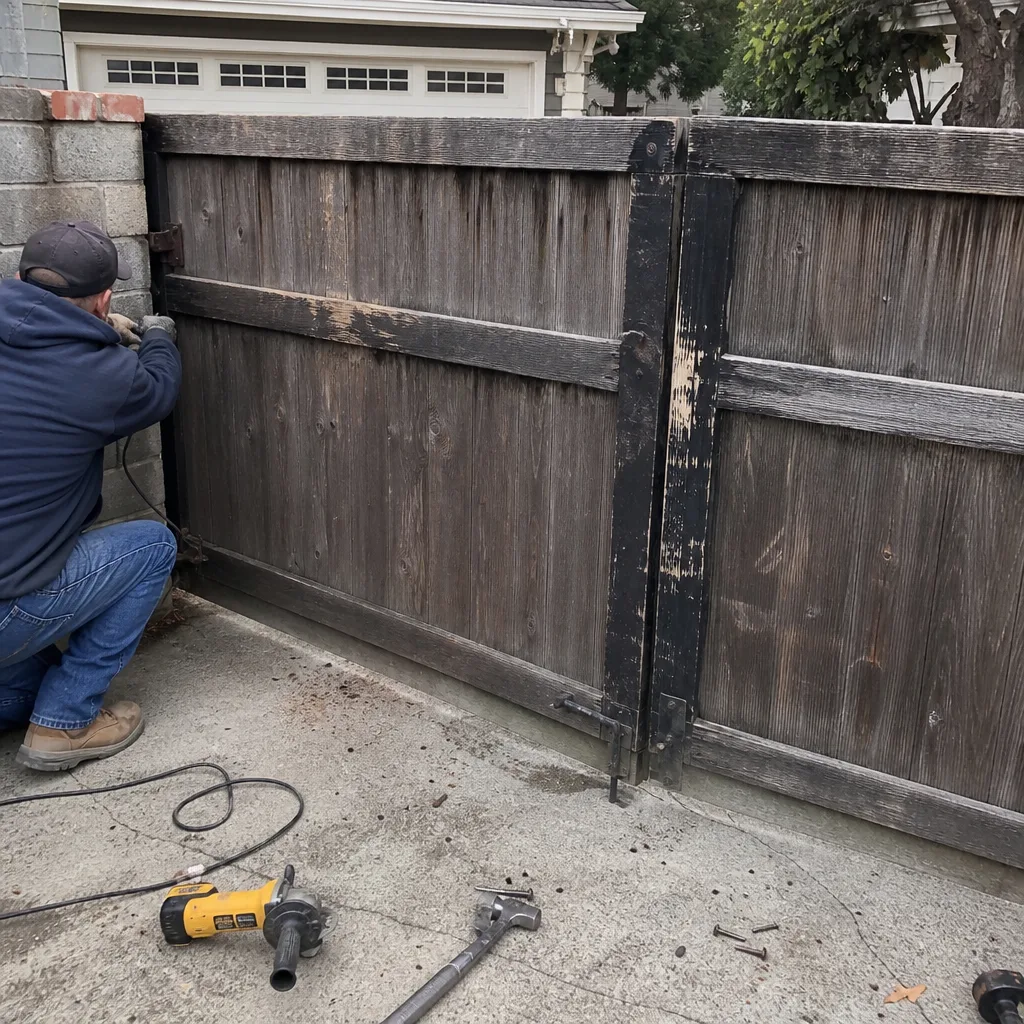 Before
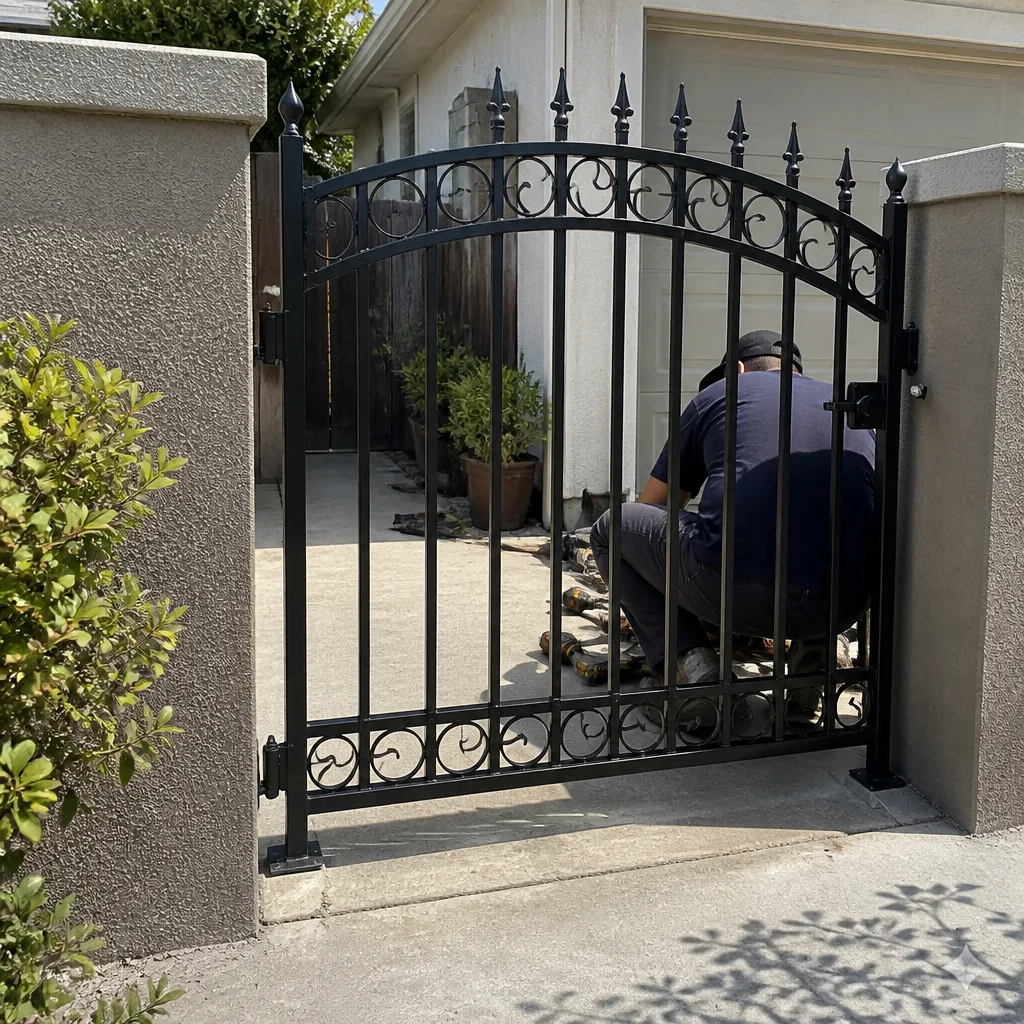 After
After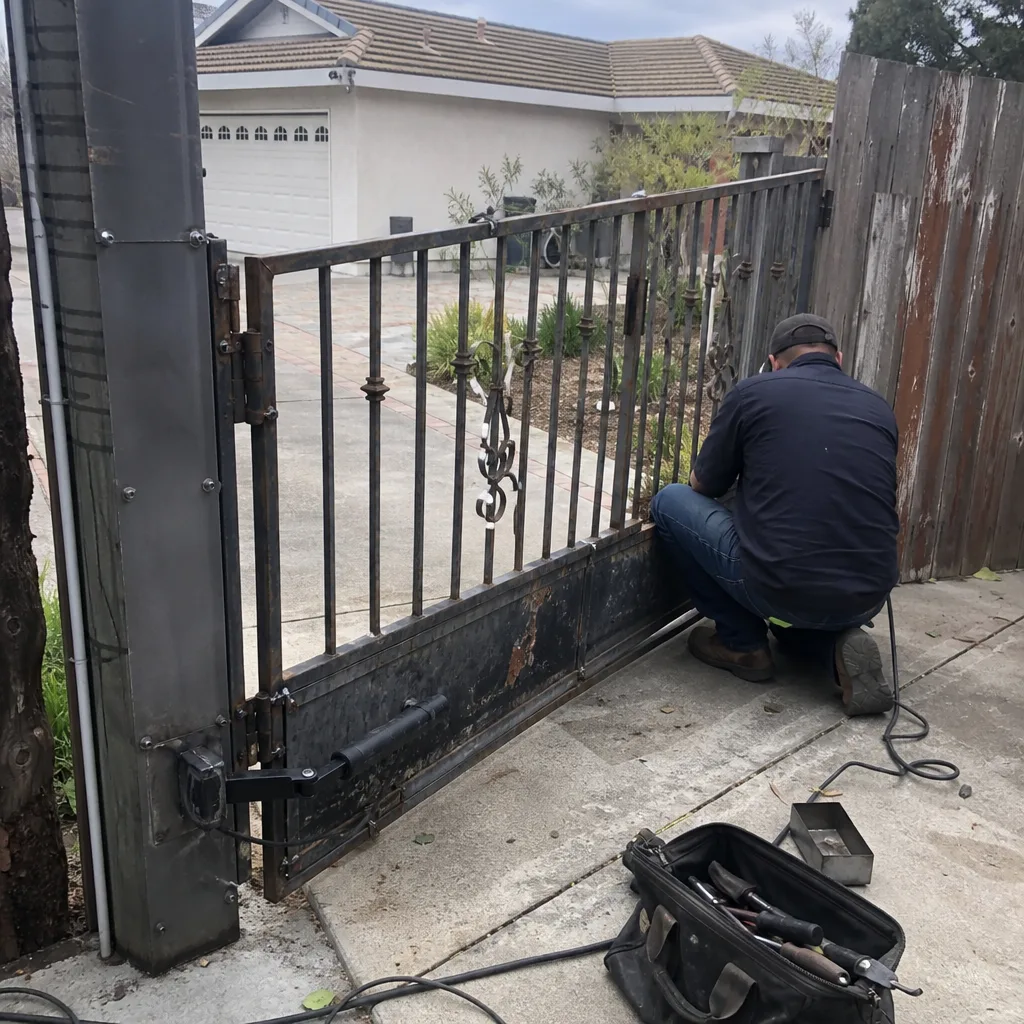 Before
 After
After Before
 After
AfterGate Repair Permits, Codes & Inspections in CA: What You Need to Know
A homeowner in Fremont replaced a failing swing gate with a heavier automated system, skipped the permit because “it’s just a repair,” and received a city notice requiring removal of the new operator. The threshold between repair and installation under California Building Code is narrower than most contractors admit, and crossing it without paperwork has triggered stop-work orders, forced removals, and liability exposure for injury claims. In this guide, we’ll map exactly where that line sits for residential and commercial gate work in Fremont, what UL 325 compliance means for your insurance coverage, and how to verify a contractor pulled the right permit before anyone picks up a tool. For Gate Repair Warning Signs: A Fremont Homeowner’s Reference Guide, see our dedicated resource.
Quick Answer
Most gate repairs in California do not require a permit if they are replacement-in-kind - same weight class, same automation type, same opening width. Any change in gate weight, operator type, or access-control integration triggers a permit under California Building Code, and automated gates must meet UL 325 safety standards regardless of permit status. In Fremont, the Building Division enforces both state code and local amendments, with inspections required for permitted work before final activation.
Table of Contents
- Repair vs. Installation: Where California Draws the Line
- UL 325 Compliance and What It Means for Liability
- Fremont’s Local Amendment Layer
- The Permit Process: Step by Step
- What a Post-Repair Inspection Looks For
- How to Verify a Contractor Pulled the Correct Permit
- How Photographic Documentation Protects You
- Common Mistakes to Avoid
- When to Call a Professional
- Frequently Asked Questions
 Before
 After
AfterRepair vs. Installation: Where California Draws the Line
California Building Code Section 105.1 requires permits for “installation, alteration, repairs, and replacement” of structures, but the state recognizes a critical distinction for gates: replacement-in-kind versus change in scope. Understanding this distinction saves homeowners from the Fremont scenario - a gate that functions perfectly but must come down because the paperwork doesn’t match the work performed.
Replacement-in-kind (typically no permit required):
- Replacing a broken swing gate with a new gate of identical weight, material, and dimensions
- Swapping a failed motor for the same model or direct equivalent within the same brand family
- Repairing welds, hinges, or rollers without changing the gate’s operating characteristics
- Replacing a damaged photo-eye or loop detector with identical equipment
Change in scope (permit required):
- Upgrading from manual to automated operation
- Switching from swing to slide mechanism, or vice versa
- Installing a heavier gate (steel replacing aluminum, or solid-fill replacing open-bar design)
- Adding access control - keypad, telephone entry, card reader, or smartphone integration
- Increasing the opening width or height beyond original dimensions
- Changing voltage or phase (110V to 220V, single-phase to three-phase)
The weight class threshold matters particularly. A standard residential aluminum swing gate might weigh 150-250 pounds. Replacing it with a steel-framed, solid-panel gate at 400-600 pounds changes the load on posts, footings, and the operator. In our experience across Fremont neighborhoods from Mission San Jose to the Irvington district, this is where most homeowners cross the line unknowingly. They wanted something more substantial for security or wind resistance, and the contractor either didn’t know to flag the permit requirement or chose not to mention it.
California also distinguishes between residential and commercial thresholds. Commercial gate work more frequently triggers permits because of higher duty cycles, heavier gates, and integration with fire-life-safety systems. A warehouse slide gate in Fremont’s industrial corridor along Stevenson Boulevard operating on a gate motor & opener in Fremont with a loop detector and keypad entry almost certainly requires permitting, even if the previous gate was identical in scope.
UL 325 Compliance and What It Means for Liability
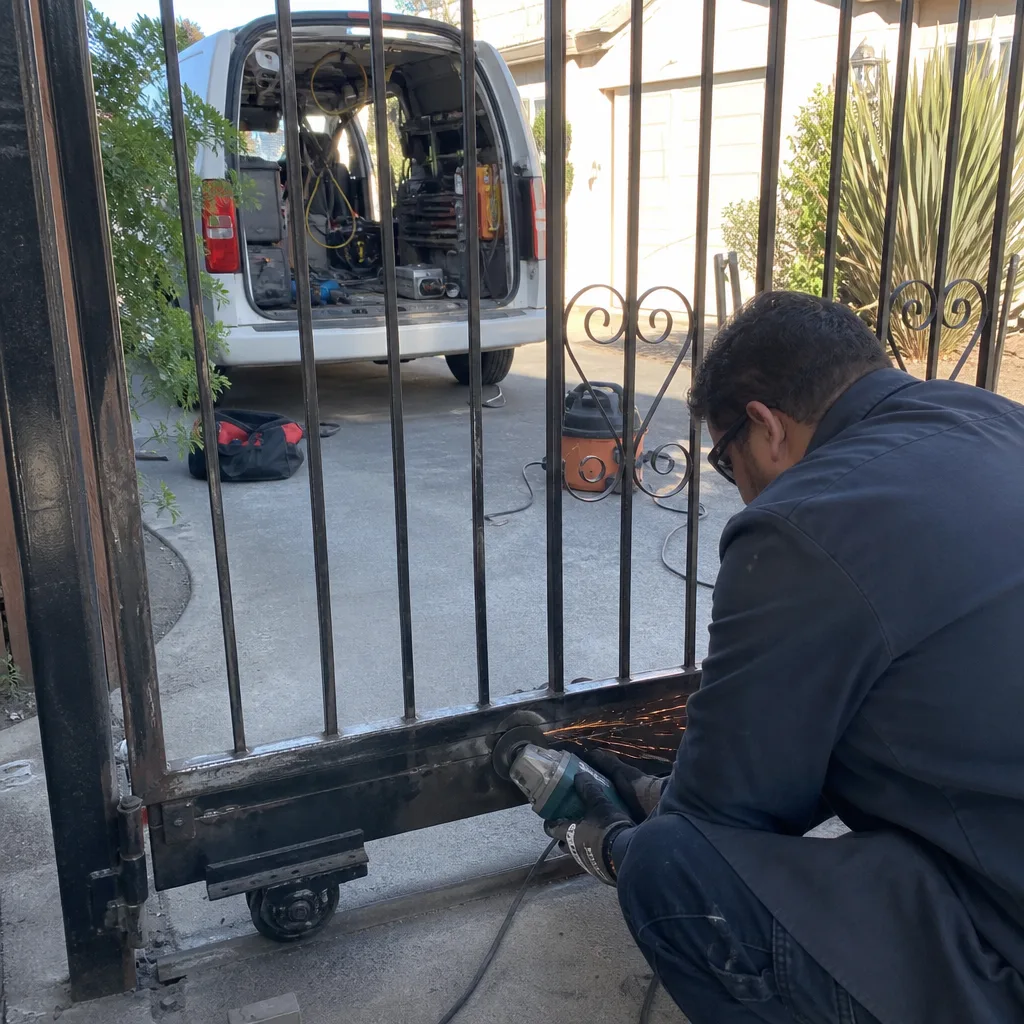
Every automated gate operator installed in California must comply with UL 325, the Underwriters Laboratories standard for door, drapery, gate, louver, and window operators and systems. This is not a permit issue alone. It’s a liability issue that affects whether your homeowner’s insurance covers an injury claim.
UL 325 defines entrapment protection requirements, force limitations, and safety device categories. An operator without compliant external entrapment protection - typically photo-eyes and edge sensors - fails the standard regardless of how well the motor functions. We’ve inspected gates in Fremont where the operator was a recognized brand, properly installed, but missing the secondary entrapment device required for the gate’s class. The homeowner had no idea until we documented it.
The four classes of gate operators under UL 325:
| Class | Use Case | Entrapment Protection Required |
|---|---|---|
| I | Vehicular access to residence | Primary (inherent) plus one external device |
| II | Commercial/general access | Primary plus two external devices |
| III | Industrial/limited access | Primary plus two external devices |
| IV | Restricted access (correctional, etc.) | Varies by application |
Most residential gates in Fremont fall under Class I. The external device is typically a photo-eye (the infrared beam that stops the gate if something crosses the path) or a contact sensor on the leading edge. If a contractor installs a Class II operator on a residential driveway gate and someone is injured, the installation may be deemed non-compliant even if the permit was properly pulled. The permit verifies code compliance at the time of inspection; it does not guarantee ongoing UL 325 adherence if the wrong equipment class was selected.
We’ve serviced operators from Linear, Viking, and DoorKing across Fremont properties where the original installer matched the brand correctly but selected a commercial-duty operator for a residential application. The motor worked. The gate moved. But the entrapment protection configuration didn’t match the site use, creating exposure. Under our Haven Standard, we document the existing class and configuration in photos, note any discrepancy in writing, and provide a written scope if correction is needed - before any work begins.
Insurance carriers have increasingly denied claims where non-compliant gate operators caused injury. A 2019 California appellate decision upheld a carrier’s denial where the gate operator lacked required external entrapment devices, even though the homeowner hadn’t known of the deficiency. The court found the homeowner had a duty to maintain safe premises, and the gate’s non-compliance was discoverable. This is why we photograph pre-existing conditions and provide written documentation - it establishes what was found, not what we assumed.
Fremont’s Local Amendment Layer
California Building Code is the floor, not the ceiling. Cities adopt local amendments that add requirements, and Fremont maintains several that affect gate work. The challenge is that these amendments change, and the published code doesn’t always reflect the current enforcement interpretation.
Where Fremont differs from baseline California code:
- Side yard and rear yard gate setbacks: Fremont’s zoning code specifies minimum distances from property lines for gates over six feet in height. A repair that raises gate height - replacing a five-foot gate with a six-foot model for privacy - may trigger zoning review even if the building code permit isn’t required.
- Historic district review: Properties in the Mission San Jose Historic District or Niles Historic District require design review for visible gate changes, including material and style alterations. This runs parallel to building permits and must be completed first.
- Fire department access: Fremont Fire Department requires minimum 20-foot clear width for driveway access in multi-family developments. A gate repair that narrows the effective opening - by adding thicker posts, wider pillars, or offset hinges - can trigger fire marshal review.
- Grading and drainage: Gate posts set in new concrete footings may require grading permits if the work disturbs more than 50 cubic yards of earth or changes drainage patterns. This is more common in hillside Fremont neighborhoods like the area above Mission Boulevard.
How to verify current requirements without multiple calls:
- Start with the Fremont Building Division’s online permit portal. The “Do I Need a Permit?” tool covers common projects and is updated more frequently than the printed handouts.
- Download the current “Residential Repair/Replacement Guidelines” PDF, which lists specific exemptions. Check the revision date in the footer - versions from 2019 and 2022 are both circulating, and the 2022 update changed gate operator thresholds.
- For commercial work, request a “pre-application conference” through the city’s online scheduling system. This 15-minute phone call with a plans examiner confirms permit requirements before you invest in drawings.
- Check the Alameda County Assessor’s parcel map if you’re unsure of historic district boundaries or zoning overlays. The map layer shows designations that aren’t obvious from street view.
We’ve found that Fremont’s building staff are precise and responsive, but they expect callers to have done preliminary research. Calling to ask “do I need a permit for a gate repair” without knowing the gate weight, operator type, or whether the work changes the opening dimensions will yield a qualified answer that requires follow-up. We prepare a written scope before any permit inquiry - gate dimensions, existing operator model, proposed changes - and submit it as a pre-application request. The written response becomes part of the job record under Haven Standard Clause 4.
The Permit Process: Step by Step
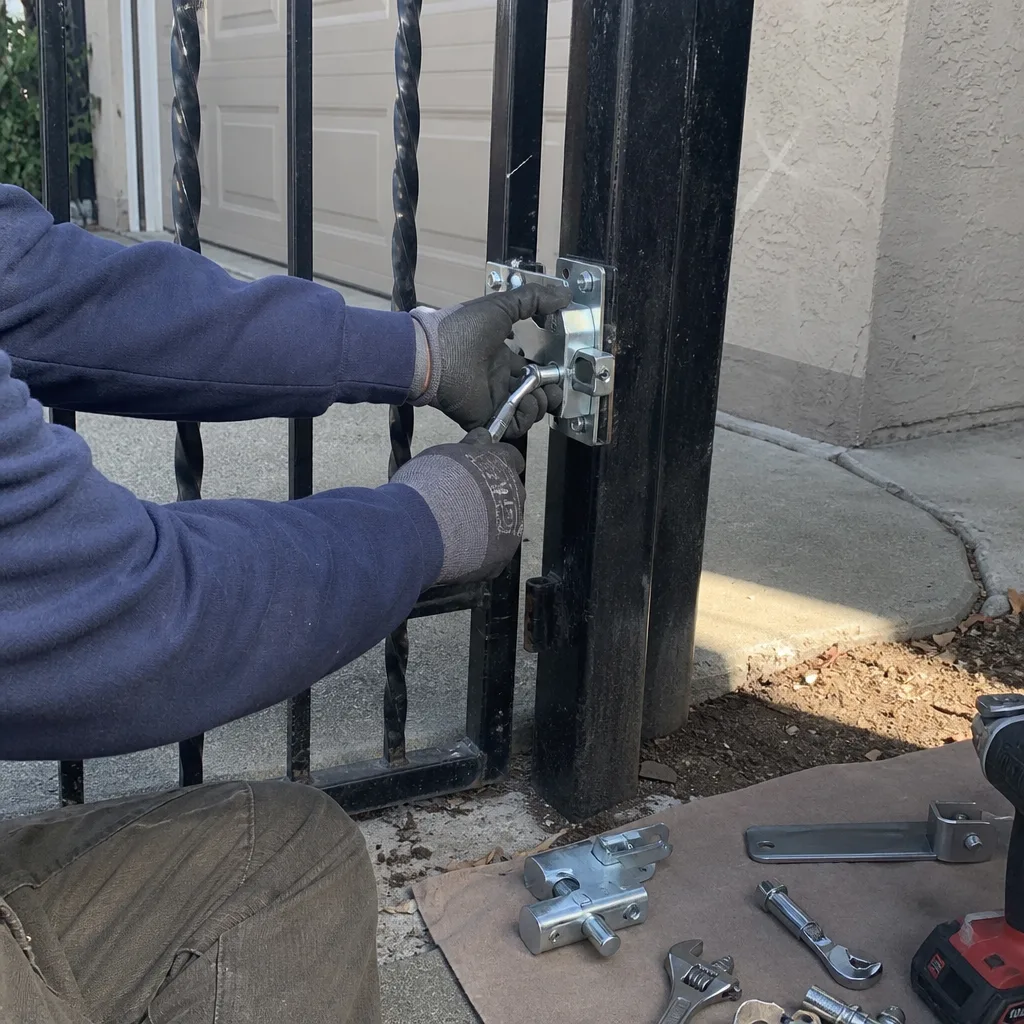
When a permit is required, the process in Fremont follows a predictable sequence. Delays typically come from incomplete applications, not from staff processing time.
Step 1: Determine permit type
Residential gate permits usually fall under “Combination Permit” (building and electrical) if the gate is automated, or “Building Permit Only” for manual gates. Commercial work may require additional fire department or planning department sign-off. The permit type determines the inspection sequence and fee schedule.
Step 2: Prepare documentation
Fremont requires a site plan showing gate location relative to property lines, a detailed gate drawing with dimensions and materials, and electrical plans for automated systems. For replacement-in-kind where the permit is triggered by automation changes, we provide photos of the existing gate and a written scope defining what changes. This often streamlines review because the plans examiner can verify that structural elements aren’t being altered.
Step 3: Submit application
Online submission through the Fremont Citizen Access portal is preferred. Paper submissions are accepted but add 3-5 business days for scanning. The permit fee for a residential automated gate typically runs $200-$400 depending on valuation, with commercial work scaling higher. Fremont publishes a fee schedule online; we reference the specific line item in our written price quote so the homeowner knows the permit cost is actual, not estimated.
Step 4: Plan review
Residential permits with complete documentation typically review in 5-10 business days. Commercial work or properties in historic districts may extend to 15-20 days. Fremont offers an express review for an additional fee if timing is critical, though we’ve rarely found it necessary for gate work.
Step 5: Permit issuance and work window
Once issued, the permit is valid for 180 days with one 180-day extension. Work must not begin before permit issuance - starting early risks a stop-work order and double fees. We schedule the job only after permit confirmation, and we provide the permit number to the homeowner in writing.
Step 6: Inspection scheduling
Fremont requires inspection at rough-in (electrical and structural elements visible) and final (complete installation operational). Some automated gate installations also require a separate electrical inspection if the operator is hardwired rather than plug-in. Inspections are scheduled online or by phone, with next-day availability typical if scheduled before 3 PM.
Step 7: Final approval and certificate of occupancy
Upon passing final inspection, the permit is finaled online and a certificate of completion is issued. This document is critical for property records, insurance verification, and future sale disclosures. We file a copy with the homeowner’s job record under Haven Standard Clause 4.
What a Post-Repair Inspection Looks For
Inspections focus on what can’t be seen after the fact. An inspector who arrives after a gate is fully installed and landscaped around cannot verify footing depth, post embedment, or underground conduit. This is why the rough-in inspection exists, and why contractors who skip it or discourage it are creating future problems.
Rough-in inspection checklist:
- Post footing depth and diameter (typically 36 inches minimum in Fremont’s expansive clay soils, deeper in hillside areas)
- Rebar placement and concrete specification
- Underground conduit depth and separation from other utilities
- Electrical grounding and bonding for operator circuit
- Photo-eye and edge sensor mounting locations relative to gate travel path
Final inspection checklist:
- Gate operation through full cycle - open, close, stop, reverse
- Entrapment protection activation at specified force thresholds (UL 325 requires reversal within 2 seconds of contact for Class I operators)
- Warning signage visibility and placement
- Manual release function and accessibility
- Gate alignment and clearance from adjacent structures
In Fremont, inspectors have discretion to require correction of conditions not on the checklist if they identify safety hazards. We’ve accompanied inspections where an inspector noted that a photo-eye was mounted at 18 inches rather than the recommended 12-15 inches for vehicle detection, or where a manual release was obstructed by landscaping installed after rough-in. These aren’t code violations per se, but the inspector can condition final approval on correction.
The documented photo record we provide under Haven Standard Clause 4 becomes valuable here. If a dispute arises about whether a condition existed at installation or developed later, our pre-departure photos show gate position, device alignment, and clearances as we left them. We’ve used this record to resolve three disputes in Fremont where homeowners believed a post-installation problem was our error, and the photos demonstrated otherwise.
How to Verify a Contractor Pulled the Correct Permit
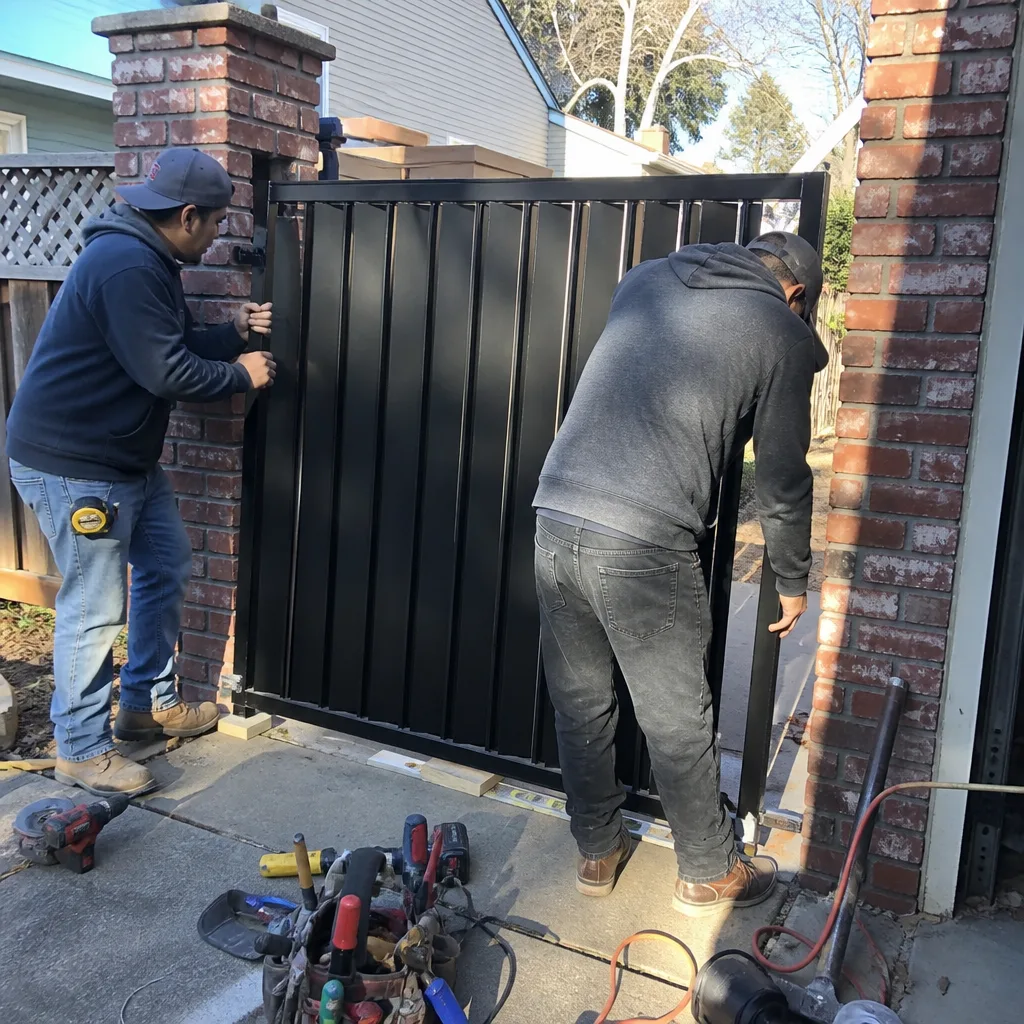
Permit fraud in California construction takes several forms: no permit pulled at all, a permit pulled in the wrong category (electrical only when building was required), a permit with mismatched scope (single gate when double gate was installed), or a permit pulled by an unlicensed contractor using another company’s license number. Each creates exposure for the homeowner.
Verification steps:
- Request the permit number before work begins. A legitimate contractor has this number after issuance. “I’m waiting on the city” on the morning of installation is a red flag unless the job was explicitly structured as permit-pending with written acknowledgment.
- Verify online. Fremont’s Citizen Access portal allows permit lookup by address or permit number. Confirm the scope description matches your written contract: “Replace existing swing gate operator” versus “Install new automated gate system” are different scopes with different inspection requirements.
- Check the license match. The Contractors State License Board (CSLB) website verifies that the license number on the permit matches the company performing the work. Mismatches suggest the contractor is operating under another company’s license, a practice that voids their insurance coverage.
- Confirm inspection scheduling. A valid permit requires inspection. Ask when the rough-in and final inspections are scheduled, and request notification so you can be present. Contractors who resist homeowner presence at inspection may be concealing scope deviations.
- Obtain the final certificate. Don’t accept “the city has it” as sufficient. Request a copy of the final approval or certificate of completion for your records. This is standard documentation we provide on every permitted job under Haven Standard Clause 4.
We’ve been called to gate repair in Fremont where the previous contractor installed a Ghost Controls operator on a permit that only covered electrical work, with no building permit for the structural gate changes. The gate functioned until a neighbor complaint triggered code enforcement. The homeowner faced a choice: remove the gate, or retroactively permit with engineered drawings and possible structural modifications. The original contractor was unresponsive. Our written scope for the correction included permit assistance, but the cost was triple what proper permitting would have been.
How Photographic Documentation Protects You
The Fremont case that opened this guide - the homeowner who replaced a gate and received a removal notice - illustrates why documentation matters beyond the immediate job. When code enforcement acts months or years after installation, the homeowner needs evidence of what existed before, what was changed, and what the contractor represented.
What we document on every visit, permitted or not:
- Wide-angle photos of the full gate and surrounding area, including property line references
- Close-ups of existing operator nameplate, model, and serial number
- Photo-eye and sensor positions with measurements
- Post and footing condition, including depth markers if visible
- Electrical supply: voltage, disconnect location, grounding method
- Any damage, wear, or non-compliance observed before work begins
This documentation serves multiple purposes. For permitted work, it establishes the pre-existing condition if an inspector questions whether a feature is new or original. For unpermitted repair-in-kind, it demonstrates that the work didn’t change scope if a future code inquiry arises. For warranty claims, it shows whether a failure is in the repaired component or an unrelated system.
Under Haven Standard Clause 4, we leave a copy of the photo log with the homeowner and retain the master file. If a Fremont homeowner sells their property and the buyer’s inspector questions the gate installation, the documentation is available. If a boundary dispute arises and a neighbor claims the gate encroaches, the original photo with property line reference is evidence. We’ve provided documentation for three property sales, two insurance claims, and one boundary survey where our photos from years earlier resolved questions that would otherwise have required expensive investigation.
The 365-Day Done Right Promise extends to documentation accuracy. If we misrepresent a condition in our written record or photo log, we correct it at no charge regardless of whether the related repair is under warranty. This is Clause 1 in practice: the written record must match what we found, or it has no value.
Common Mistakes to Avoid
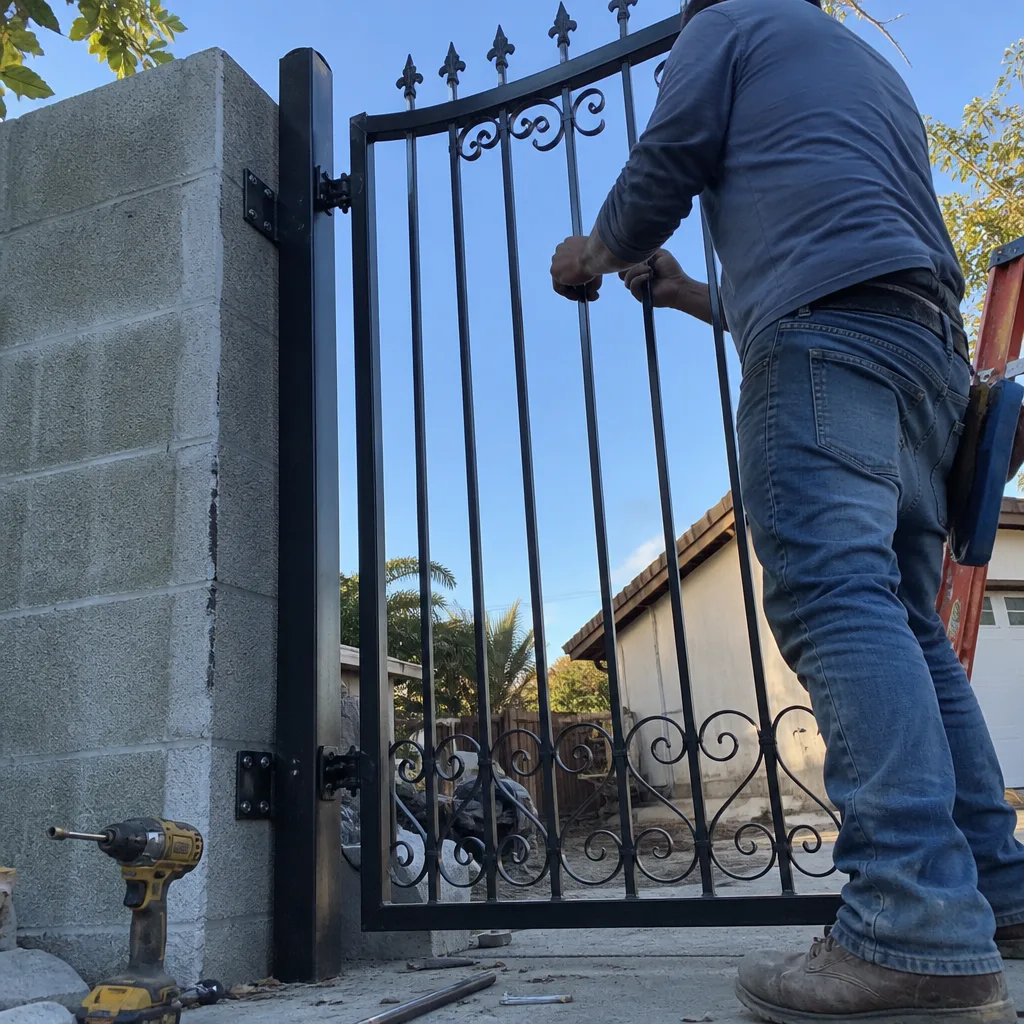
- Assuming “repair” means no permit. In Fremont, replacing a manual gate with an automated one is installation, not repair, regardless of how the homeowner frames it. The permit threshold is defined by the work performed, not the homeowner’s intent or the contractor’s description.
- Accepting a contractor’s verbal permit confirmation. We’ve encountered contractors who claim permits are “in process” when no application has been submitted. Verify independently through Fremont’s online portal before work begins.
- Ignoring UL 325 on a “simple” operator swap. Even direct replacement of a failed operator requires verification that the new unit matches the gate’s class and has appropriate entrapment protection. A contractor who installs a basic operator without photo-eyes on a gate that previously had them is creating liability.
- Failing to document pre-existing conditions. In Fremont’s competitive real estate market, gate installations are frequently questioned during sale transactions. Photos taken at installation resolve disputes that would otherwise require destructive investigation.
- Not checking historic district status. The Mission San Jose and Niles districts have design review requirements that run parallel to building permits. A building permit alone doesn’t satisfy the historic review requirement, and work approved by one body may be rejected by the other.
- Overlooking fire department access requirements. A gate repair that narrows driveway width or adds delay to emergency access can trigger fire marshal enforcement separate from building code compliance. This is more common in multi-family properties and gated communities in Fremont.
- Paying in full before final inspection. California law limits upfront payment on home improvement contracts, but more importantly, final payment should be contingent on permit finalization. We’ve been called to jobs where the contractor collected full payment, failed the final inspection, and abandoned the job with the permit open.
When to Call a Professional
Call a licensed gate contractor when your project crosses any of these thresholds: automation is involved, gate weight or material is changing, access control is being added or upgraded, or you’re uncertain whether the work qualifies as replacement-in-kind. See How to Hire a Gate Repair Contractor in Fremont: A Step-by-Step Guide for vetting questions. The cost of a professional evaluation is minimal compared to the cost of a stop-work order, forced removal, or injury liability.
Vance Gate Repair Fremont offers free estimates in Fremont - call (510) 826-3980. We provide a written scope and price before any work begins, include permit assistance when required, and deliver a documented photo record on every visit. If you have a written estimate from another contractor, we’ll review it at no cost and identify any permit or compliance gaps we’ve seen create problems.
Frequently Asked Questions
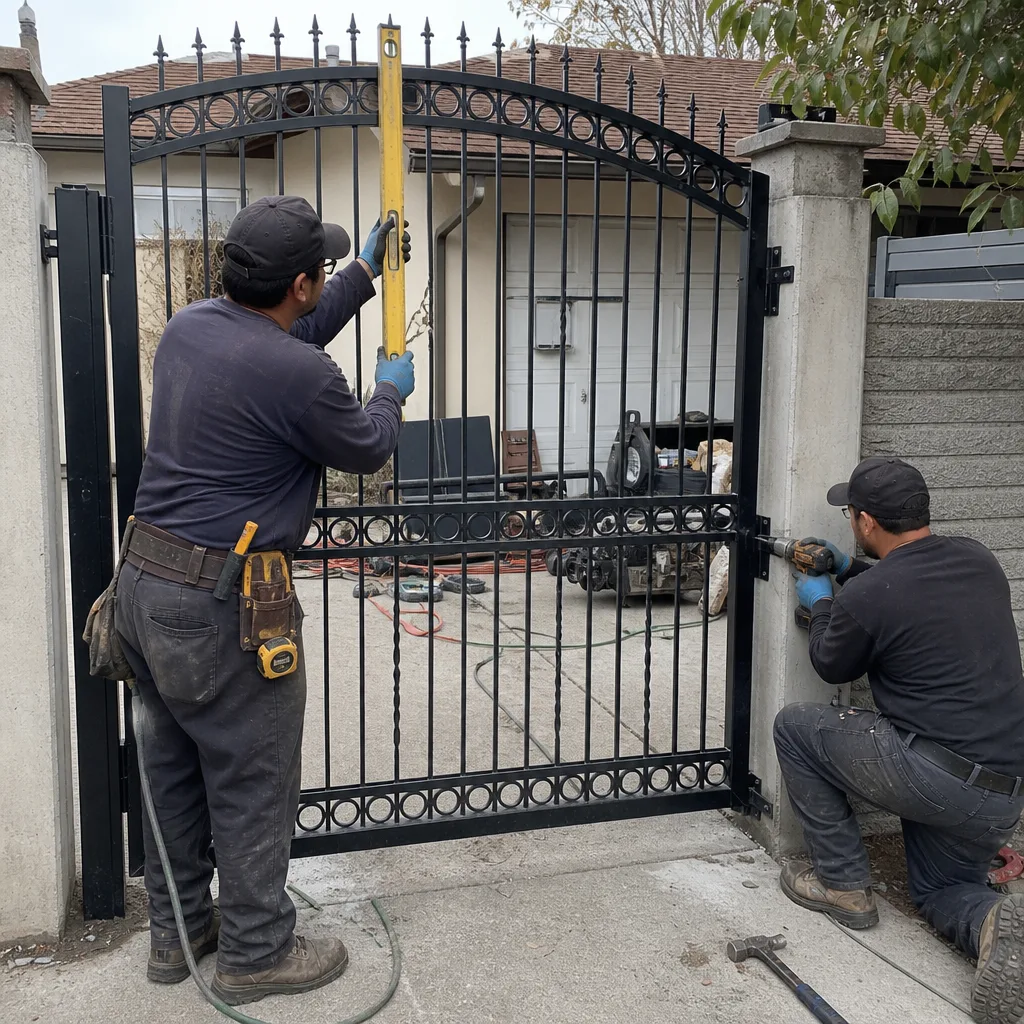
Most gate repairs in Fremont do not require a permit if they are replacement-in-kind - same gate type, same weight, same automation. Any change in weight class, operator type, or addition of access control triggers a permit under California Building Code. Call (510) 826-3980 for a free estimate - we’ll assess your specific situation and identify any permit requirements in writing.
The city can issue a stop-work order, require removal of unpermitted work, and impose penalties of up to three times the permit fee. Homeowners may also face insurance denial if an injury occurs on a non-compliant installation. If you discover an open or missing permit after work is complete, contact the Fremont Building Division immediately - voluntary disclosure before a complaint is filed typically reduces penalties.
Residential automated gate permits in Fremont typically range from $200 to $400, depending on project valuation and whether electrical and building permits are combined. Commercial permits scale higher. The fee schedule is published online, and we itemize permit costs separately in our written quotes under Haven Standard Clause 1 so you know exactly what the city charges versus what the contractor charges.
No. Adding automation to a previously manual gate is classified as new installation, not repair, under California Building Code. The permit ensures UL 325 compliance, proper electrical work, and structural adequacy for the automated operation. We’ve seen homeowners in Fremont’s Central District assume automation was a “minor upgrade” and face enforcement when the operator was visible from the street.
UL 325 is the safety standard for automated gate operators, defining entrapment protection, force limits, and warning requirements. California courts have upheld insurance denials where injury resulted from non-compliant operators, finding the deficiency discoverable by reasonable maintenance. Even a properly permitted installation can create exposure if the operator class doesn’t match the site use - Class II commercial equipment on a residential Class I application, for example.
Check the operator nameplate for a UL listing mark and verify the class matches your application. Class I for residential vehicular access, Class II for commercial general access. Confirm that external entrapment protection - photo-eyes, edge sensors, or both - is installed and functional. We verify and document UL compliance on every service call; if you’re uncertain, we offer a free compliance check with written findings.
We handle permit applications as part of our scope when permitting is required. This includes documentation preparation, submission, inspection scheduling, and final approval tracking. The permit fee is passed through at actual cost with no markup, shown as a line item in your written quote. You receive the final certificate for your records. For repair-in-kind work that doesn’t require permitting, we still provide the documented photo record under Haven Standard Clause 4.
The Bottom Line
The permit line for gate work in California is specific and enforceable: replacement-in-kind needs no permit, but changes in weight, automation, or access control do. Fremont adds local layers - historic districts, fire access, grading - that can trigger requirements even when state code doesn’t. UL 325 compliance is separate from permitting but equally critical for liability protection. The homeowners who avoid problems are those who verify permits independently, demand written documentation, and work with contractors who treat paperwork as seriously as the physical installation. Explore more guides & resources on gate compliance and maintenance. Under our Haven Standard, every job leaves a written price, a written scope, and a photographic record - because the gate that matters is the one still standing and still compliant years after we leave.
Written by Adrian Vance, Owner at Vance Gate Repair Fremont, serving Fremont since 2014.